By Kodjo Adams, GNA
Accra, June 2, GNA – The World Bank has expressed satisfaction with the progress of the REDD+ programme being implemented in the Atewa Hotspot Intervention Area (HIA) in the Eastern Region.
“We are modestly satisfied with the progress being made, but of course, we can always improve,” Mr Guangzhe Chen, Vice President for Planet at the World Bank Group, said during a field visit to projects in the region on Monday.
The delegation visited Pano, Kwasi Komfo, Potroase and Amanfrom, communities within the Atewa landscape, which is under increasing pressure from illegal small-scale mining activities.
The visit highlighted the need for sustained investment in alternative livelihoods and community-led conservation.
The Ghana Cocoa Forest REDD+ Programme (GCFRP), a joint initiative of the Forestry Commission and COCOBOD, aims to halt deforestation and promote sustainable, climate-smart cocoa farming.
The programme, which commenced in 2019 and is expected to end in 2027, is funded by the World Bank’s Forest Carbon Partnership Facility (FCPF) and linked to performance-based carbon payments.
Covering 5.9 million hectares in Ghana’s High Forest Zone, the programme supports more than 140,000 cocoa farmers across six hotspot intervention areas, including Atewa.
Mr Chen said the financing model supported basic community needs, such as the provision of water boreholes and agricultural inputs, to improve livelihoods, create jobs and promote forest conservation.
Atewa received 4.8 million dollars in June 2023 for the 2019 monitoring period and 16.9 million dollars in June 2024 for the 2020–2021 monitoring period, reflecting progress in emission reductions.
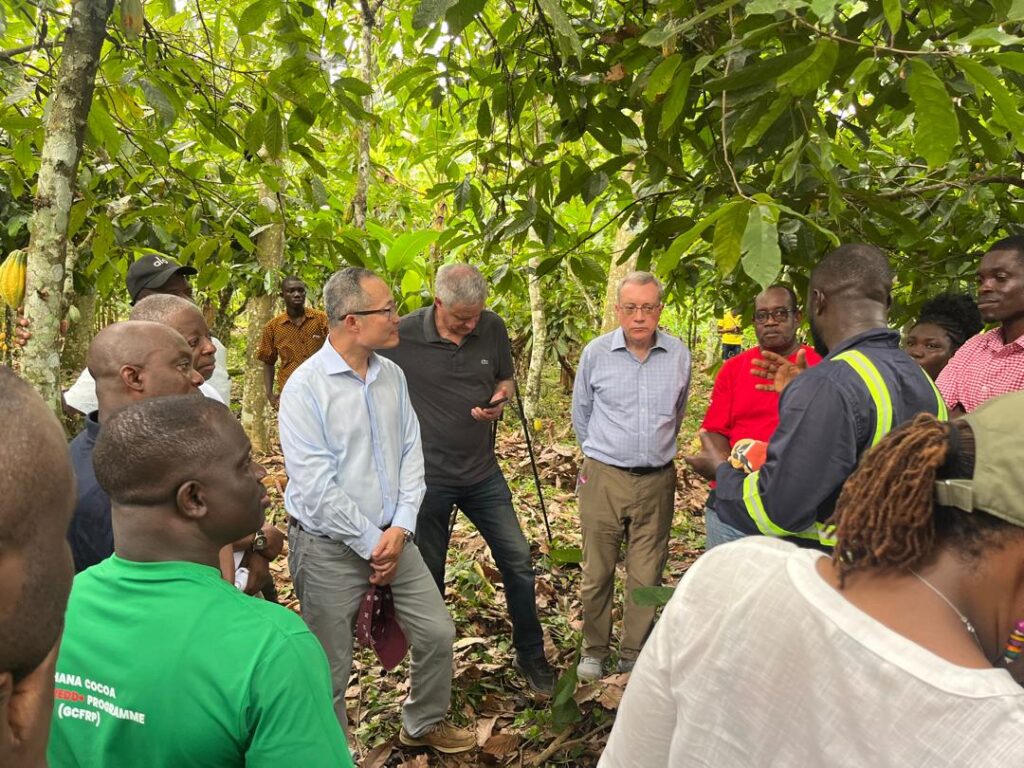
“We want to accelerate the payments, but that requires everybody to work together. The communities are delivering the outcomes with strict supervision from the Forestry Commission,” he said.
Mr Chen commended the enthusiasm of beneficiary communities and underscored the importance of their participation.
He also praised the support of Osagyefuo Amoatia Ofori Panin, Okyehene of Akyem Abuakwa, for championing environmental sustainability initiatives.
He lauded the Forestry Commission and its partners for advancing Ghana’s green economy agenda and promoting sustainable development.
Mr Chen described carbon finance as a critical mechanism for compensating farmers and communities for reducing emissions.
He said the World Bank would explore avenues to scale up the programme to reinforce Atewa’s significance as a biodiversity hotspot and a high-value carbon landscape requiring sustained investment.
“We have seen that Ghana has already established itself as a leader not only in Africa but also globally in developing carbon markets,” he added.
Dr Hugh C.A. Brown, Chief Executive of the Forestry Commission, said about 23 per cent of the funds received had been used to provide logistics and build the capacity of communities to effectively safeguard the environment.
He said the interventions enabled the Commission to procure motorbikes and vehicles, while strengthening community capacity.
Dr Brown noted that poverty remained a major challenge and expressed optimism that the programme would help address it in a practical and timely manner.
Achievements under the programme include the distribution of 540 school desks to 54 schools within the Atewa enclave, construction of mechanised boreholes, provision of agricultural inputs, and capacity-building initiatives for beneficiaries.
GNA
Edited by Agnes Boye-Doe
Reporter: Kodjo Adams