By Agnes Ansah, GNA
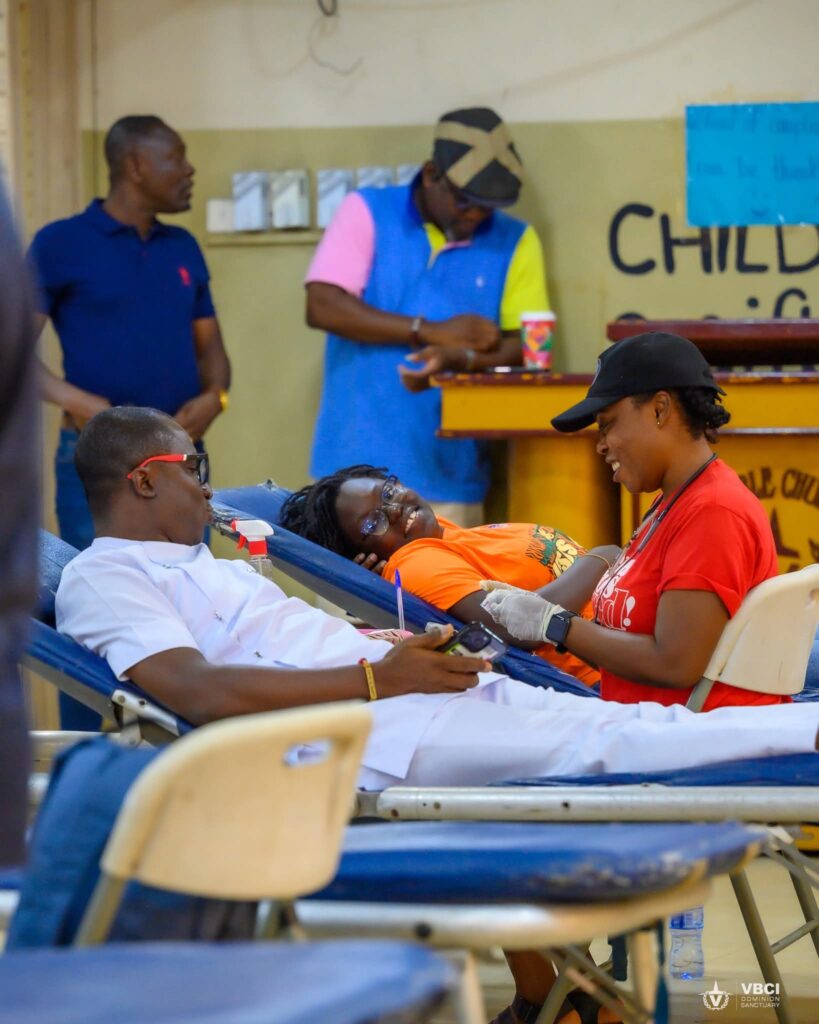
Accra, June 8, GNA – Victory Bible Church International (VBCI) has marked its 41st anniversary with a mass blood donation exercise across its Accra sanctuaries.
The exercise, held at the Dominion Sanctuary, the church’s headquarters at Awoshie Junction in Accra, formed part of a three-pronged health outreach initiative that also included the donation of incubators to the Paediatric Unit of Achimota Hospital and support for the Stroke Unit of the Korle-Bu Teaching Hospital.
Organised in partnership with the National Blood Service, the exercise sought to help address critical blood shortages in hospitals across the Greater Accra Region.
Held on the theme: “Healing Hands, Serving Hearts,” the initiative was also in line with the church’s commitment to supporting Ghana’s healthcare delivery system by helping to replenish the National Blood Bank.
The exercise was aimed at saving lives and supporting emergency, maternity and surgical care across the country.
Bishop Nii Apiakai Tackie-Yarboi, Presiding Bishop and Founder of Victory Bible Churches Worldwide, said the blood donation exercise was one of the church’s ways of expressing gratitude to God for His faithfulness over the past 41 years.
“For 41 years, God has been faithful to our commission, both locally and internationally. As we celebrate, we choose to give back in a way that heals and restores,” he said.
Bishop Tackie-Yarboi noted that Ghana’s healthcare system required collective support and that the church believed no act of service was too small when lives were at stake.
Rev. Dr. Ernest Anim-Opare, Specialist Family Physician at Korle-Bu Teaching Hospital and Head of the Church’s Medical Team, said the demand for blood in Ghana remained constant.
“There will never be a point where we can say we have enough blood. A single accident victim may require as many as eight units of blood at a time, so the need will always exist,” he told journalists.
He explained that patients with chronic illnesses and women experiencing complications during childbirth often required multiple transfusions, making a steady supply of donated blood essential.
Addressing concerns about blood donation, Dr. Anim-Opare assured the public that the process was safe and medically supervised.
“Before a person is approved to donate blood, we assess their blood pressure, weight, height, age and conduct other necessary screenings to ensure they are fit to donate. Once blood is donated, the body naturally replenishes it within a few months,” he said.
He also dismissed misconceptions that donated blood was misused.
“In my years of medical practice, I have not encountered any instance where blood in the hospital system was used for purposes other than patient care. Donated blood is added to the national pool and is available to all Ghanaians who may need it,” he said.
Mr. Sidney Edem King, Donor Recruitment Officer at the Greater Accra Regional Blood Centre of the National Blood Service, encouraged eligible Ghanaians between the ages of 17 and 60 to donate blood regularly to help reduce persistent shortages.
He said the country required about 350,000 units of blood annually but consistently recorded a shortfall of about 150,000 units.
“The highest collection we have achieved is between 180,000 and 200,000 units annually. We are therefore always faced with a deficit of about 150,000 units,” Mr. King said.
He explained that the demand for blood was driven by the needs of accident victims, pregnant women with childbirth complications, children suffering from severe anaemia and patients undergoing surgery.
Mr. King further noted that blood donation offered health benefits to donors.
“When you donate blood, the body recognises the loss of some blood cells and begins the process of replacing them. Research has shown that this can contribute to improved cardiovascular health,” he said.
GNA
Edited by Agnes Boye-Doe
Reporter: Agnes Ansah