By Hannah Awadzi
Accra, June 6, GNA-Stakeholders at a forum organised by the West African Science Service Centre on Climate Change and Adapted Land Use (WASCAL) have pledged to move beyond dialogue to undertake concrete actions to mitigate the impacts of climate change.
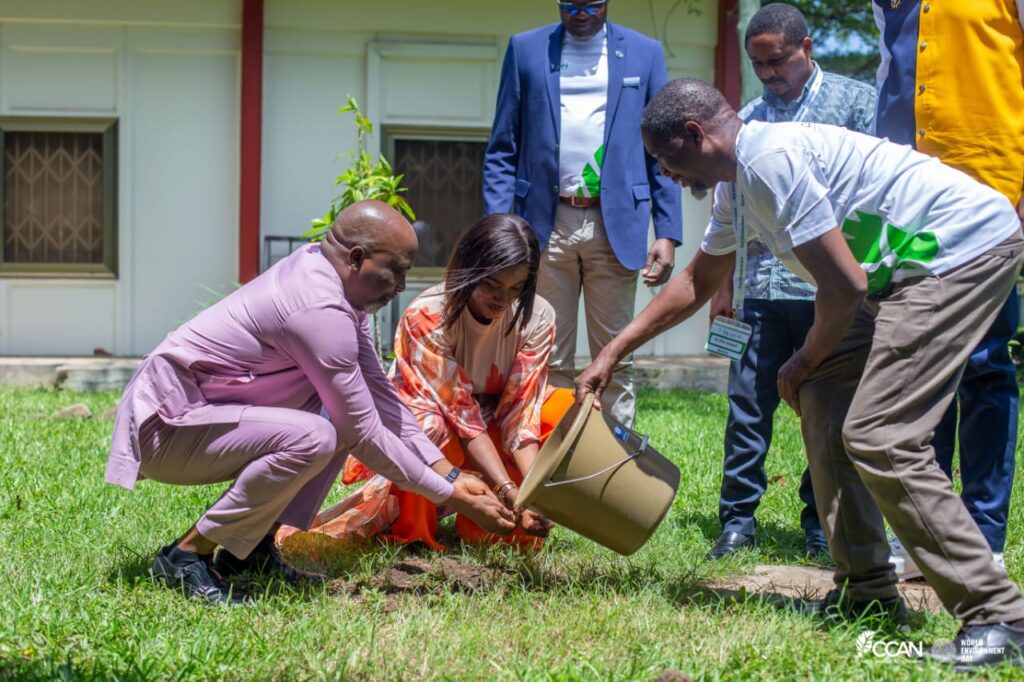
A symbolic tree-planting exercise was undertaken at the close of the forum to demonstrate actionable steps and encourage participants to emulate tangible climate initiatives.
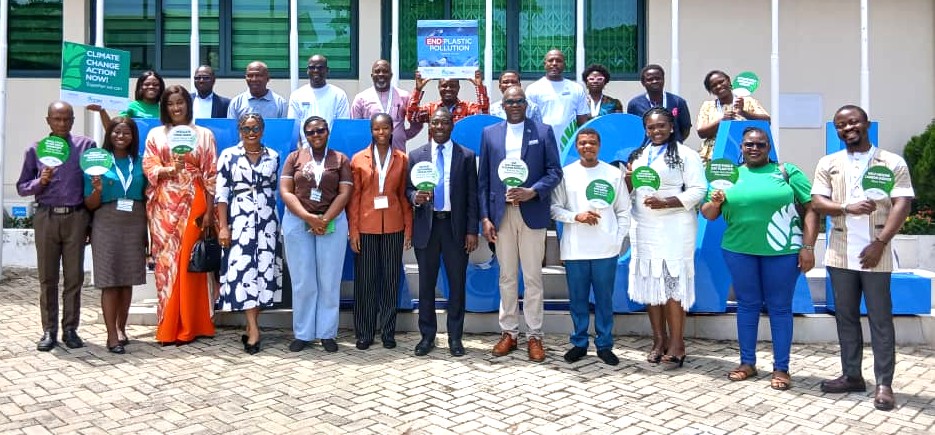
The forum, on the theme: “From Global Commitments to Practical Implementation – Youth, Science and Diplomacy for Climate Action,” brought together participants from academia, policymaking, research institutions, civil society, influencers, and the media to deliberate on practical measures to address climate change.
Nana Sean Yaw Agyei Sikapa Agyemang, a serial entrepreneur and policy advocate, urged stakeholders to bridge the gap between knowledge and practice.
“Across West Africa and, indeed, the world, climate change is no longer a distant scientific prediction; it is our daily reality, seen in prolonged droughts, devastating floods, rising temperatures, declining agricultural productivity, coastal erosion, and threats to food and water security,” he said.
He commended WASCAL for demonstrating that science, innovation, and collaboration could provide pathways towards resilience and sustainable development.
Nana Agyemang called for structured platforms to strengthen collaboration among researchers, policymakers, and civil society, and urged greater investment in climate communication to make scientific findings accessible through local languages, radio, digital platforms, and educational outreach.
Professor Emmanuel Wendsongre Ramde, Executive Director of WASCAL, said the Centre was entering a critical implementation phase following the launch of the Climate Change Action Now (CCAN) initiative in 2025.
“Our goal is clear: to transform climate research into practical, scalable, and inclusive solutions that respond to the needs of communities,” he stated.
He emphasised that climate action must be science-driven, youth-inclusive, and rooted in strong partnerships.
“Science gives us evidence. Diplomacy builds bridges. The media amplifies awareness. Communities give action meaning. And young people bring the urgency, creativity, and courage needed to shape a resilient future,” Professor Ramde said.
He urged stakeholders to embrace cooperation, innovation, trust, and sustained commitment in tackling climate challenges.
Mr Moses Ayamga, Director of Monitoring and Evaluation at the Ministry of Climate Change and Sustainability, called for home-grown solutions to climate challenges.
He urged Ghanaians, particularly the youth, to become actively involved and take ownership of efforts to mitigate climate change.
GNA
Edited by Lydia Kukua Asamoah
Writer: Hannah Awadzi