By D.I. Laary
Kyebi (E/R), June 7, GNA – Office of Daasebre Dr Twum Ampofo II, in partnership with the Nana Fofie Nkrabea Foundation, Dutch-based slavery institute NiNsee and diaspora stakeholders, has convened a two-day dialogue in Kyebi on reparations and reparatory justice.
The meeting examined the transatlantic slave trade’s enduring spiritual, social, economic and cultural impacts and proposed pathways for healing, restoration and justice.
Held at Ofori Panin Fie with the blessing of Osagyefuo Amoatia Ofori Panin II, brought together traditional leaders, diaspora representatives, educators and advocates from Ghana, the Netherlands, Suriname and Australia.
Participants discussed the enduring social, cultural, economic and psychological impacts of slavery and colonialism while exploring practical pathways towards reparatory justice.
Addressing the forum, Daasebre Dr Twum Ampofo II, Chief of Asiakwa and Nifahene of the Akyem Abuakwa Traditional Area, said slavery had left profound physical, emotional, spiritual and developmental scars on African societies.
“When you talk about slave trade, Akyemman has to be mentioned,” he said, stressing that communities lost people, resources, artefacts and cultural heritage through slavery and colonial exploitation.
He cited historical accounts suggesting that some enslaved people were held in areas around Kyebi before being transported elsewhere.
He said the removal of natural resources, including gold, timber and other wealth, deprived communities of opportunities for development.
“Physically, they took from us virtually everything. They took our people, our resources, our artefacts and our opportunities for development. These resources could have been used to develop Akyemman. It has taken us centuries back,” he said.
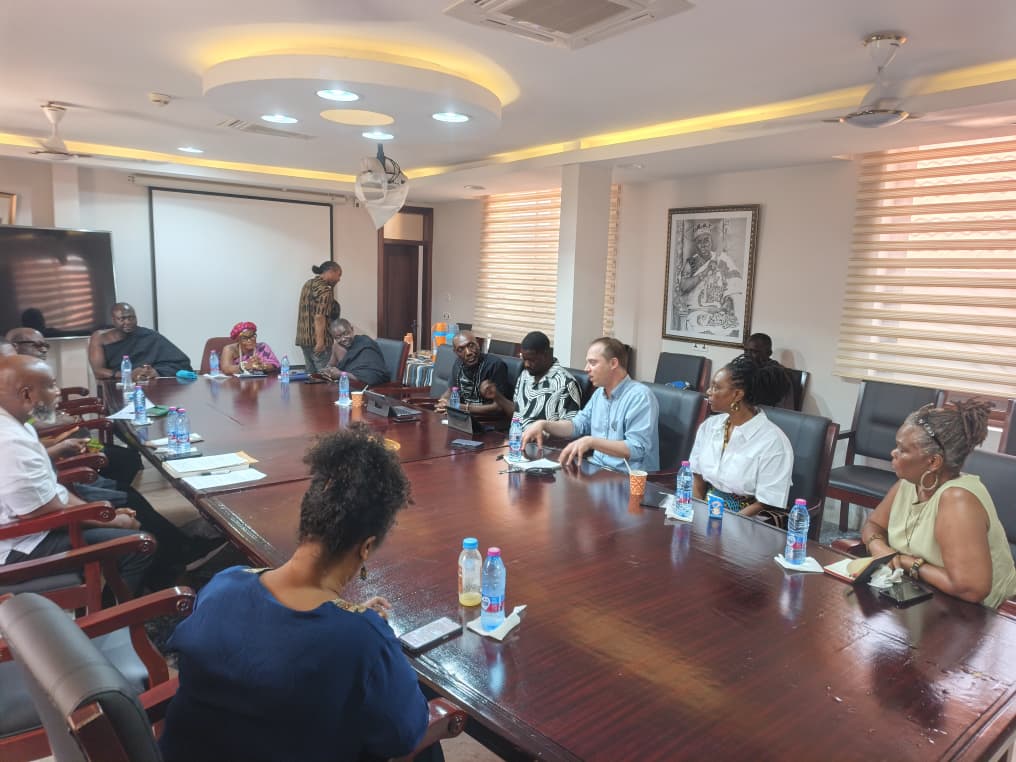
Daasebre Ampofo II also argued that the disruption of indigenous belief systems and traditional practices weakened African societies and contributed to long-term developmental challenges.
“They took from us our belief. They took away our spirituality, our customs and many of the things that gave us identity as a people. To get to the people, you have to break them spiritually and mentally, and one way of breaking an individual is taking away his religion,” he said.
He called for investments in education, cultural restoration and capacity building to help Africans reclaim their identity, strengthen traditional institutions and bridge the development gap created by slavery and colonialism.
Ms Bridget Agbee-Bamfo, a Ghanaian-born career civil servant based in Australia, said slavery and colonialism had undermined African spirituality, confidence and cultural identity.
“The first thing they have to take from us is our spirituality. They told us what we practice is evil and barbaric while their religion is civilized, and that hollowed us out because we became people without foundation,” she said.
She said traditional customs, naming ceremonies and ancestral practices helped build confidence, identity and a sense of belonging, particularly among Africans living in the diaspora.
“We must first stop being ashamed of our ancestors. We must first accept who we are,” she said.
She said healing would require honest conversations between Africans and their descendants abroad, many of whom still carried the pain and mistrust associated with slavery.
She noted that growing international recognition of slavery’s legacy presented an opportunity to rebuild trust and strengthen ties between Africa and the diaspora.
Participants also discussed the cultural legacy of slavery, including the continued use of imported products in traditional ceremonies and the need to strengthen indigenous knowledge systems.
Nana Fofie Afia, Nkosuohemaa I of Nana Tongo Shrine at Asokore-Koforidua, said reparatory justice must go beyond financial compensation to include the restoration of traditional authority, indigenous knowledge systems and cultural identity.
Drawing on her experiences among descendants of enslaved Africans in the Caribbean, she said many people of African descent were seeking to reconnect with their ancestral roots and traditional institutions.
“Something was bigger done than just taking our lands and our people,” she said, adding that colonial systems weakened traditional authorities and disconnected generations of Africans in the diaspora from their history, culture and identity.
She called for stronger engagement between traditional leaders and diaspora communities as part of efforts to restore historical and cultural ties.
Mr Ranger Mawuenyega, Advisor on International Relations and Diaspora Affairs at the Office of Daasebre Dr Twum Ampofo II, said the dialogue followed engagements with diaspora organisations and NiNsee during a cultural diplomacy mission to the Netherlands last year.
He said Ghana’s recent advocacy on reparations at the United Nations had renewed international attention on slavery and its enduring consequences.
“As a Slavery Institute, they wanted to come and hear from us, the traditional leaders, what we think about the subject matter and how prepared we are to embark on this journey,” he said.
Mr Mawuenyega said participants examined issues ranging from reparations and reparatory justice to education, trade, economic empowerment, cultural restoration and healing.
“We have to look at what trade imbalances have been created as a result of the transatlantic slave trade,” he said.
Participants identified education, capacity building, cultural restoration, mental health support, economic empowerment and stronger engagement between Africa and the diaspora as priorities for any reparations framework.
Several contributors described education as the most important long-term investment, arguing that future generations must understand the history of slavery, colonialism and African civilisation to rebuild confidence, identity and community institutions weakened over centuries.
They maintained that financial compensation alone could not address the legacy of slavery and called for coordinated action among governments, traditional authorities, scholars, civil society organisations and diaspora communities to promote reconciliation, economic empowerment and sustainable development.
The forum referenced the CARICOM 10-Point Reparations Plan and welcomed growing international recognition of slavery as a historical injustice requiring redress.
The transatlantic slave trade, which lasted from the 16th to the 19th century, forcibly transported more than 12.5 million Africans across the Atlantic, according to the Slave Voyages database, with about 10.7 million surviving the journey.
GNA
Kenneth Odeng Adade
Reporting by D.I. Laary