By Evans Worlanyo Ameamu
Anloga (V/R), June 27, GNA – The National Disaster Management Organisation (NADMO) in the Anloga District of the Volta Region has disclosed that 28,809 residents have been affected by the recent perennial flooding that has devastated communities across the district.
The flooding has submerged farmlands, destroyed crops, collapsed houses, and left dozens of communities in severe distress.
Mr. Daniel Kofi Blekpe, Anloga District Director of NADMO, said the disaster has affected all demographic groups. According to the latest assessment, 9,584 adult males, 9,758 adult females, 4,576 boys, and 4,891 girls have been impacted, bringing the total number of affected persons to 28,809.
“The flooding in the Anloga District is a recurring phenomenon that continues to cause untold hardship for residents year after year. This latest disaster once again underscores the urgent need for permanent structural interventions to break the cycle of annual devastation,” he said.
Mr Blekpe noted that the agricultural sector has suffered significant losses, with 2,146 acres of farmland submerged, destroying crops including okro, tomatoes, garden eggs, onions, and other vegetables.
He warned that the losses pose a serious threat to food security in the district, particularly for smallholder farmers whose livelihoods depend on the current farming season.
The NADMO Director said 48 communities have been affected, with Galo-Sota, Azanu, Devenu, Agortoe, and Shime among the hardest hit
“Our NADMO personnel remain on the ground in all affected communities to assess the full extent of the damage and coordinate immediate response measures,” he said.
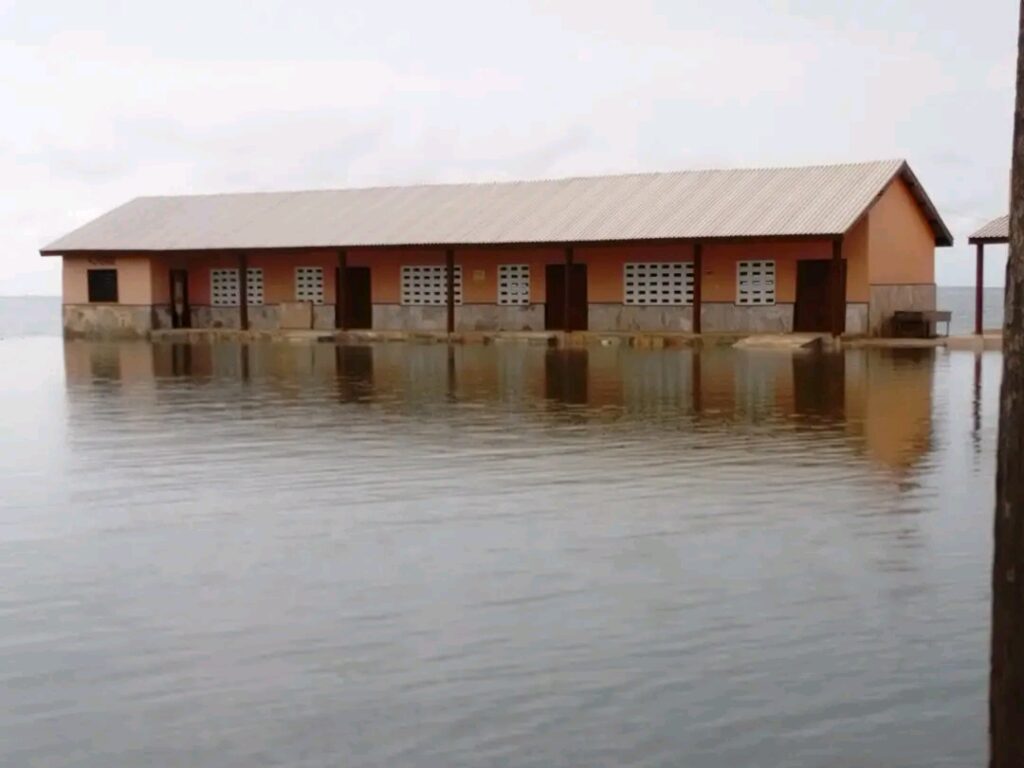
He further disclosed that 31 houses had collapsed as of the time of reporting, adding that the figure could increase as assessment teams continue to reach more remote communities.
Mr Blekpe commended the Anloga District Department of Agriculture for its support in compiling data on farmland losses and crop destruction, describing the collaboration as critical in presenting an accurate assessment of the disaster.
He explained that Anloga remains one of the most climate-vulnerable coastal districts in the Volta Region because of its low-lying terrain and proximity to the sea and lagoon systems. The district’s economy largely depends on fishing in the sea, the Volta River and the Keta Lagoon, as well as farming and trading.
Mr Blekpe appealed to the Government, the Volta Regional Coordinating Council, corporate organisations, non-governmental organisations, and philanthropists to provide emergency relief, including food, clothing, mattresses, and temporary shelter for affected residents.
Some farmers who spoke to the GNA described watching their crops—cultivated with their savings, labour, and hope—disappear beneath advancing floodwaters.
They appealed to the Anloga District Assembly, the Volta Regional Coordinating Council, the Ministry of Food and Agriculture, NADMO, and the Ministry of Works and Housing to deploy technical teams to assess the damage, provide emergency assistance, and implement long-term measures to permanently address the annual flooding.
GNA
Edited by: Maxwell Awumah/Audrey Dekalu