Koforidua, June 11, GNA – Mounting concerns over longstanding hospital bed shortages in major health facilities have prompted MTN Ghana Foundation to launch a nationwide intervention to refurbish beds and repair accessories to improve healthcare access.
The move follows years of public concern over Ghana’s “no-bed syndrome,” with assessments at the Eastern Regional Government Hospital in Koforidua revealing that one in five beds has been condemned.
The initiative, being implemented under MTN’s 2026 21 Days of Y’ello Care campaign, seeks to restore unusable hospital beds, expand healthcare access, and raise awareness about non-communicable diseases (NCDs) affecting underserved communities.
Addressing a ceremony in Koforidua on Wednesday, Mr Ransford Gyan, MTN Area Sales Manager for the Eastern, Volta and Oti Regions, said the Foundation had deliberately turned its attention to the health sector in response to growing concerns about the country’s no-bed syndrome.
“We’ve heard over the past few months about the no-bed syndrome within hospitals. So it is a key issue that, as a business and as a Foundation, we have taken it upon ourselves to address this time around,” he said.
He explained that the intervention forms part of the 19th edition of Y’ello Care, MTN’s employee volunteerism campaign, and also contributes to activities marking the company’s 30 years of operations in Ghana.
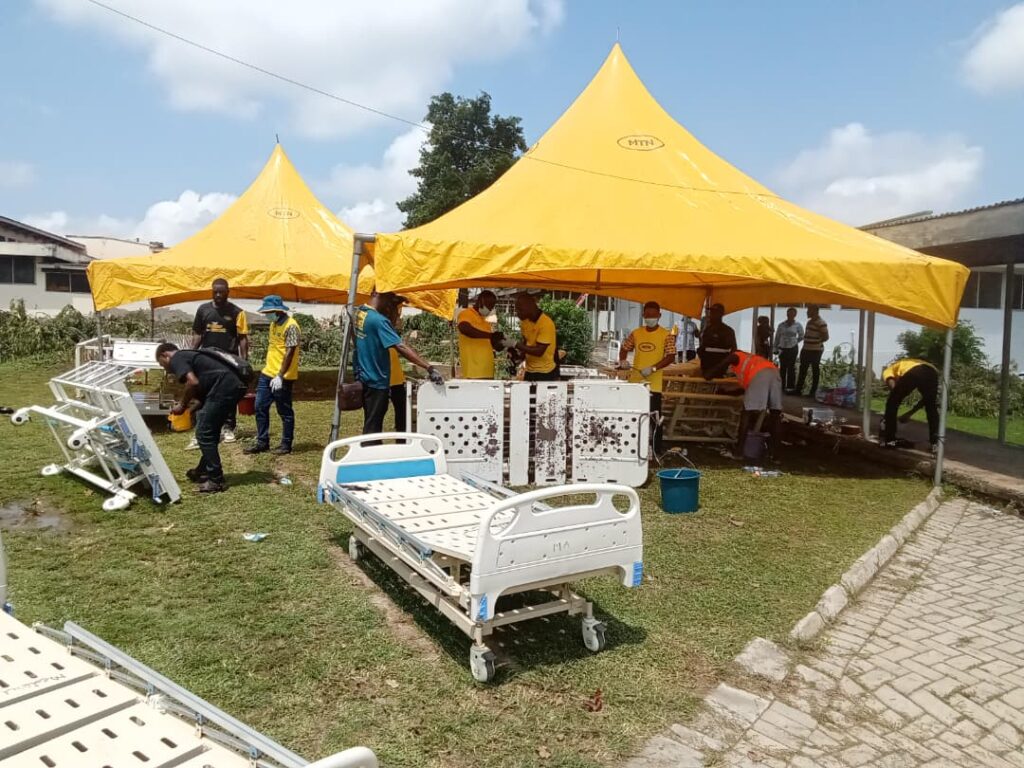
Over the next 21 days, MTN employees will work alongside contractors to refurbish hospital beds and related accessories at selected facilities, including the Eastern Regional Government Hospital and Ho Teaching Hospital.
Mr Gyan told the Ghana News Agency on the sidelines of the ceremony that the Eastern Regional Government Hospital was selected due to its strategic role in healthcare delivery in the region, adding that initial assessments revealed significant defects in hospital beds.
“To be frank, there were many beds that needed work. The contractor has promised that every bed with issues will be repaired and made usable and patient-friendly,” he said.
He described the shortage of hospital beds as distressing for patients and families seeking care, noting: “It becomes very disturbing when patients go into the hospital and there is a lack of beds for them to be treated on.”
He added that the initiative was intended to complement government efforts to improve healthcare delivery while drawing attention to long-standing but addressable gaps within the health system.
MTN officials said the intervention had been inspired by painful experiences associated with the no-bed syndrome, including the recent Charles Amissah case, which renewed public attention on the consequences of inadequate hospital capacity.
“A bed is what has stood between life and death for many others before and after him,” Mr Gyan said, stressing that a single repaired bed could make the difference between timely treatment and tragedy.
Earlier, Mr Charles Darko Premier, Managing Partner of Sika Pe Adjuma Company Limited, the maintenance engineering firm executing the project, said assessments at the hospital revealed the scale of the challenge.
He said about 20 per cent of the hospital’s beds had been condemned, while approximately 30 per cent remained in good condition.
The remaining beds require varying levels of maintenance, including wheel replacements, repainting, and structural repairs.
“Not all are broken, but a large number require maintenance to bring them back into proper use,” he explained.
Mr Premier said the exercise extended beyond beds to include trolleys, drawers, lockers, and other non-electrical hospital furniture.
Selected hospitals nationwide have been earmarked for the intervention, with plans to refurbish several beds across the country.
Beyond the refurbishment exercise, the Foundation will also conduct screenings and awareness campaigns on NCDs, HIV, and tuberculosis in underserved communities, including Nkurakan in the Eastern Region and Taviefe Gborgame in the Volta Region.
The outreach will focus on conditions such as diabetes, hypertension, and heart diseases, often described as “silent killers” because many people remain unaware of their condition until complications arise.
Officials said the campaign aligns with national efforts to tackle NCDs, including the Mahama Cares Initiative, which seeks to reduce the burden of chronic illnesses on individuals and the National Health Insurance Scheme.
The Foundation will also improve water, sanitation, and hygiene facilities in selected schools, train Health Champions to sustain health education after the campaign, and drive mHealth enrolment to connect communities to digital health services.
Hospital staff will also receive orientation on maintaining refurbished equipment to prolong its lifespan and sustain the gains of the intervention.
GNA
Reporter: D.I. Laary