Accra, June 9, GNA – The Ghana Maritime Authority (GMA) has urged global employers to tap into the Ghanaian labour market, saying the country offers disciplined, talented and culturally adaptable professionals.
The Authority made the call as it intensified efforts to secure international cadet placements for Ghana’s and Africa’s rapidly growing maritime talent.
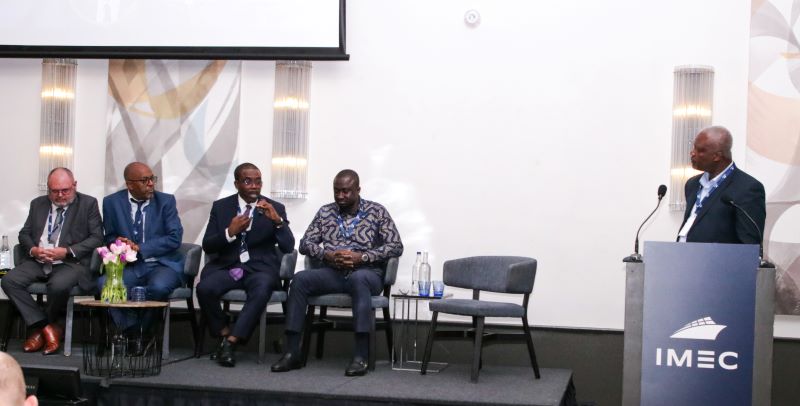
Mr Mubarick Masawudu, Deputy Director-General of the GMA, made the appeal at a conference organised by the International Maritime Employers’ Council (IMEC) in Southampton, United Kingdom.
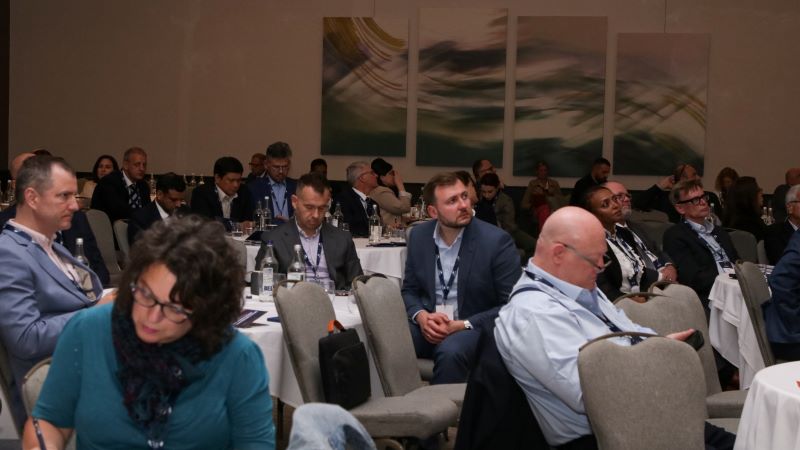
The conference, on the theme, “Putting People at the Helm,” brought together global shipping companies, policymakers, ship management firms and crew managers to deliberate on the rapidly evolving challenges facing the industry.
Speaking on the panel topic, “Is Africa the Next Frontier for Seafarers?” Mr Masawudu highlighted Ghana’s and Africa’s immense potential as sources of qualified and highly disciplined maritime professionals.
He noted that Ghana’s youth represented a readily developable talent pipeline for the global shipping industry, supported by relatively high literacy levels, strong English-language proficiency and a culture of discipline and hard work.
He said a defining strength of Ghana’s training model was its paramilitary-style approach, which combines rigorous academic preparation with strict discipline.
The approach, he explained, ensures that seafarers are physically, mentally and emotionally resilient enough to meet the demands of ship management companies.
Mr Masawudu said the high-quality training framework was strictly regulated by the GMA through a robust quality management system and supported by international training partnerships, ensuring alignment with rapidly changing global industry standards.
He noted that the calibre of Ghanaian personnel had been demonstrated by the long-term recruitment of Ghanaians by leading global shipping companies such as Pacific International Lines (PIL), Bernhard Schulte Shipmanagement (BSM) and Hafnia.
He added that some of those employers had established dedicated training centres in the country.
Highlighting Ghana’s demographic and historical advantages, the Deputy Director-General said the country possessed a large, skilled and highly trainable youth population.
Mr Masawudu said the young workforce was further strengthened by Ghana’s longstanding maritime heritage, with coastal communities having depended on the sea for trade, fishing and livelihoods for generations, resulting in a population with a natural affinity for maritime life.
Mr Masawudu acknowledged, however, that while Ghana possessed remarkably strong maritime foundations, it had historically lacked a coordinated national strategy to position itself in the highly competitive global maritime labour market.
To bridge the gap, the GMA, he said, recognised the need for a deliberate, government-led framework to seamlessly unify workforce development in the maritime sector.
The shift, he noted, underscored Ghana’s move to ensure the nation derived full socio-economic benefits from seafaring and the broader maritime labour market, and moving beyond simply producing trained seafarers to positioning its workforce strategically for maximum global opportunities.
“As a direct response, the National Seafarer Development and Placement Programme (NSDPP) has been developed as a cross-government initiative, requiring close, high-level collaboration among the Ministries responsible for Transport, Education, Youth Development, Foreign Affairs, and Finance,” Mr Masawudu explained.
The core objective of the NSDPP, he said, was to position Ghanaian seafarers as highly sought-after professionals.
“Under the NSDPP, Ghana targets growing its registered seafarer workforce from the current 5,500 to 20,000 by 2036, a scale at which minimum foreign exchange earnings from seafarer remittances are conservatively estimated at $360 million annually”, Mr Masawudu added.
The programme, he said also seeks to diversify beyond traditional deck and engine ratings, by deliberately targeting the growing global demand for technical and hospitality crew—including carpenters, electricians, plumbers, cooks, and waiters—aboard passenger vessels.
Beyond technical training, the scope of Ghana’s strategy, he said actively sought to strengthen social protection systems, elevate seafarer welfare, and champion greater gender inclusion within modern maritime careers.
“To ensure the programme’s long-term viability, sustainable financing mechanisms are currently being explored, including revolving funds, dedicated scholarship schemes and industry partnerships,” Mr Masawudu told the delegates.
The GMA Deputy DG informed delegates that Ghana’s global recruitment campaign was already yielding fruits, and gaining momentum built from GMA’s participation in various international maritime forums in 2025 where active partnerships were formed with major operators like Bahri Ship Management, Hafnia, Pacific International Lines (PIL) and Kuwait Oil Tanker Company (KOTC).
“Complementing these partnerships is the Authority’s ‘Go to Sea’ Campaign, a national initiative designed to attract high-quality young talent into maritime careers, he said.
He said, the campaign sought to significantly grow the labour pipeline beyond the more than 300 maritime graduates produced annually by the Regional Maritime University (RMU) and the Kwame Nkrumah University of Science and Technology (KNUST).
Mr Masawudu also announced that Ghana was seeking support from the International Maritime Organization to upgrade local training curricula, to ensure that Ghanaian seafarers and instructors developed vital competencies in alternative fuels, biodiversity-sensitive operations, and digital maritime governance.
Again, he called on global employers and crew managers to look beyond traditional labour markets and give Ghanaian cadets the critical sea-time and berthing placements they needed to prove their worth.
He expressed the hope that any operator who engaged with Ghana’s maritime workforce would earn immense value from the Ghanaian workforce.
GNA
Reporter: George Agboklu
[email protected]