By Edward Dankwah, GNA
Accra, June 2, GNA – Mr. Issifu Seidu, Minister of State for Climate Change and Sustainability, has called for urgent reforms in Ghana’s food system, to reduce the country’s dependence on food imports through climate-smart agriculture
This, he said, was critical to ensuring food security, economic resilience, and sustainable development.
He said Ghana’s agricultural sector, which contributed about 19 per cent of Gross Domestic Product (GDP) supporting the livelihoods of one in every three citizens, was increasingly threatened by climate change, environmental degradation, and rising production challenges.
The Minister was speaking at a workshop organised by the Office of the Minister of State for Climate Change and Sustainability in collaboration with the Plant Based Treaty under the theme, “Ghana Journey Towards Food System Resilience,” in Accra.
The workshop served as the foundational platform for shaping the future national policy framework, and a road map to address the climate and health crises, build nutrition security, food sovereignty, and economic development.
Mr. Seidu noted that Ghana spent more than 400 million dollars annually on poultry imports, describing the trend as a major drain on the economy and a setback to efforts to strengthen local production and food sovereignty.
He said changing weather patterns were already affecting the production of key staple crops, including cassava, yam, and plantain, while projections showed that severe crop failures could become more frequent in parts of Northern Ghana if urgent action was not taken.
The Minister said agriculture and land-use change accounted for approximately 44.6 per cent of Ghana’s greenhouse gas emissions, while deforestation, water pollution, and other forms of environmental degradation continued to threaten ecosystems and public health.
He highlighted the growing burden of malnutrition and diet-related non-communicable diseases, including hypertension, which were placing increasing pressure on the country’s healthcare system.
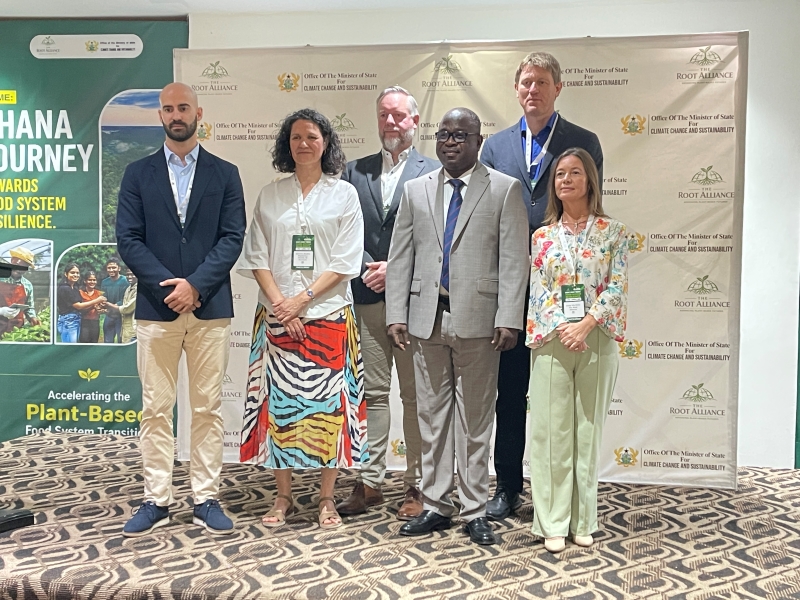
Mr. Seidu, however, said Ghana had a unique opportunity to transform its food system by promoting diversified, climate-smart, and nutrition-sensitive agricultural practices capable of improving productivity, strengthening resilience, enhancing nutrition, and creating sustainable livelihoods.
He said the transition should focus on expanding opportunities for farmers, strengthening local value chains, and increasing investment in sustainable food production systems.
The Minister urged stakeholders to use the workshop to identify practical policy, financing, and investment measures that aligned agriculture, health, trade, and climate objectives.
He stressed that building a resilient food system would require coordinated efforts from government institutions, farmers, the private sector, researchers, development partners, and local communities.
Mr. Seidu said the outcomes of the discussions would contribute to Ghana’s Climate Prosperity Plan and support the country’s commitments under international climate and development frameworks.
He called for scalable interventions that would boost agricultural productivity, reduce import dependence, protect the environment, and secure a healthier and more sustainable future for generations to come.
GNA
Edited by Linda Asante Agyei