By Albert Oppong-Ansah
Vienna, June 15, GNA –Ghana can strengthen food production and reduce climate-related agricultural losses by accessing crop technologies offered by the International Atomic Energy Agency (IAEA) to help countries develop stronger and more resilient crops.
IAEA Member states, including Ghana, could also access support to develop crops that withstand drought, disease, heat and other environmental pressures increasingly affecting agriculture.
The support comes as Ghana continues to experience changing rainfall patterns and dry spells that have disrupted agricultural production and raised concerns over food security.
Mr Elsadig Eltayeb Habora Amin, Laboratory Head at the Plant Breeding and Genetics Section at the joint FAO/IAEA Centre under the Department of Nuclear Sciences and Applications disclosed this to the Ghana News Agency in Vienna, Austria.
The centre, he said worked with counterparts around the world and that their services were based on request from the 181 member states.
He disclosed that crop materials from Ghana had already been received under collaboration arrangements available to member countries.
Mr Amin said countries could submit seeds or plant materials for scientific assessment and improvement before receiving promising varieties back for testing under local conditions.
He explained that the process uses controlled nuclear techniques to accelerate crop improvement but does not produce radioactive crops and that the service was free.
Mr Amin noted that improved crop varieties are tested under difficult conditions including drought, disease, salinity and heat before being recommended for local adaptation.
Beyond improving existing crops, he hinted that the centre was using advanced laboratory methods to develop technologies that enable countries to rapidly multiply healthy planting materials within a short period.
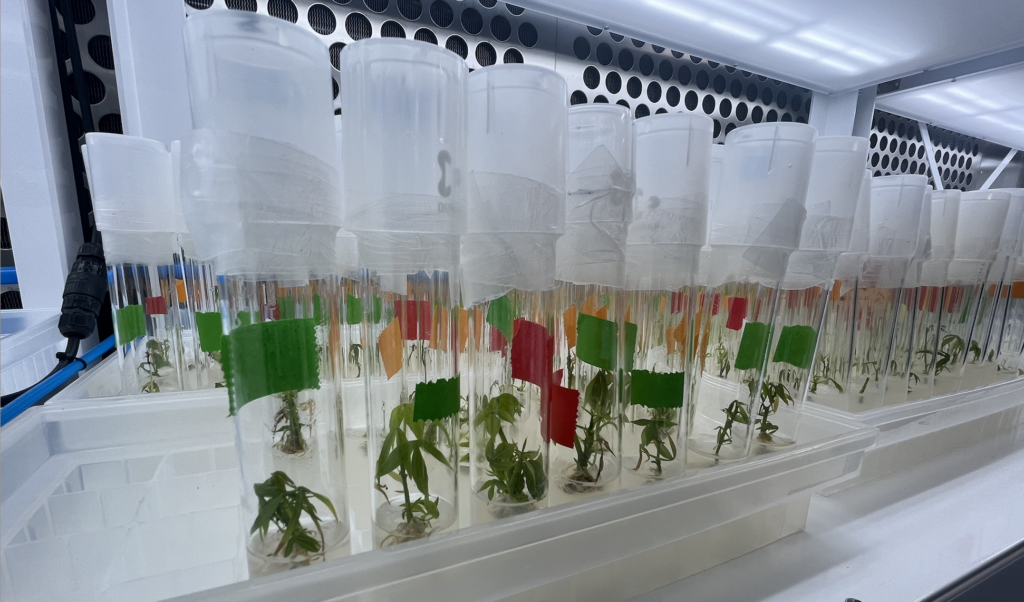
Mr Amin cited banana and cassava production as examples, explaining that the technology could support large-scale cultivation by rapidly multiplying planting materials that would otherwise take years to produce through conventional methods.
He said the approach could also support crops such as cassava, coffee and cereals.
Mr Amin added that all technologies developed under the programme were shared with member states and accompanied by training opportunities for researchers and technical personnel.
More than 3,500 improved crop varieties have been developed and distributed across 78 countries using International Atomic Energy Agency (IAEA)-supported technologies, with Ghana among member states accessing support to strengthen climate resilience and food security.
GNA
Edited by Lydia Kukua Asamoah
Writer: Albert Oppong-Ansah
Email: [email protected]
June 15, 2026