By Muyid Deen Suleman
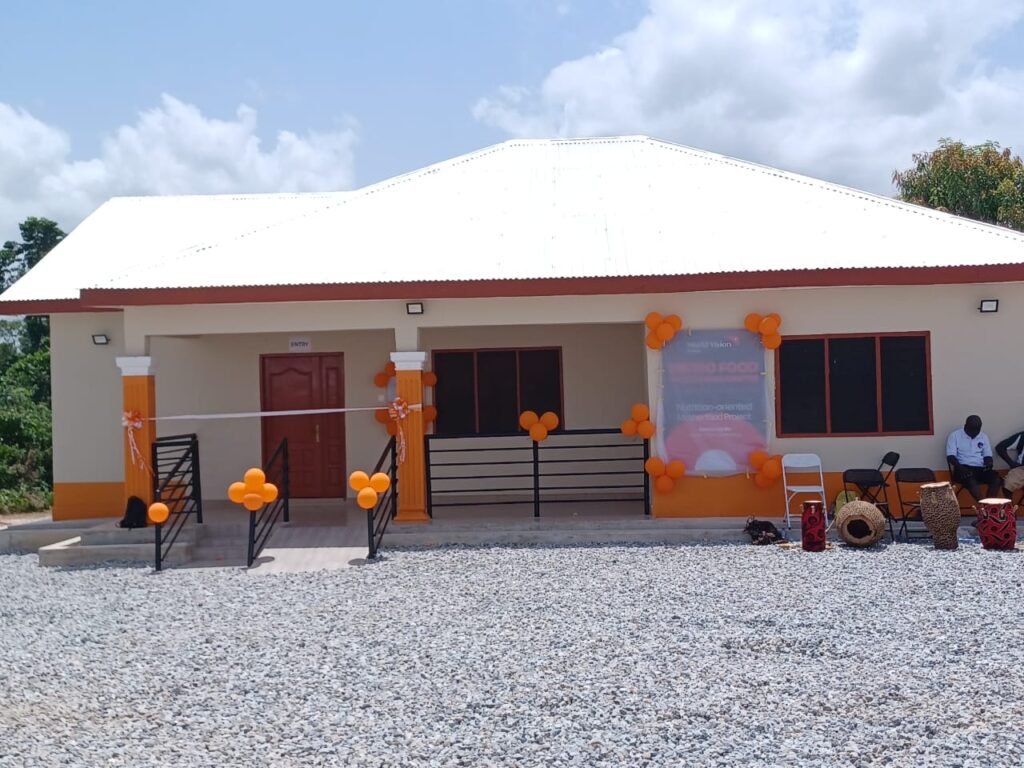
Ahwerewa (Sekyere East -Ash), May 14, GNA – The World Vision Ghana has commissioned a $50,000 micro-food processing centre for the Ahwerewa community in the Sekyere East District of the Ashanti Region.
The initiative, which brings together World Vision and its programme partners, is expected to support local women and children by improving access to processed, safe and nutritious foods while also creating steady livelihood opportunities for households in the area.
The centre was funded by World Vision, a Non-Governmental Organisation (NGO) and partners, under its Nutrition-Oriented Motherhood Project.
The project seeks to strengthen household nutrition practices through value addition, small-scale processing, and better feeding options for children and pregnant or nursing mothers.
In practical terms, the micro-food processing centre is expected to enable women groups to process locally available food items such as cereals, legumes and tubers into shelf-stable products that can be prepared more easily during busy days or lean seasons.
The centre is expected to be guided by food security, sustainable development and economic empowerment of women only.
To achieve this, World Vision intends to link the facility with community-based training and support that will help beneficiaries improve hygiene standards, adopt better storage methods, and manage small enterprises effectively.
Mr. Irvine Aboagye, Southern Operations Manager for the organisation, speaking at the commissioning, said the centre forms a landmark achievement that reflects the power of partnership, community leadership and shared vision.
He said the commissioning was not just about constructing a facility, but about enabling community members especially women to become active participants in solving the nutrition and livelihood challenges affecting their children.
He said one of the missions of the World Vision was to strengthen the foundation for child well-being at various communities including Ahwerewa and its surrounding communities.
According to him, improved maternal nutrition, access to safe foods, and better livelihood support contribute directly to healthier growth and development for children.
Mr. Aboagye noted that the World Vision always strived to ensure that communities were provided with interventions in nutrition, livelihoods, health, water and Sanitation, and education to address certain root causes of poverty.
He reaffirmed World Vision’s commitment to helping women and children of deprived communities for their developments, adding that beneficiaries were expected to be trained to run the centre responsibly, maintain equipment and follow best practices that protect the health of consumers.
Ms. Priscilla Babae, Area Program Manager for World Vision, in her address noted that the centre represents their collective commitment in empowering women and ensuring that communities have tools to strive on.
She urged the community to work hand in hand to make sure the initiative grows into a beacon of transformation for generations to come.
She further encouraged the women to take ownership of the project by participating actively in monitoring, decision-making and resource planning.
Mr. Ibrahim Adams, the DCE for the area, urged the community to cultivate the culture of maintenance for its sustainability and longevity.
He said regular cleaning, proper handling of machines, timely replacement of consumables, and adherence to hygiene procedures were essential to keep the centre functional and productive for years.
He also promised to assist the facility with a freezer to enhance their work.
GNA.
Edited by Yussif Ibrahim/Kenneth Odeng Adade
Reporter: Muyid Deen Suleman