By Samuel Yaokumah
Akropong-Akuapem (E/R), May 29, GNA – Stakeholders at an event to commemorate the 2026 World Menstrual Hygiene Day have called for a menstrual period-friendly Ghana, stressing that menstrual health is critical to girls’ dignity, education, health and future opportunities.
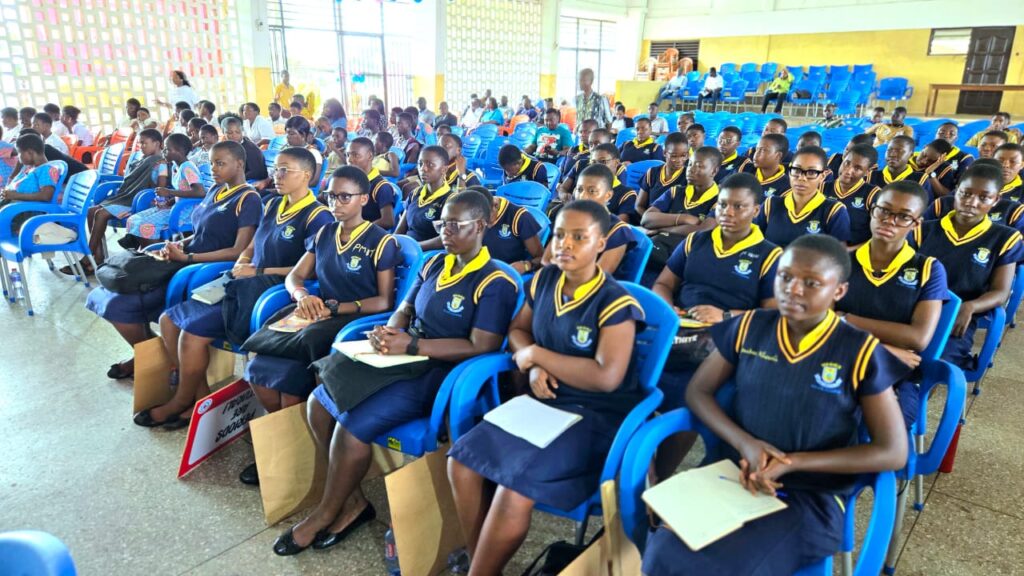
The call was made at Okuapemman School in Akropong-Akuapem during the national observance of the day, held under the theme: “Together for a Period-Friendly Ghana.”
The event brought together government officials, development partners, educators and students to promote menstrual health as a matter of human dignity, public health and educational equity.
It was organised by the National Technical Committee on Menstrual Hygiene Management (MHM), comprising the Ministries of Education, Gender, Sanitation and Health, with support from UNICEF, UNFPA, the World Bank, World Vision Ghana, WaterAid Ghana, Global Communities and Plan International Ghana.
Addressing participants on behalf of the Minister of Tourism and the Government, Mr John Evans Kumordzi, Municipal Chief Executive for Akuapem North, described menstrual hygiene as a national development issue requiring collective action.
“This day is not merely a commemoration of menstrual hygiene; it is a strong call to action,” he stated.
He said the Akuapem North Municipal Assembly had intensified Water, Sanitation and Hygiene (WASH) interventions in schools and undertaken classroom renovation projects to improve teaching and learning conditions.
Mr Kumordzi stressed that menstrual hygiene was not solely a women’s issue but one linked to human dignity, public health and educational opportunity.
“Every girl deserves the opportunity to attend school confidently, without fear of stigma, embarrassment or discrimination because of a natural biological process,” he noted.
He added that empowering girls ultimately strengthened families, communities and national development.
Professor Smile Gavua Dzisi, the Deputy Director-General in charge of Management Services at the Ghana Education Service (GES), reaffirmed the Service’s commitment to ensuring that no girl missed school because of menstruation.
“Menstrual hygiene is not a private matter; it is a public commitment,” she emphasised.
Professor Dzisi commended the Government’s sanitary pad distribution initiative, describing it as a significant step towards improving girls’ educational outcomes and wellbeing.
“Every girl is valued and deserves to smile each month,” she stated.
She further encouraged schools to create safe and supportive environments where menstruation could be discussed openly without fear or stigma.
Professor Dzisi also praised the active participation of boys in the programme, particularly those who took part in poetry recitals, describing menstrual health as a shared responsibility.
She called for boys and girls to be equipped with accurate information on menstruation and expressed confidence that what she called period poverty could be eliminated through sustained collaboration.
Also speaking at the event, Mr Sammy Awuku, Member of Parliament for Akuapem North, said the impressive academic performance of girls in the constituency strengthened his resolve to champion issues affecting girls and young women.
He stressed that menstruation should never be treated as a source of shame but recognized as a natural biological process essential to human life.
Explaining the significance of the theme, Mr Awuku said a period-friendly Ghana meant creating an environment where girls could participate fully in education and national life without barriers.
“When a child misses school because of her period, it affects parents, leaders and the wider community,” he observed.
He warned that period poverty and stigma could deprive the country of future talent and leadership if left unaddressed.
The event ended with a renewed call for collective action to eliminate period poverty and menstrual stigma, with stakeholders stressing that a period-friendly Ghana was essential to protecting girls’ dignity, improving educational outcomes and enabling them to realise their full potential.
The event also featured poetry recitals, a children’s panel discussion and cultural drama performances to promote menstrual health awareness, dignity and inclusion among young people.
GNA
Edited by D. I. Laary/Benjamin Mensah
Reporting by Samuel Yaokumah
Email: [email protected]