By Maxwell Awumah, GNA
Ho, May 7, GNA – Dr David Esinu Yao Normanyo, the Volta Regional Executive Secretary of the National Peace Council (NPC), has advocated the domestication of the Global Peace Index (GPI) into a localised Ghana Peace Index (GPI‑G) as a catalyst to reinforce peacebuilding measures for rapid national development and social cohesion.
He said the proposed GPI‑G benchmarking system would provide a structured and evidence-based framework to assess peace and stability across the country, particularly at the sub-national level.
Dr Normanyo made the call during a keynote address delivered to mark the 2026 World Press Freedom Day celebration at the Volta Press Centre in Ho, on the theme: “Shaping a Future of Peace.”
In an interview with the Ghana News Agency on the sidelines of the event, Dr Normanyo explained that the conceptualisation of the GPI‑G would function as a multi-dimensional diagnostic framework for national stability.
He said the index would go beyond aggregated statistical reporting to provide a granular analysis of Ghana’s internal security dynamics.
The Volta Regional Executive Secretary noted that while international metrics such as the Global Peace Index primarily focused on macro-level indicators, including militarisation and international relations, a localised Ghana Peace Index would concentrate on sub-national drivers of communal instability.
He explained that central to the GPI‑G framework would be the systematic monitoring of internal violence, including conflict-related fatalities arising from chieftaincy, land and ethnic disputes, as well as the proliferation of illicit small arms, which remained a critical trigger for communal hostilities.
Dr Normanyo said the index would also incorporate societal safety indicators, such as the incidence of violent crimes including armed robbery, kidnapping and aggravated assault, violent demonstrations and election-related tensions.
“Within the Ghanaian security landscape, state intervention will serve as a definitive proxy for the fragility of peace,” he said.
Consequently, he noted that the index would measure “Reactive Peace” through indicators such as the density and duration of curfews, as well as the frequency and scale of security force deployments.
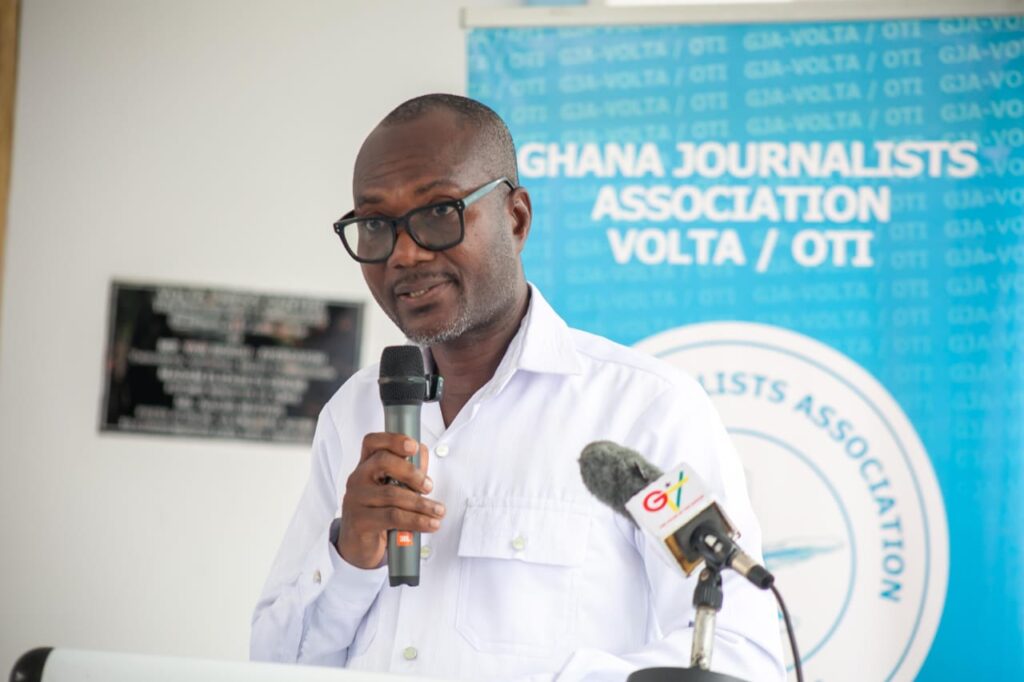
Dr Normanyo said the proposed Ghana Peace Index would adopt the rigorous methodological standards of the Institute for Economics and Peace, including a robust scoring system.
“This will involve data normalisation to ensure cross-district comparability, the application of weighted variables to reflect the relative impact of different conflict drivers, and qualitative assessments to contextualise quantitative findings,” he explained.
Dr Normanyo, who is also the Assemblyman for the Dzita Electoral Area in the Anloga District, said the resulting “Peace Score” would provide a localised benchmark for each region and district to facilitate data-driven policy interventions and strengthen early-warning mechanisms.
“To truly shape a future of peace, we must move beyond global averages and address localised tensions such as land disputes, chieftaincy conflicts and political friction that threaten to derail our development agenda,” he said.
He said a localised Ghana Peace Index would rank all the 16 regions and the 261 Metropolitan, Municipal and District Assemblies on their levels of peacefulness, identify fragile areas for proactive intervention by the National Peace Council and law enforcement agencies, and track how local media reportage contributed to either calming or inflaming tensions.
Dr Normanyo reminded journalists that the media played a critical role in shaping national consciousness and urged media practitioners to uphold the principles of peace journalism while holding duty-bearers accountable without fear or favour.
Meanwhile, according to the 2025 Global Peace Index, Ghana ranked 61st globally with an overall score of 1.898 and was the seventh most peaceful country in Sub-Saharan Africa, behind Mauritius, Botswana, Namibia, The Gambia, Sierra Leone and Madagascar.
Although Ghana maintained a high peace status, the wider Sub-Saharan African region recorded a 0.17 per cent deterioration in peacefulness, a development Dr Normanyo said underscored the need for sustained vigilance.
Ghana was also identified as one of only 14 countries globally involved in five or more external conflicts, largely through its participation in international peacekeeping operations, indicating that the country’s peace was not insulated from global security dynamics.
Dr Normanyo, a seasoned public servant with more than 29 years’ experience in public administration, peacebuilding and law enforcement, is a fellow of The Hague Academy for Local Governance and a Global Peace Index Ambassador of the Institute for Economics and Peace.
GNA
Edited by Lydia Kukua Asamoah
Reporter: Maxwell Awumah
[email protected]