By James Amoh Jnr, GNA
Accra, May 27, GNA – Ghana and Jamaica have reaffirmed their longstanding historical and diplomatic ties, committing to deepen cooperation in health, trade, culture, tourism and reparatory justice.
At the Third Session of the Ghana-Jamaica Permanent Joint Commission for Cooperation (PJCC) in Accra on Tuesday, the two countries pledged to strengthen bilateral engagement and advance Pan-African solidarity.
The session, held after a 21-year hiatus since the last meeting in Kingston in 2005, brought together ministers, diplomats, technical experts and senior government officials from both countries to explore new areas of collaboration and review existing partnerships.
Mr Samuel Okudzeto Ablakwa, the Minister of Foreign Affairs, described the meeting as a historic milestone anchored on shared ancestry, common heritage and mutual respect between the two nations.
“It testifies to our shared desire to deepen bilateral relations and strengthen decades of mutual respect, engagement and sustained cooperation guided by the Pan-African ideals championed by two visionaries, Jamaica’s Marcus Garvey and Ghana’s Dr Kwame Nkrumah,” he said.
The Minister noted that relations between Ghana and Jamaica were rooted in a shared history shaped by the transatlantic slave trade, which had evolved into bonds of solidarity, cultural kinship and purposeful cooperation.
Mr Ablakwa commended Jamaica for supporting Ghana’s successful push at the United Nations to secure the landmark resolution declaring transatlantic enslavement the gravest crime against humanity.
He said Jamaica played a key role throughout the negotiations and co-sponsored the resolution alongside other Caribbean nations.
The adoption of the resolution, the Minister said, had already produced significant international outcomes, including recent commitments by French President Emmanuel Macron to repeal slavery-era laws and collaborate with Ghana on reparatory justice and the restitution of African artefacts.
He also cited apologies issued by the Church of Scotland and the Catholic Church for their historical involvement in the slavery.
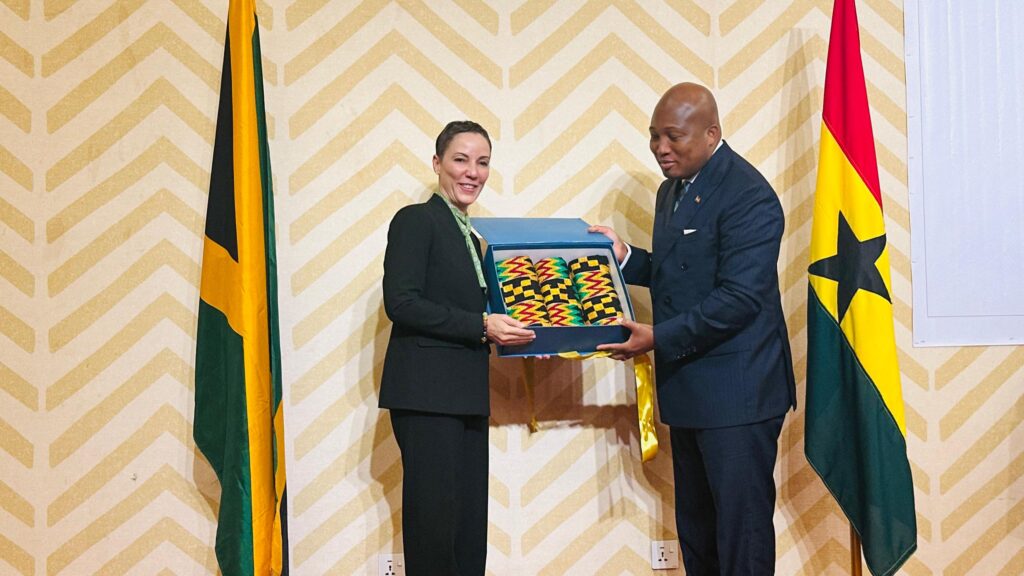
“These are very significant developments, very historic developments, which cannot be downplayed,” he stated, adding that they represented an important phase of healing and restoration of dignity for people of African descent.
Mr Ablakwa urged that the PJCC moved beyond ceremonial agreements to focus on implementation and measurable outcomes that would positively impact citizens in both countries.
He identified health, agriculture, education, climate resilience, technology transfer, tourism and human capital development as priority areas for enhanced collaboration.
One of the major highlights of the session was the signing of a bilateral health workforce mobility agreement between the two countries.
Mr Ablakwa noted that Ghana’s hosting of the African Continental Free Trade Area Secretariat and Jamaica’s strategic location in the Caribbean presented opportunities for stronger commercial partnerships between businesses in both countries.
He disclosed that President John Dramani Mahama had directed the technical committee working on the revival of Ghana Airways to prioritise direct flights between Ghana and the Caribbean once the national airline resumed operations.
The Minister also revealed ongoing discussions on establishing resident diplomatic missions through the opening of Ghanaian and Jamaican High Commissions in both countries.
The visa waiver agreement between Ghana and Jamaica, which took effect in July 2019, had strengthened people-to-people relations and increased travel for business, tourism, cultural reconnection and spiritual renewal, he noted.
Mr Ablakwa further invited Jamaica to participate in Ghana’s upcoming “Next Steps Conference” on reparatory justice scheduled for June, as well as the “Black Star Experience and Diaspora Summit” in December.
Senator Kamina Johnson Smith, Jamaica’s Minister of Foreign Affairs and Foreign Trade, said the agreement established a formal framework for the deployment of Ghanaian health professionals to Jamaica.
The agreement, she said, would strengthen healthcare delivery and workforce capacity in Jamaica while creating employment, skills exchange and professional development opportunities for Ghanaian health workers.
“The agreement demonstrates the collective commitment of both governments to deepening cooperation within the health sector through structured, ethical and mutually beneficial health workforce mobility arrangements,” she said.
Senator Johnson Smith disclosed that the first batch of Ghanaian health professionals was expected to depart for Jamaica in June 2026 after the completion of final administrative processes.
The agreement reflected the deep trust and enduring friendship between Ghana and Jamaica, she noted, adding that both countries were committed to ensuring fair labour conditions, professional protection and supportive working environments for Ghanaian health professionals working in Jamaica.
She expressed confidence that the partnership would serve as a model for responsible international cooperation on health workforce mobility between Africa and the Caribbean.
The session also explored opportunities to strengthen trade and investment relations between the two countries.
GNA
Edited by Agnes Boye-Doe