By Anthony Adongo Apubeo
Bolgatanga, April 2, GNA – World Vision Ghana has supported the Bawku West and Tempane District Health Directorates with ultra-light wheeled coolers to enhance vaccine storage and improve health services, particularly in hard-to-reach communities.
The Bawku West District Health Directorate received 35 coolers, while the Tempane District Health Directorate received 25 coolers for onward distribution to health facilities within the districts.
Additionally, 50 coolers will be distributed to state institutions across the two districts, including the Department of Agriculture, bringing the total number of coolers supplied to 110.
The donation, made under World Vision Ghana’s Gift-in-Kind Support Programme to its Bawku West and Garu-Tempane Programme Areas, is aimed at addressing challenges associated with vaccine preservation, especially in rural areas with limited access to reliable electricity.
Presenting the items at separate locations, Mr Joseph Edwin Yelkabong, said the items were supported by World Vision United States of America to strengthen healthcare delivery in the organisation’s operational areas.
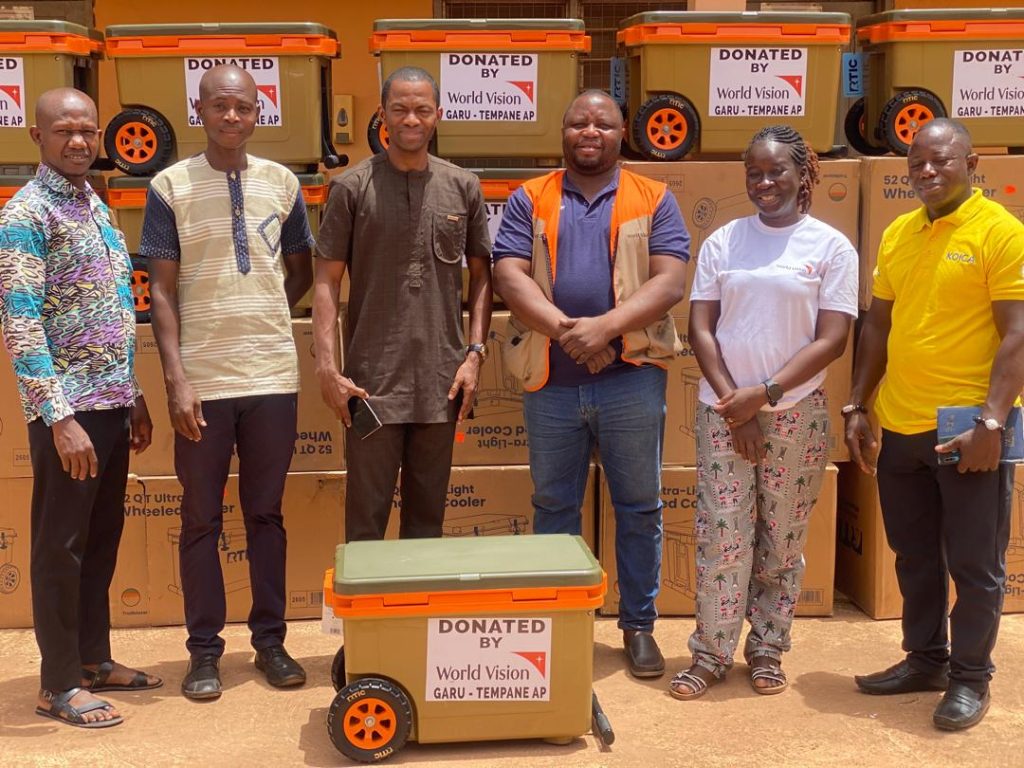
He explained that the coolers were designed to maintain low temperatures for extended periods, making them suitable for storing vaccines at Community-based Health Planning and Services (CHPS) compounds and other facilities without stable power supply.
“We are aware that access to refrigeration is a challenge in some of your catchment areas due to erratic power supply. These coolers will help preserve vaccines after opening so that they do not lose their efficacy,” he said.
Mr Yelkabong noted that the intervention formed part of World Vision’s broader efforts to strengthen health delivery systems and support frontline health workers in rural communities.
“We expect that these will be sent to facilities that need them most, especially CHPS compounds, to improve service delivery and ensure vaccines remain potent for use,” he added.
He further stressed the need for proper utilisation and monitoring of the items, cautioning against misuse, and called for stronger collaboration between World Vision and the Ghana Health Service through joint monitoring of supported facilities.
“We want to be intentional about our interventions and ensure that what we provide translates into improved outcomes. Joint monitoring will help us understand challenges on the ground and prioritise our support,” he said.
Receiving the items on behalf of the Bawku West District Director of Health Services, Mr John Kalifa Akubilla, expressed gratitude to World Vision Ghana and its donors for the timely intervention.
He said the donation would significantly improve vaccine storage and distribution, particularly in remote areas where erratic power supply continues to disrupt health services.
He cited instances where health workers had to transport vaccines over long distances due to lack of electricity, noting that such challenges compromised service delivery.
“Recently, one of our sub-districts in Sapeliga had to transport vaccines over about 10 kilometres to the district hospital because there was no power for three days. With these coolers, we can store vaccines and maintain their potency for effective use,” he said.
Mr Akubilla emphasised that maintaining vaccine quality was critical to ensuring beneficiaries received the intended protection.
“If vaccines are not stored properly, they lose their potency. It is even better not to vaccinate than to administer ineffective vaccines,” he noted.
He assured the donors that the items would be distributed to the areas of greatest need and used strictly for their intended purpose to enhance healthcare delivery in the district.
On his part, Mr Eugene Osei Yeboah, thanked World Vision Ghana for the gesture, noting that it was timely, as about 50 per cent of health facilities in the area lacked access to electricity.
He assured that the items would be used for their intended purpose to improve healthcare delivery in the district.
GNA
Edited by Caesar Abagali /Audrey Dekalu