By Benjamin A. Commey, GNA
Accra, April 02, GNA — A group of graduate students from the University of Ghana has launched a youth-focused media literacy campaign aimed at tackling the growing threat of misinformation, disinformation, and hate speech among young people in the country.
The initiative, dubbed: “Think Before You Share,” is being undertaken by five master’s students from the Department of Communication Studies as part of their coursework in Community Relations and Corporate Social Responsibility.
The project is being implemented under the auspices of the department.
The campaign was launched at the Applied Institute of Technology and Engineering-Oriented Senior High School at East Legon, where students were taken through practical steps to verify information before sharing it on social media.
Speaking on behalf of the team at the campaign launch, in Accra, on Wednesday, Ms Linda Emefa Daniels, said the project was designed to support national efforts to address rising information disorder in the country.
She said the initiative would focus on senior high school students using a “catch them young” approach to instil fact-checking habits early.
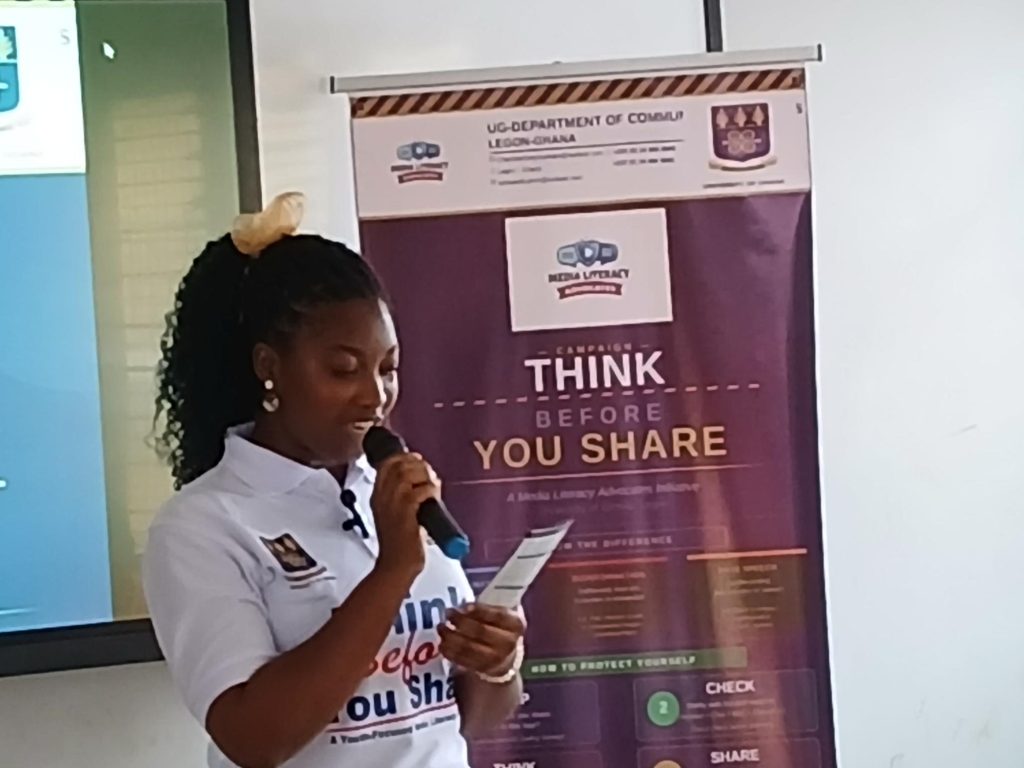
Ms Daniels said the project would also facilitate the development of practical tools and best practices for responsible online communication and help students appreciate the risks and possible sanctions associated with sharing false information.
As part of its implementation, she explained that the team plans to organise a series of seminars involving media practitioners, legal experts and institutions working in the information space, as well as establish media literacy clubs in schools to sustain the campaign.
The initiative is being undertaken in partnership with Dubawa, a fact-checking organisation.
Mr Nathan Gadugah, an Editor at Dubawa, said media and information literacy remained a critical tool in combating false information, noting that fact-checking often came after damage had already been done.
“When false information is churned out, people take decisions based on it, and sometimes the harm has already been done,” he said.
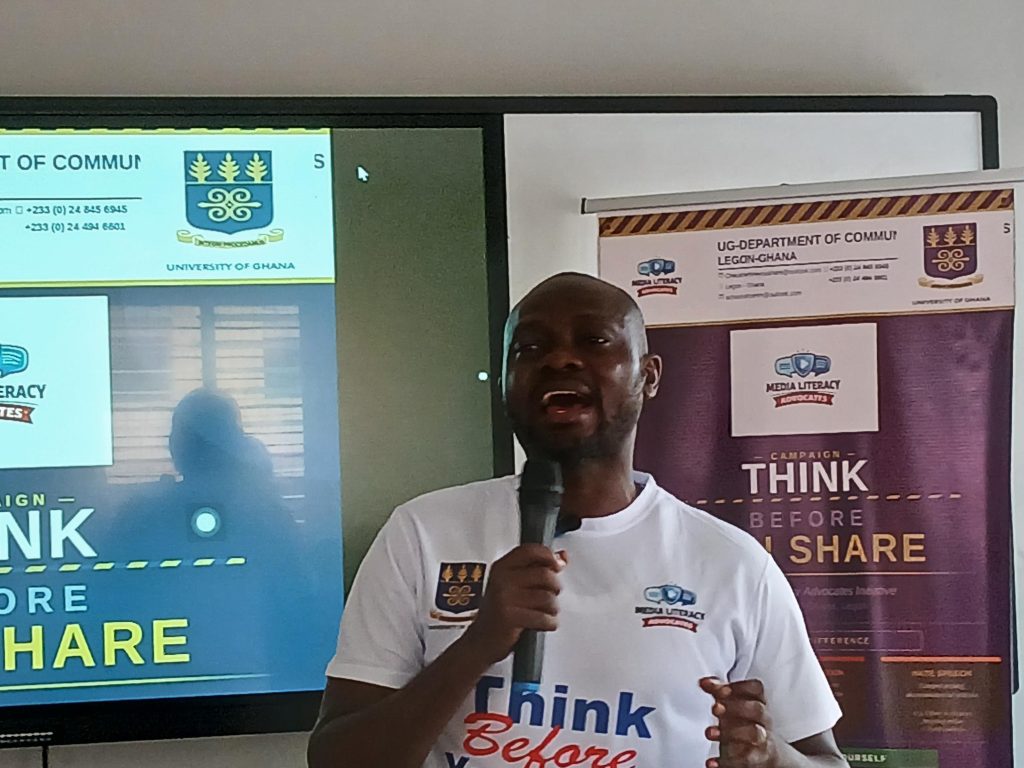
He explained that empowering people at an early age to independently assess information was critical to minimising, if not eradicating the growing canker.
He expressed concerns over the growing commercialisation of disinformation, stressing that this posed a major challenge to curbing trend.
“It’s just like galamsey, and the challenges we are having to go through in fighting galamsey is the same thing. People are actually cashing in on disinformation. So it means we have a long way to go,” Mr. Gadugah indicated.
The fact-checker cautioned the public against blind trust in digital content, especially with the rise of artificial intelligence, stating that “seeing is no longer believing,” urging the public to subject information to critical scrutiny before sharing.
Miss Thelma Badu, a student participant, demonstrated understanding of the concepts by distinguishing misinformation as false information shared without intent to harm, disinformation as deliberate falsehood, and malinformation as truthful information used maliciously.
She lauded the initiative, noting that the training had equipped students with practical steps such as pausing, verifying from credible sources and thinking critically before posting content online.
Mr Norbert Ayamga, Vice-Principal of the host school, welcomed the initiative and described communication as a powerful tool for development.
He urged students to be mindful of what they share, noting that disseminating false information could have far-reaching consequences for society.
Mr Ayamga expressed optimism that the programme would enhance students’ communication skills and contribute to a more responsible information ecosystem.
Ms. Fiona Laryea, another member of the team, assured that the campaign would be extended to other senior high schools across the country as part of efforts to build a more informed and resilient youth population.
GNA
Kenneth Odeng Adade