By Solomon Gumah, GNA
Tamale, April 25, GNA – The University for Development Studies (UDS) has inaugurated five infrastructure projects at its Tamale Campus aimed at strengthening teaching, research, and community service delivery.
The projects, funded largely through the University’s Internally Generated Funds (IGF) with support from partners including Access Bank Ghana, included a Health Sciences Laboratory Complex, a School of Nursing and Midwifery Complex, a Twin Lecture Auditorium, a Dental Clinic, and an Information and Communication Technology (ICT) Complex.
Professor Seidu Al-Hassan, Vice-Chancellor of UDS, speaking at the inauguration of the projects, described the development as a significant milestone in the University’s quest to build a responsive and self-reliant institution.
He said the projects reflected prudent financial management, strategic planning, and the institution’s commitment to excellence in teaching, research, and community engagement.
He said, “These facilities are a testament to our resolve to build a university that responds to the development needs of society while maintaining high standards in academic delivery.”
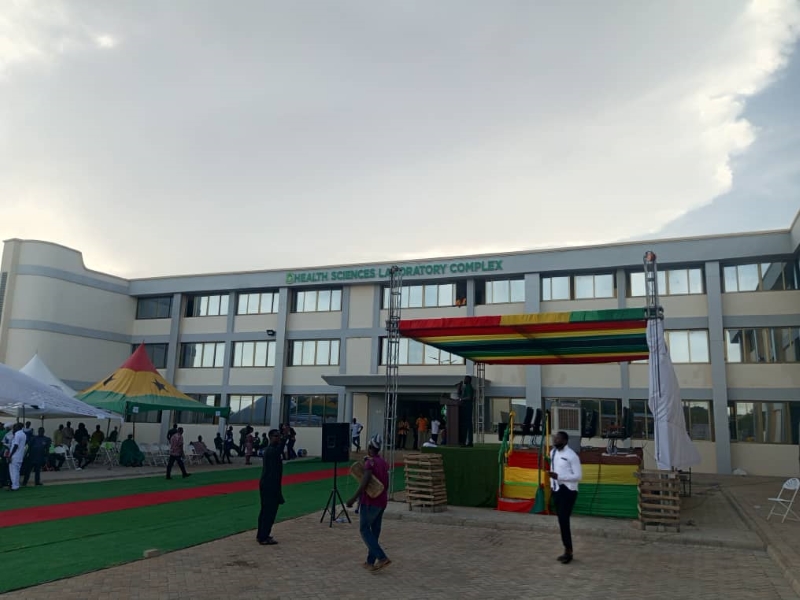
Professor Al-Hassan said the Health Sciences Laboratory Complex, which included laboratories for histopathology, hematology, dentistry, anatomy, and pharmacology, would significantly enhance practical training and research in health-related programmes.
He explained that the facility would also help address the persistent challenge of limited infrastructure, which had constrained admissions into medical programmes despite high demand.
He said, “With this facility, we are better positioned to engage government to increase student intake into our medical programmes.”
He spoke on the School of Nursing and Midwifery Complex saying the facility, which could accommodate about 3,300 students at a time, would improve the training of health professionals without compromising quality.
He added that the facility also featured multiple lecture halls, skills and industry laboratories, offices, and an 800-seat auditorium providing a conducive environment for both students and staff.
Professor Al-Hassan touched on the Twin Lecture Auditorium saying it had 600-seat capacity and would serve as a multi-purpose space for lectures, conferences, and examinations to easing pressure on existing facilities.
He announced the establishment of a Dental Clinic, which is expected to become fully operational next month to provide hands-on clinical training for students while offering oral healthcare services to the public.
He added that the ICT Complex would enhance digital innovation, teaching, learning, and administrative efficiency, saying plans were underway to commission a Medical Emergency Centre through a public-private partnership.
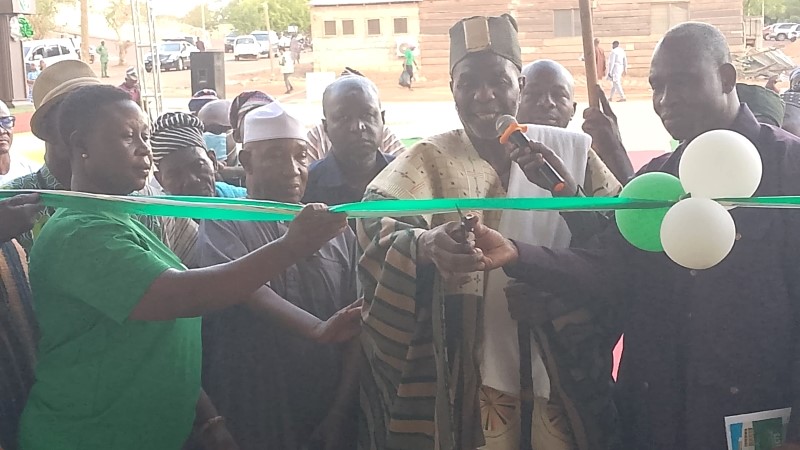
Sagnar-Naa Ambassador Yakubu Abdulai, Paramount Chief of Sagnarigu Traditional Area commended the University’s leadership for transforming the campus into a vibrant academic hub.
He described the projects as symbols of opportunity and hope that would benefit both the University and the wider community.
“What we are witnessing today is not merely the commissioning of physical structures but the realisation of a vision through deliberate investment in education and human capital.”
He urged students to take full advantage of the facilities to pursue academic excellence and called on Management to ensure proper maintenance to sustain the infrastructure.
GNA
Edited by Eric K. Amoh /Kenneth Odeng Adade