By Hannah Awadzi
Accra, April 29, GNA – Dr. Edward Ampratwum, Head of the Transformative Governance Cluster at UNDP, has said that despite Ghana’s progress in establishing legal and policy frameworks for disability inclusion, systemic exclusion, and inequality continue to hinder the full participation of particularly women and girls with disabilities
He said that disability inclusion was not a standalone issue but central to the credibility, effectiveness, and sustainability of national development efforts.
Dr. Ampratwum was speaking at a workshop organised by the Ghana National Association of the Deaf (GNAD), with funding support from the United Nations Development Programme (UNDP), on key provisions of the Convention on the Rights of Persons with Disabilities (CRPD) and the Persons with Disabilities Act, Act 715.
The workshop, on the theme “Empowered Women with Disabilities Crucial for Inclusive Leadership and Advocacy”, brought together women and girls with disabilities from various organisations.
The workshop forms part of ongoing efforts to strengthen advocacy, leadership, and inclusion of women and girls with disabilities in Ghana’s development processes.
It was informed by a comprehensive Situational Analysis on the Rights of Persons with Disabilities in Ghana, which provided an honest assessment of achievements and persistent gaps.
Dr. Ampratwum noted that UNDP’s role extends beyond supporting capacity-building activities, positioning itself as a systems broker and convener.
“We work with Government, Organisations of Persons with Disabilities, and development partners to help transform capacity into influence, advocacy into reform, and commitments into measurable outcomes,” he said.
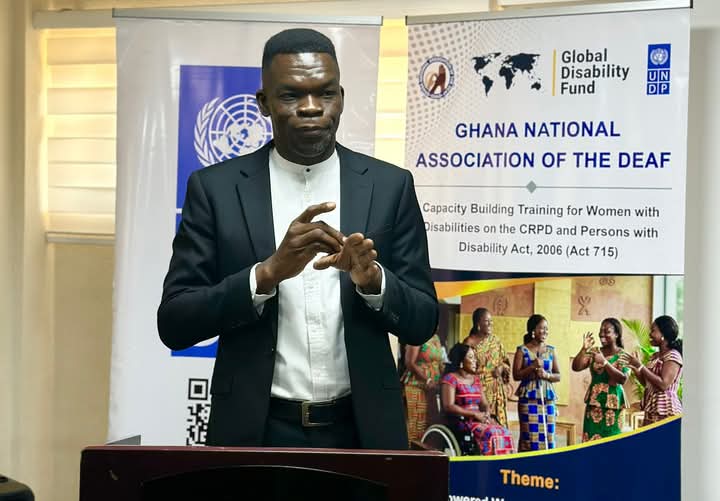
Mr Juventus Duorinaah, Executive Director of GNAD, said building the capacity of women and girls with disabilities is essential to empowering them to claim their rights and take up leadership roles.
He expressed the observation that limited confidence and persistent barriers continue to restrict their ability to contribute meaningfully, making targeted support critical for advancing inclusion.
Mr. Edwin Kweku Andoh, Executive Secretary of the National Council on Persons with Disability, said that women with disabilities continue to face barriers that limit their participation in leadership and decision-making.
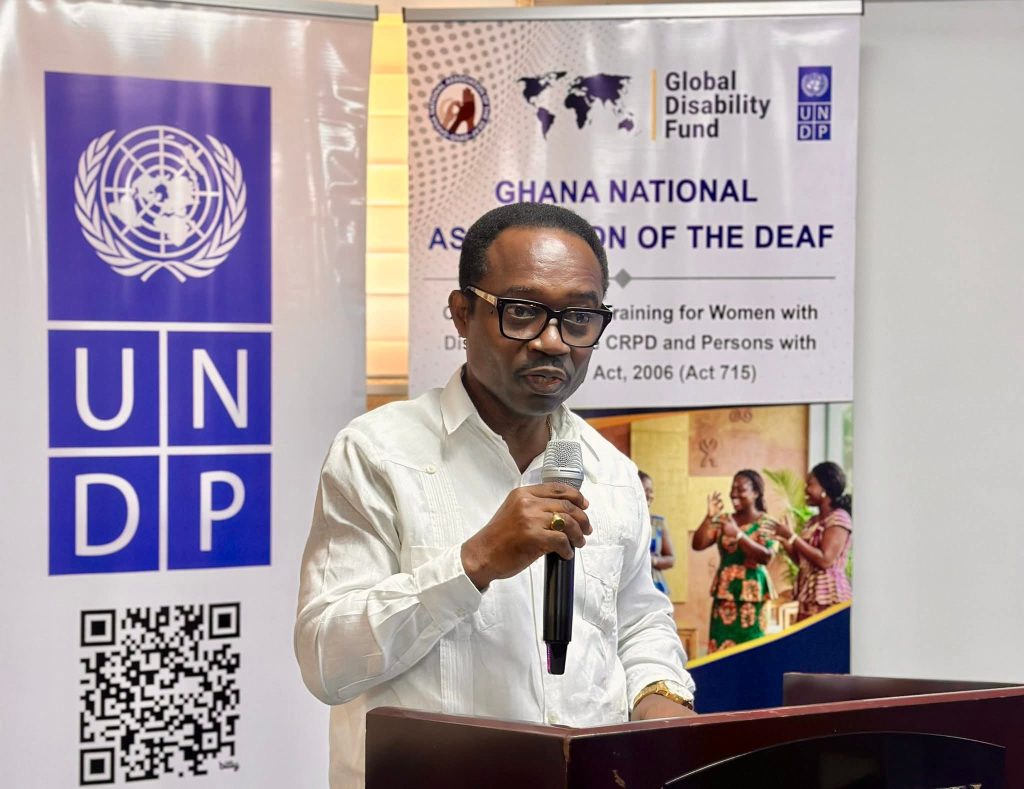
He said the workshop aimed to build their capacity and equip them with tools needed to confidently take up leadership roles and advocate for their rights.
Sharing her personal experience, Ms. Bernice Yawo Agboda, a lady with albinism, recounted how she was forced to drop out of school due to low vision. She explained that at a point in her schooling, her demand for extra support felt like begging for favour, which eventually compelled her to discontinue her education.
GNA
Kenneth Odeng Adade