By Eric Appah Marfo
Accra, April 3, GNA – The National Road Safety Authority (NRSA) has advised drivers against the use of drugs and other intoxicating substances while driving, warning that such practices impair judgment and increase the risk of road crashes.
Mr Joshua Quist, the Greater Accra Regional Director of the Authority, expressed concern over the increasing use of substances and drugs such as tramadol and “red,” among some drivers, particularly the youth.
“These substances affect the brain and impair judgment. When you are driving under their influence, your ability to make the right decisions is compromised, and that can easily lead to crashes,”he said.
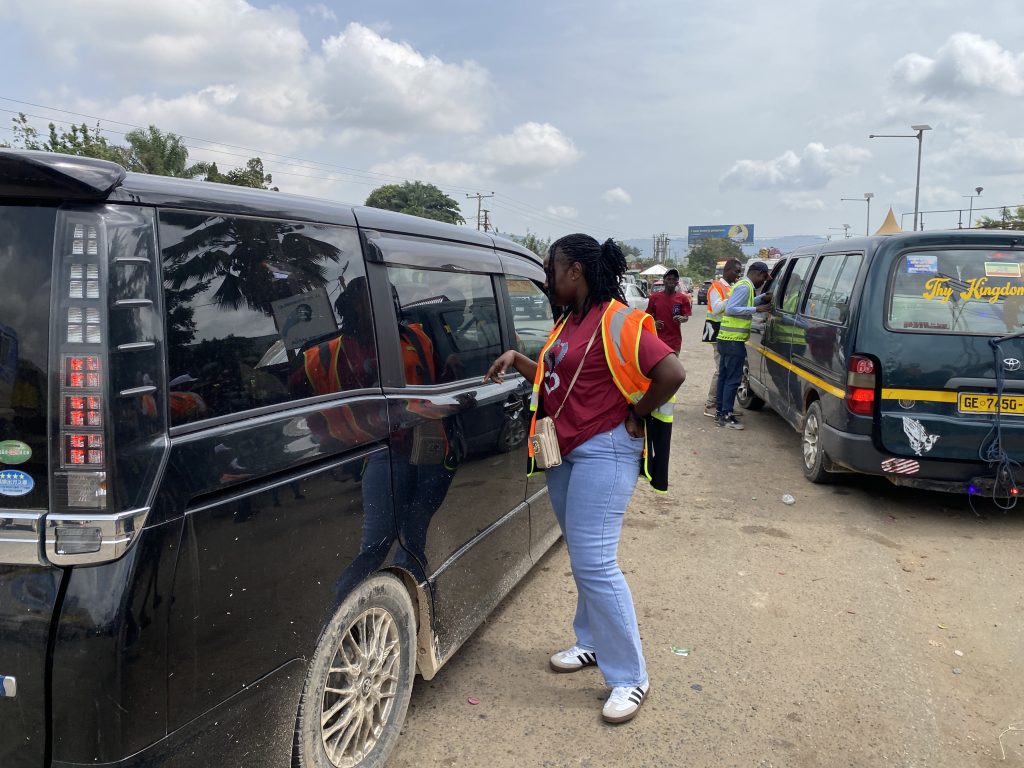
He gave the caution on Good Friday during an in-traffic sensitisation exercise at the Linda Dor rest stop along the Accra–Suhum–Bonso highway in the Eastern Region.
The exercise forms part of an ongoing Visibility Programme being undertaken by the NRSA, in collaboration with the Motor Traffic and Transport Department (MTTD) of the Ghana Police Service, to intensify road safety education and enforcement along major highways before, during and after the Easter festivities.
Touching on alcohol consumption, Mr Quist said the legal blood alcohol concentration limit had been reduced from 0.08 to 0.05 and warned that drivers who exceeded the threshold risked sanctions.
He explained that road crashes in Ghana tended to increase during festive periods such as Easter due to heightened travel and excitement among road users.
“Month-on-month statistics show that crashes normally rise around March and April because of Easter, during August to September because of other festivities and December due to Christmas,” he said.
Mr Quist attributed many of those crashes to behavioural factors, including speeding, wrongful overtaking, distracted driving, drunk driving and drug use.
He highlighted wrongful overtaking as another major cause of crashes, explaining that overtaking required careful judgment and calculation.
The Regional Director cautioned drivers against distractions, including the use of mobile phones while driving, and urged passengers not to engage drivers in ways that could divert their attention.
He underscored the importance of seatbelt use, noting that it played a critical role in protecting occupants during crashes.
Mr Quist said road crash fatalities increased from 2,494 in 2024 to 2,949 in 2025, describing the trend as worrying.
He noted that out of the fatalities recorded, a significant number involved commercial and private vehicles, while about 46 per cent of deaths were linked to motorcycle-related crashes.
“In Greater Accra alone, out of 420 deaths recorded, about 226 were from motorcycle crashes,” he added.
Mr Quist cautioned motorcycle riders, particularly those operating in rural and peri-urban communities, against overloading and not wearing helmets.
He said the Authority was working to regulate the motorcycle transport sector, including encouraging riders to form unions and register, as well as introducing identification measures.
The Director highlighted new child safety measures, explaining that children below 12 years, those under 145 centimetres in height or weighing less than 36 kilogrammes, were required to sit in the back seat with appropriate restraints.
He expressed worry over fatigue driving, noting that many inter-city transport operators did not comply with the requirement for relay driving.
Drivers were expected to rest after about eight hours of driving or ensure the availability of a second driver for long journeys, he added, noting that fatigue could lead to dizziness and loss of control.
Mr Quist encouraged passengers to play an active role in ensuring safety by advising drivers to slow down or rest when necessary.
“Road safety is a shared responsibility. Passengers must speak up and support drivers to make safe decisions,” he said.
Superintendent Emelia Asiedua Gyekye of the MTTD at Kibi in the Eastern South District, said the Police were adopting proactive enforcement strategies to prevent crashes during the festive period.
She explained that education formed a key part of enforcement, aimed at correcting behaviour before offences were committed.
“Police presence on the road makes drivers more cautious. Our goal is to prevent crashes before they happen,” she said.
She identified unnecessary overtaking, speeding, non-use of seatbelts and failure by motor riders to wear helmets as some of the common offences observed on the highways.
Superintendent Gyekye dismissed claims by some drivers that the absence of road signs justified reckless driving, noting that signs were placed at critical points but often misunderstood.
“Road signs are available, but many drivers do not understand their meanings. We encourage them to study the road traffic manuals provided during licensing,” she said.
She advised drivers to exercise patience, particularly on busy highways where traffic flow was heavy, while urging them to comply with police checks along the highways to ensure safety.
GNA
Edited by Agnes Boye-Doe