By Michael Foli Jackidy, GNA
Ho (V/R), March 18, GNA – The University of Health and Allied Sciences (UHAS) Basic School (UBS) has marked its fifth anniversary of academic excellence with a call for renewed commitment to quality education and institutional growth.
The celebration, held on the theme, “UBS at 5: A Solid Foundation for Excellence,” took place on Wednesday at the UHAS campus in Ho.
The school also launched its five-year Strategic Plan to guide its development over the next phase.
Ms Yaa Amankwaah Opuni, Registrar of UHAS, described the milestone as both a moment of reflection and a call to action.
“This anniversary is not only about celebrating how far we have come, but also about reaffirming our shared commitment to excellence in education,” she said.
She noted that over the past five years, the Basic School had grown steadily into a model institution within and beyond the University, attributing the progress to the dedication and professionalism of management and staff.
Ms Opuni outlined key expectations for staff as captured in the Strategic Plan, including a sustained commitment to academic excellence, professionalism, and ethical conduct.
She urged teachers to maintain high standards in teaching, assessment, and learner support, while also serving as role models to students.
She emphasised the need for continuous professional development, innovation in teaching methods, and adaptability to evolving educational demands.
According to her, accountability, teamwork, and efficient use of resources would be critical in achieving the school’s long-term goals.
“Education is dynamic, and we must evolve with it. We expect staff to embrace innovation and contribute ideas that will strengthen teaching and learning outcomes,” she added.
Ms Opuni also stressed the importance of nurturing students beyond academics, noting that UBS must continue to provide a safe, inclusive environment that promotes discipline, confidence, and character development.
Dr Cynthia Sena Kpeglo-Freiku, former Registrar of UHAS, traced the history of the school, explaining that it was established with a vision to create an elite university-based basic school comparable to those of University of Ghana, University of Cape Coast, and Kwame Nkrumah University of Science and Technology.
She said the school was designed to provide high-quality education for children of staff and the wider community, serve as a model for best practices in basic education, support teacher training, and research, and strengthen the University’s community engagement.
Dr Kpeglo-Freiku emphasised that such a vision required strong academic standards, a well-structured curriculum, highly trained teachers, and a learning environment that promotes critical thinking, creativity, and leadership.
Prof. Theophilous Fleischer, former Board Chairman of UBS and Chairman for the occasion, called for collective stakeholder support to sustain the school’s growth.
He stressed that building an excellent institution required collaboration among management, teachers, and parents, adding that moral and character development must remain central to education.
“Training future leaders without moral excellence would mean building on a weak foundation,” he cautioned.
Mr Seth Korgah, Head of the Basic School, recounted the school’s journey, noting that it was established to provide quality basic education primarily for children of the staff of the university.
He said despite challenges, including its establishment during the COVID-19 pandemic, the school had grown from an initial enrolment of 84 pupils to 317, with a current staff strength of 47.
He highlighted key achievements, including participation in the Basic Education Certificate Examination (BECE), active involvement in sports through the University Basic Schools Sports Association, and practical learning initiatives such as field trips, clean-up exercises, charity outreach, and career guidance programmes.
The school also recorded success in athletics during its maiden appearance at a national competition, winning gold and silver medals in track and field events.
Mr Korgah acknowledged challenges such as inadequate classroom space, the need for a reliable water supply system, more computers for e-learning, and additional library resources.
He expressed gratitude to stakeholders, including parents, management, and donors, for their continuous support in cash and in kind.
The Vice-Chancellor of UHAS, Prof Lydia Aziato, officially launched the five-year Strategic Plan, outlining seven key thematic areas to guide the school’s development.
These include promoting holistic educational excellence, strengthening administrative systems, attracting, and retaining high-quality staff, creating a conducive learning environment, ensuring accountability, and building strong partnerships with parents and stakeholders.
She urged all stakeholders to support the implementation of the plan to ensure sustained excellence and measurable impact.
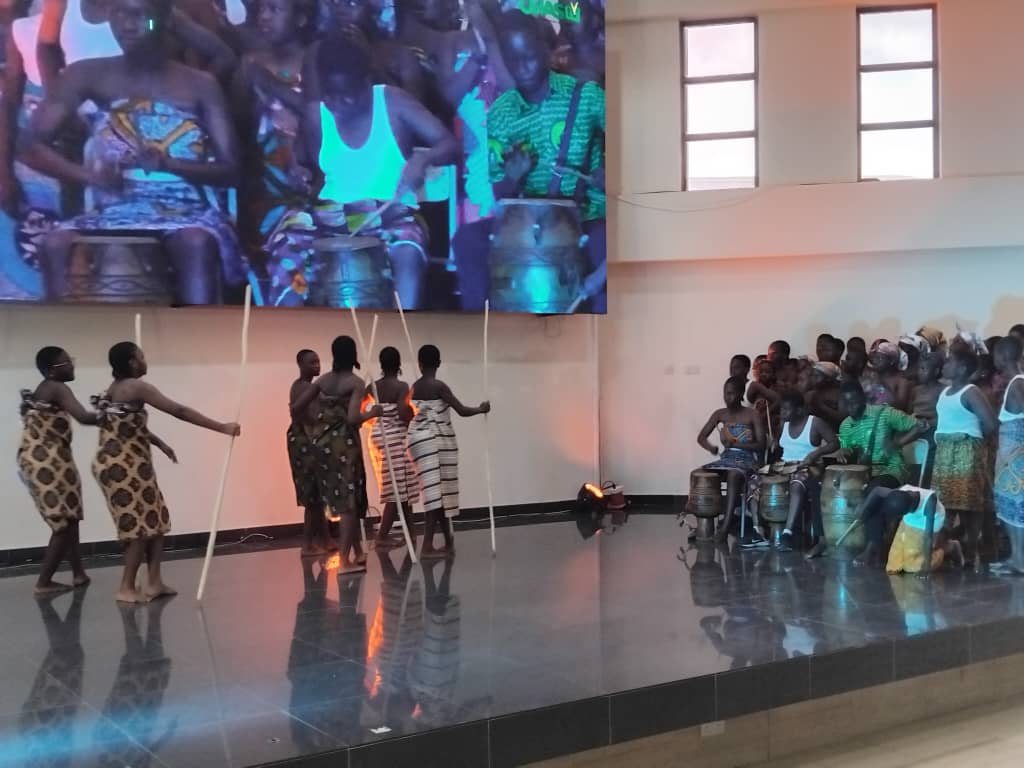
As part of the event, the school also inaugurated its cultural troupe to promote Ghanaian and African cultural heritage among learners.
GNA
Edited By: Maxwell Awumah/Linda Asante Agyei