By Elsie Appiah-Osei
Accra, May 22, GNA – Alban Sumana Kingsford Bagbin, Speaker of Parliament, has called on Commonwealth member states, particularly the United Kingdom, to strengthen cooperation in addressing growing global instability and insecurity.
Speaking during a courtesy call by a delegation from the Royal College of Defence Studies at Parliament House in Accra, Mr Bagbin said the world was experiencing a period of profound uncertainty that demanded collective action among nations with shared values.
“It is only when people enjoy security and stability that development becomes meaningful,” he stated.
He stressed the importance of countries “bonding and moving together” to find lasting solutions to global challenges, noting that peace and security were prerequisites for sustainable development.
Mr. Bagbin expressed satisfaction that the Commonwealth alliance remained resilient despite current global tensions and geopolitical shifts.
“We are having a different era in which the uncertainties are becoming too profound, and we encourage you to keep moving together,” he urged.
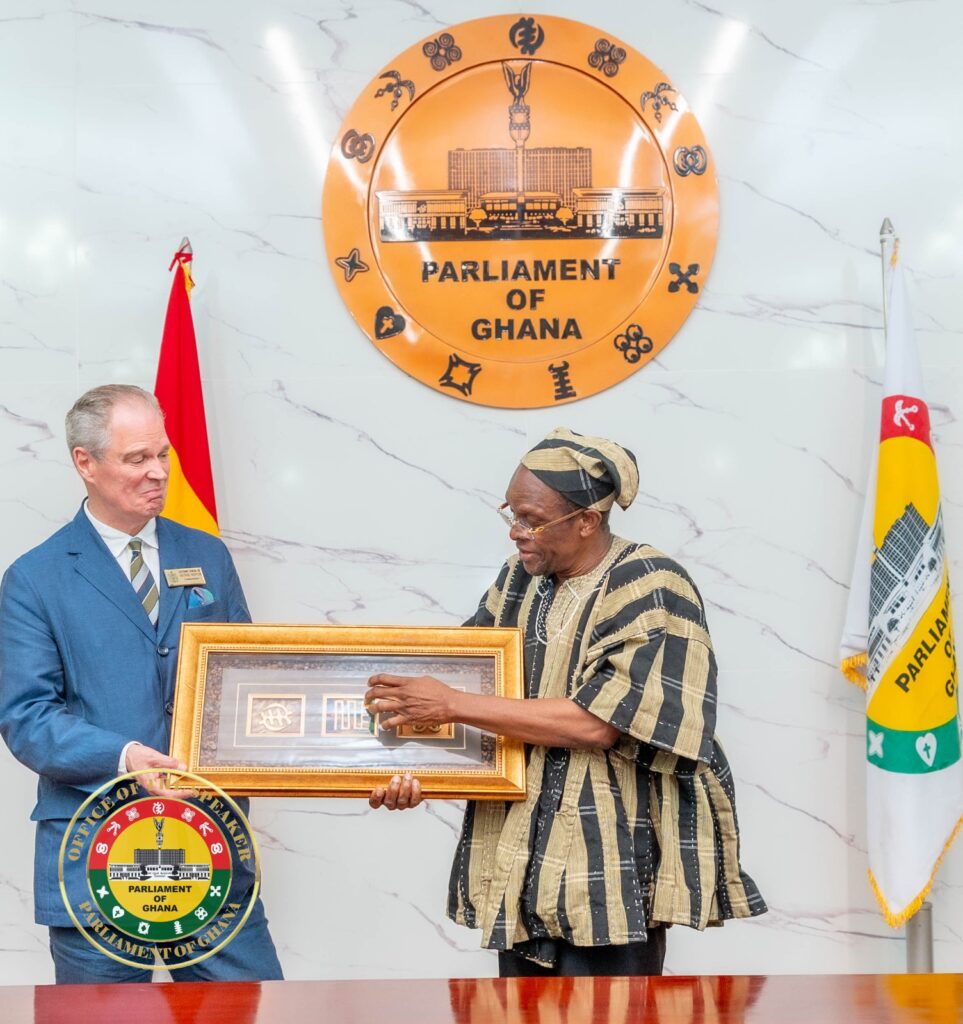
The delegation, made up of senior security experts from nine countries, was led by Sir George Norton. The team is in Ghana to study security challenges and opportunities while exchanging experiences with Ghanaian institutions and other Commonwealth partners.
The Speaker observed that the timing of the delegation’s global tour reflected the seriousness of the current international security environment and called for stronger collaboration among Commonwealth nations.
“There is no need to split, and we still need to work together. I am happy with the recent experience that Europe seems to be getting closer to Africa than before,” he said.
Referring to the UK’s departure from the European Union, Mr Bagbin noted that nations should not wait for crises or painful experiences before recognising the value of cooperation.
“We do not need to learn the bitter lesson of the UK exiting the European Union before we work together because we are one and the same people,” he added.
He further stated that greater unity among nations would enable countries to support one another more effectively and promote healthier, longer lives for citizens worldwide.
“We are not here to compete among each other, as we are well endowed because each has his potential if given the right environment to flourish,” he said.
Mr Bagbin described the Royal College of Defence Studies as a strategic institution that had trained many leaders across the Commonwealth since the colonial era.
Touching on emerging technologies, the Speaker raised concerns about the growing impact of artificial intelligence on employment and global security systems.
“If you do not do that, before you realise many of you will be unemployed. Security will not use human intervention but AI,” he cautioned.
Responding, Sir George Norton explained that the college focused on preparing senior security officials for high-level strategic decision-making.
“Our focus is at the grand strategic level and it is really about understanding the challenges and opportunities facing the world and how we might best address them,” he said.
The Royal College of Defence Studies is the UK’s senior military and strategic leadership institution, training senior military officers, diplomats, civil servants, and international partners for leadership roles in defence and international security.
Founded in 1927 as the Imperial Defence College, it was renamed the Royal College of Defence Studies in 1970.
GNA
Edited by Audrey Dekalu
Reporter : Elsie Appiah-Osei