By Maxwell Awumah, GNA
Ho, March 13, GNA – The Ho Zonal 2026 Active Citizenship and Accountability Dialogues (AAACD) has ended with a call to action, to design and strengthen policies aimed at empowering the youth to be change agents for rapid development and industrialisation.
This year’s dialogue was convened by the STAR-Ghana Foundation in collaboration with the Global Action for Women Empowerment (GLOWA), a Ho-based development entity, and attracted participants including chiefs, queens, the youth, and representatives of political parties.
It was on the theme: “Beyond Partisanship: Youth, Active Citizenship, and Ghana’s Democratic Future.”
Dr Harrison Kofi Belley, a Governance Lecturer at the Ho Technical University, in his keynote address, indicated that the youth currently stood at the crossroads of history, to either remain as passive observers of national challenges or rise up as active citizens to shape the destiny of their communities and nation.
He said through activism, community service and volunteerism, young people could address critical societal issues, and drive positive change within their enclaves through education, skill development, and civic engagement.
The Lecturer described a citizen as more than a legal member of a state, which was a living relationship, a bond of rights and responsibilities with a true citizenship demanding participation, accountability, and service.
He emphasised that active citizenship depicted stepping beyond political party loyalty, identifying the gaps in the democratic space, “as the late democracy advocate, Anthony Akoto Ampaw, once upheld” and filling them with courage, collaboration, and sacrifice.
He paid glowing tribute to the late Akoto Ampaw, a legal luminary and political advocate, whose reflections were firmly rooted in activism in community, civil society and in the conviction that ordinary citizens could drive extraordinary change, which must be embraced by young people.
He said “Akoto Ampaw’s legacy is collaboration, which he demonstrated through civil society, could thrive not in competition, but in unity. Today’s activists must learn that pulling people along, even when they resist, is the essence of civic struggle.”
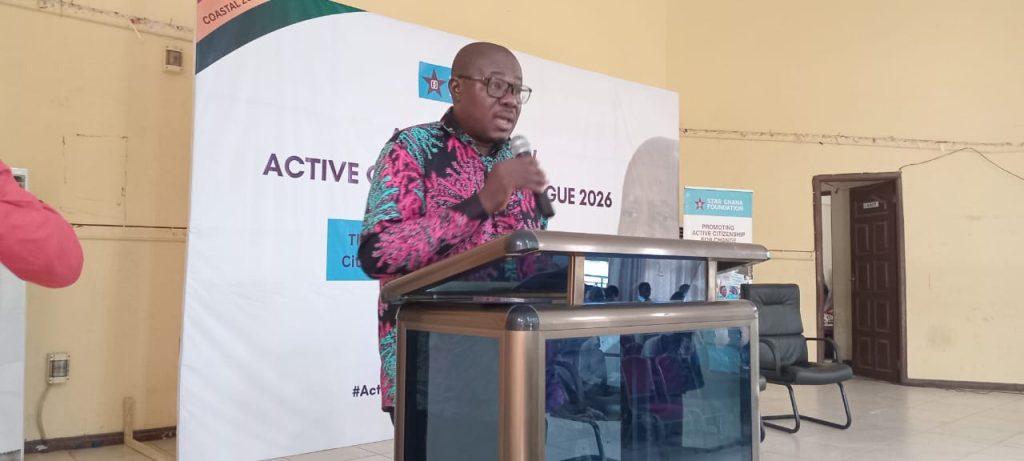
Dr Belley, also Regional Chair of the Ghana Journalists Association observed that the once bounding characteristics of sense of patriotism, spirits of communal labour and volunteerism were now invincible, while youth activism is reduced to partisan slogans, while the pressing needs of farmers, artisans, and traders remain unanswered.
He exhorted the youth to demand accountability, transparency, and solutions for their common good from leadership and avoid asking for personalised favours as these frowned against activism.
He said the “youth of Ghana are its greatest asset and with energy, innovation, and ambition, could propel economic growth, social justice, and democratic accountability. But this potential must be harnessed through education, skill development, and civic engagement.”
Quoting President Nelson Mandela, “The youth of today are the leaders of tomorrow,” Dr Belley asked, “The question is not whether Ghana’s youth will lead, but how. Will they lead with division, or with dedication to service? Will they be remembered for slogans, or for sacrifice? The time to choose is now.”
Madam Eunice Agbenyadzi, the Head of Programmes at STAR-Ghana Foundation emphasised the dialogue sought to promote inclusive platforms for reflection and engagement on youth participation, civic responsibility, and democratic governance within an increasingly polarised environment.
She said the dialogue was envisioned to reposition active citizenship as a consistent, values-driven and non-partisan responsibility towards Ghana’s democratic consolidation and development, believing that the calibre of participants would engender greater discussions on the subject matter.
Focusing on the role of young people as democratic stewards, Madam Agbenyadzi said the forum is expected to address how polarization affects youth engagement, civic organising and collective action, in a socio-political context.
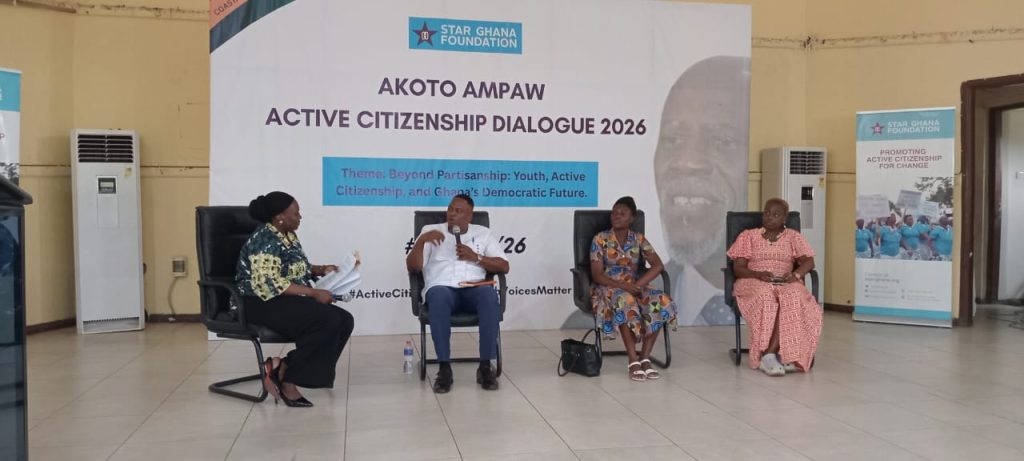
In a panel discussion, Mr Mawulorm Kwame Klutse, the Founder of the Volta Business Consortium, entreated citizens to be the actual change for others to emulate.
He said citizen activism should transcend beyond projecting political ideologies at the expense of national interest and development.
Ms Edith Allan Ablormeti, the Assembly Member, Akome called on government to direct adequate and deliberate resources towards the operations of the National Commission for Civic Education (NCCE) to bring especially the youth in active citizen activism as mandated by the Constitution.
She noted that where partisan politics thrives, good reasoning is over-shadowed, and development suffers, urging the youth to demand accountability at all times.
Ms Patrice Robertson, the Executive Director, Eclectic Love urged the NCCE to leverage social media, which harboured the chunk of the youth, to complement their Constitutional roles towards nation building processes.
GNA
Edited by Christabel Addo