By Iddi Yire, GNA
Accra, March 25, GNA – President John Dramani Mahama has led a wreath-laying ceremony at the African Burial Ground National Monument in New York.
The sacred ground is the resting place of more than 419 Africans buried during the late 17th and 18th centuries in a portion of what was the largest colonial-era cemetery for people of African descent, some free, but most enslaved.
President Mahama is in New York to table a motion at the United Nations (UN) declaring slavery and the transatlantic slave trade the gravest crime against humanity.
In his address at the wreath laying, President Mahama said amongst people of African descent throughout the Diaspora, as well as indigenous Africans on the continent, the collective rituals surrounding death were a communal experience, from its announcement to its recognition through ceremony.
“If you travel to Africa, from the top of the continent to the bottom, in most cities, towns, and villages, you will see notices of people’s deaths—not small obituaries in newspapers, but flyers, posters and billboards—plastered all around,” he said.
“Listed on them is usually a litany of names of the bereaved. Not just immediate relatives, but also names of extended family members, whether they are local or living abroad, and tribal or community leaders.”
He said all the people to whom the deceased belonged, and the funeral services were often attended by people who were not personally acquainted with the deceased.
“That’s because we do not mourn as individuals. We mourn as families. We mourn as communities. We sometimes mourn as nations. In this case, we are mourning as an entire community today,” the President said.
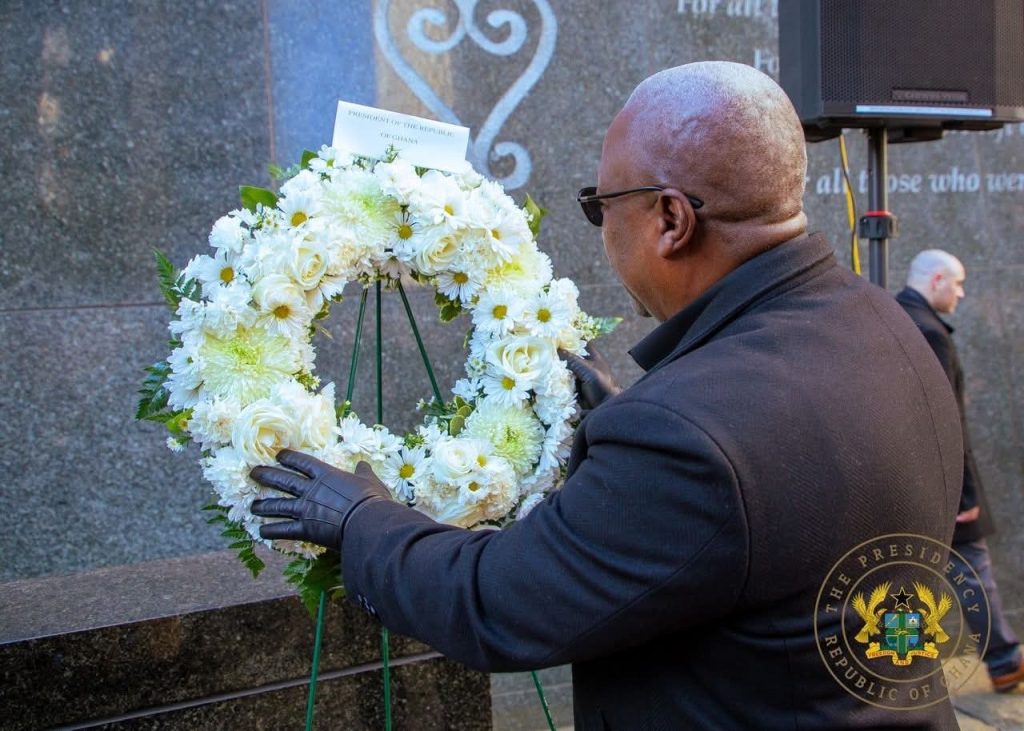
President Mahama, who is also the African Union Champion on Reparations, said he was at the African Burial Ground National Monument in New York on behalf of the 1.4 billion citizens of the African continent.
“We lay down this wreath to honour the memories of the nearly 20,000 Africans who are buried on these grounds, some of whom were free but most of whom were enslaved,” he stated.
The President said enslaved Africans were transported from there to the British colonies in the Caribbean and America; stating that those individuals were referred to as Coromantees.
He said in 1665, Fort Kormantine was seized by the Dutch in retaliation because the British had taken many of its territories and holdings—such as the Dutch colony of New Amsterdam, which, just a year earlier in 1664, had been captured by the British and renamed New York.
President Mahama said this burial ground was believed to have been in use as early as the mid-1600s, but the first written record of its existence dates to 1712.
He said that year, there was an uprising in New York led by the Coromantees, who gained a reputation across the so-called New World for being rebellious.
He said this was because the Coromantees led revolts wherever they were taken: South Carolina, Jamaica, St. John, Antigua, Barbados, and Guyana.
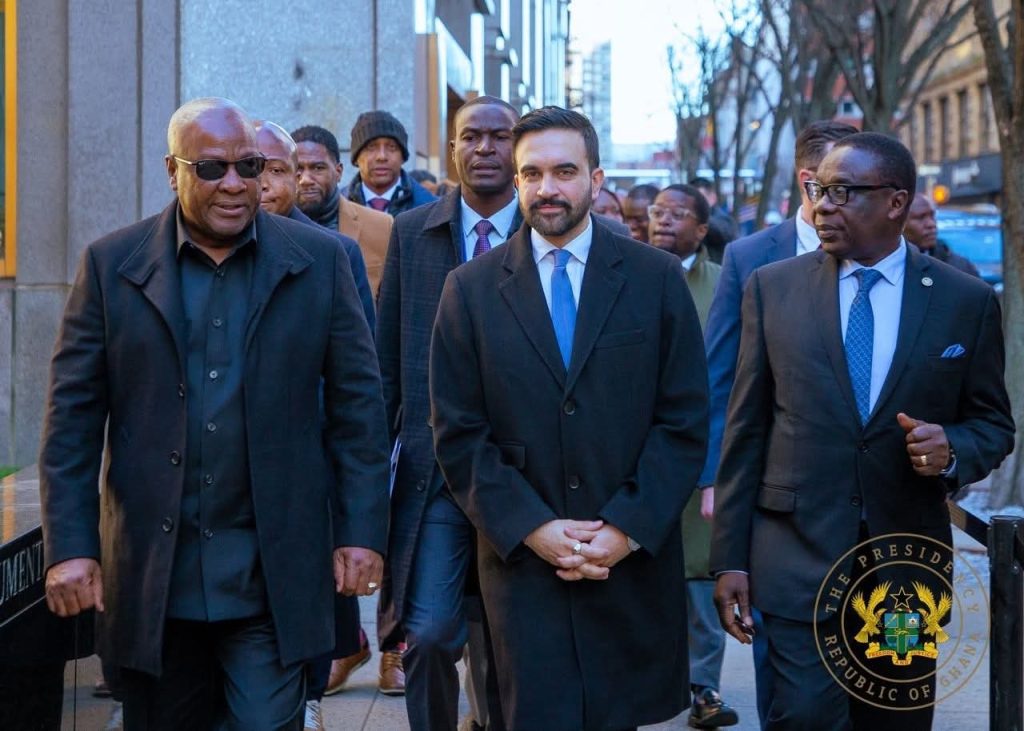
President Mahama said after this burial ground was discovered in 1991, archaeologists exhumed and studied the skeletal remains of 419 individuals; stating that several of those bodies belonged to children under the age of four.
“Their bones told the story of harsh labour and malnutrition. An infant, only two months old, was laid to rest with a string of yellow beads around its neck, one for each week of its brief life.”
The President said many individuals were buried with beads, of all colours—beads adorned their waist or wrist, or one lone bead tucked in the palm of a closed fist. Adding that they were sometimes also buried with coins, in their hands, or on the closed lids of their eyes.
“They were wrapped in white cotton or linen shrouds that were fastened, like a cape, with a brass straight pin. They were buried with their heads to the West, so that their bare feet pointed towards Africa, primed for the return home, if only symbolically,” he said.
“It is both heartening and heartbreaking to contemplate the care, attention to detail, and sheer love with which they were laid in their final resting place.”
President Mahama said they were buried this way so that through death, they might finally, in the ancestral realm, receive all that they had been deprived of in the physical realm.
“We lay this wreath today in honour of those buried here who resisted domination and disrespect. And, also, in recognition of their valiant pursuit of freedom,” he said.
GNA
Edited by Benjamin Mensah