By Morkporkpor Anku
Accra, March 6, GNA – Madam Nana Oye Bampoe, Deputy Chief of Staff, has reaffirmed the government’s commitment to providing affordable and accessible housing for all citizens.
Madam Bampoe said housing is not just a social necessity but a productive asset that underpins health, education, job creation, and economic growth.
She was speaking at the opening of the National Home Ownership Fair 2026, on themed “Building Ghana, One Home at a Time.”
She emphasised that the government was determined to complete ongoing projects such as the Sagleme Affordable Housing Project, Ho Oxygen City, and the District Housing Programme to ensure that ordinary workers, civil servants, and professionals have access to affordable homes.
She said the pivotal role of the National Home Ownership Fund was to address barriers to homeownership, expanding mortgage access, and stimulating private sector participation.
“Collaborative efforts with developers, financial institutions, local authorities, and traditional leaders are central to scaling housing delivery across the country,” she added.
Madam Bampoe also commended legislative reforms, including the modernized rent control bill, which protect tenants and create a more structured housing sector
She encouraged all stakeholders to work together, indicating that housing development required sustained efforts.
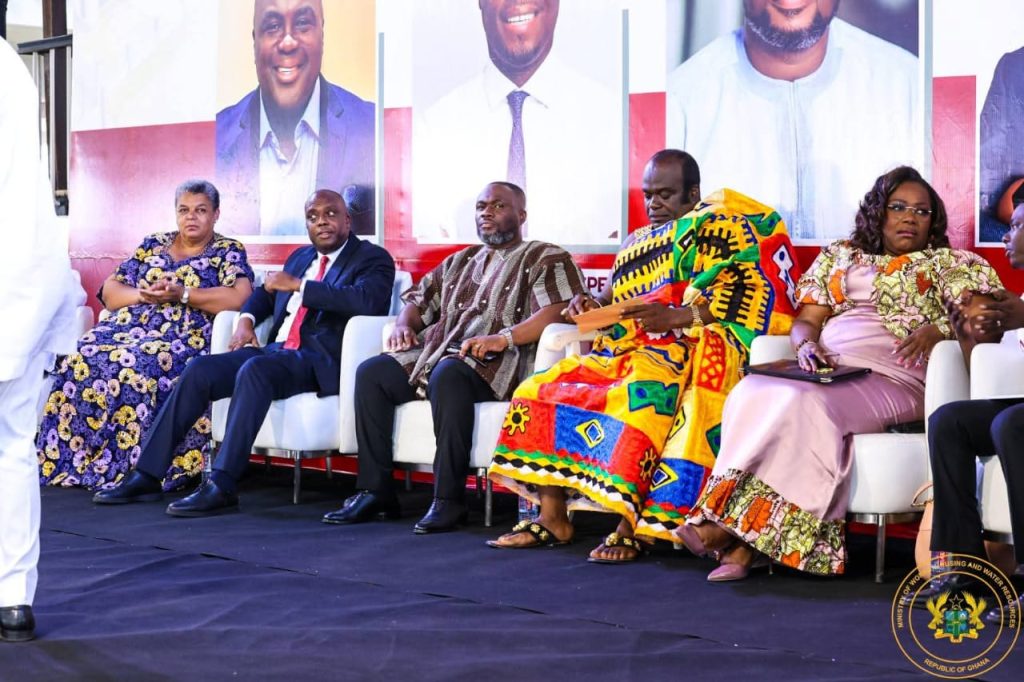
The fair provides a platform for prospective homeowners, developers, financiers, and regulators to engage directly on housing solutions, reflecting a unified approach to closing Ghana’s housing gap.
Mr Thomas Nyarko Ampem, Deputy Minister for Finance said achieving affordable housing in Ghana required sustained macroeconomic stability, long-term financing solutions, and structural reforms to reduce the cost of home ownership.
He said Ghana’s housing deficit, estimated at more than 1.8 million units as of 2025, remained a pressing national challenge driven by rapid urbanisation, population growth, and limited housing finance.
He noted that the housing gap was not only a social concern but also an economic issue, as poor living conditions, high rents, and long commuting times negatively impact productivity, health, and educational outcomes.
Citing data from the Ghana Statistical Service, he said the construction sector expanded by 5.5 per cent year-on-year in the third quarter of 2025, demonstrating the sector’s potential to create jobs and stimulate economic growth when properly supported.
Mr Ampem outlined three key priorities of the Ministry of Finance in addressing the housing challenge; maintaining macroeconomic stability to lower the cost of capital; unlocking long-term patient capital for housing finance and implementing reforms to reduce non-construction costs such as land acquisition, permitting, and infrastructure provision.
The Deputy Minister said the Government’s fiscal strategy remained anchored on discipline, credibility, and transparency to sustain low inflation, stabilise the currency, and restore investor confidence.
He said the Ministry was strengthening partnerships with pension funds, banks, and development finance institutions to mobilise long-term capital for housing, while supporting reforms to enhance land title security and streamline regulatory processes.
Mr Ampem described the Fair as a platform for dialogue and collaboration among developers, financiers, regulators, and citizens, aimed at making home ownership attainable for ordinary Ghanaians.
GNA
Edited by Kenneth Odeng Adade