By Michael Foli Jackidy
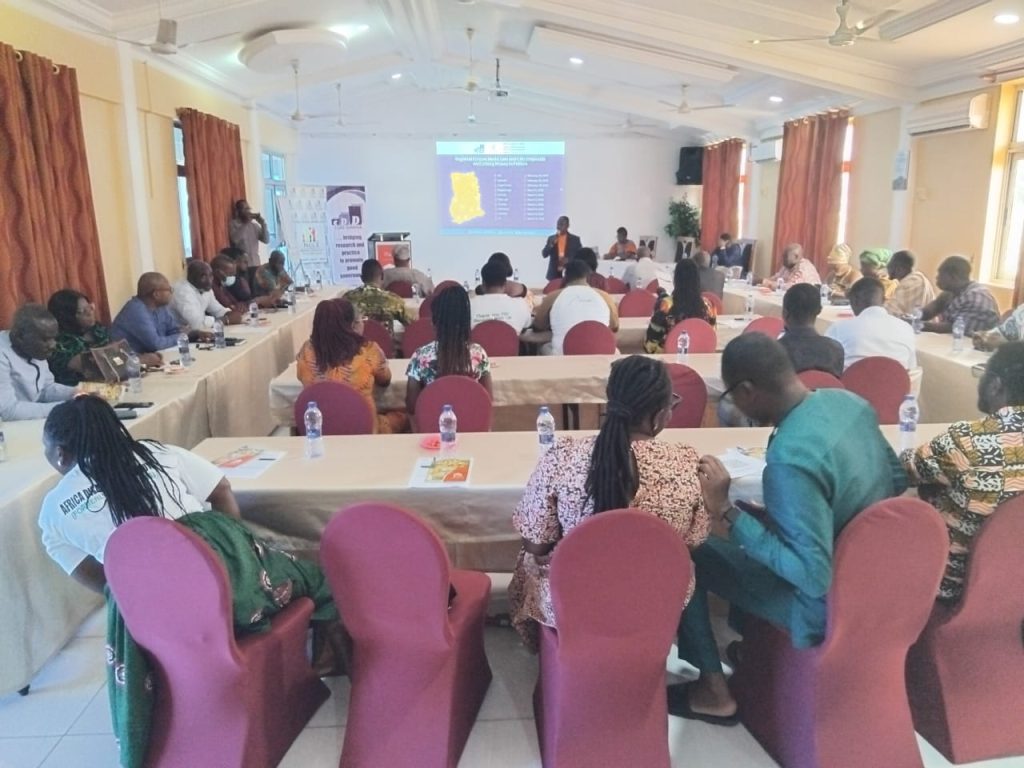
Ho (V/R), March 13, GNA – The Centre for Democratic Development-Ghana (CDD-Ghana), in collaboration with the National Commission for Civic Education (NCCE) and other partners, has organised a Volta Regional stakeholders’ forum, to discuss the Draft Campaign and Political Financing Bill.
The Draft Bill aimed at regulating money in Ghana’s politics.
The forum brought together representatives of political parties, assembly members, lawyers, civil society organisations, labour unions, persons with disabilities, and other stakeholders, to discuss the provisions of the draft model law and make proposals to improve it before it is submitted for further legislative consideration.
Mr Joseph Oti Frimpong, the Programmes Officer for Elections at CDD-Ghana, who presented on the state of political financing in Ghana, said the increasing cost of elections had become one of the major challenges confronting the country’s Fourth Republic.
He said investigations conducted by CDD-Ghana showed a steady rise in campaign expenditure by parliamentary candidates over the years.
Mr Oti Frimpong said in 2012, parliamentary candidates spent an average of about GHS124,000 on campaigns, which increased significantly to GHS235,699 in 2016, and rose further to about GHS4 million in the 2020 elections.
He attributed the rising cost of elections to factors such as high nomination and filing fees charged by political parties, vote buying, unregulated financing of candidates, and the abuse of state resources or incumbency advantages.
He said the CDD-Ghana was prioritising political finance reforms to safeguard the integrity of Ghana’s democracy.
“The feedback that we have received from the various stakeholder engagements will be consolidated and submitted to the Attorney-General. We have already presented the draft model law to him, and the ongoing consultations will help refine the bill before it is submitted to Cabinet,” he said.
Mr Oti Frimpong disclosed that CDD-Ghana had so far held similar consultations in 10 regions across the country as part of efforts to build national consensus on the proposed law.
He added that the organisation had also established a technical working group made up of experienced political actors and governance experts, including Mr Peter Mac Manu, the former National Chairman of the New Patriotic Party (NPP), Mr Inusah Fuseini, a former Member of Parliament, and Madam Brigitte Dzogbenuku, among others, to provide technical guidance on the draft legislation.
He noted that CDD-Ghana had also engaged the Constitutional Review Committee (CRC) during its nationwide consultations and shared proposals on political finance reforms.
“We participated in the Civil Society Organisations’ engagement with the Constitutional Review Committee and shared our views on key governance issues. We hope that the recommendations from the CRC and the work we are doing on campaign finance regulation will complement each other in strengthening Ghana’s democracy,” he said.
Mr Oti Frimpong stressed that although campaign financing was not the only challenge facing Ghana’s democratic system, it remained one of the most critical issues that must be addressed.
“Money plays an important role in politics, but when it is not properly regulated, it can put our democracy in danger. That is why we believe that regulating campaign financing should be a priority,” he added.
Ms Brigitte Dzogbenuku, the Presidential Candidate of the Progressive People’s Party (PPP) in 2024 and member of the technical working group of CDD-Ghana, said the growing monetisation of politics had become a major concern for Ghana’s democracy.
She noted that the problem was not only about politicians spending money but also about the expectations of voters during election periods.
“For many voters, election time is seen as an opportunity to receive money from politicians. Some delegates even describe it as their ‘cocoa season.’ This mindset must change,” she said.
Ms Dzogbenuku stressed the need for civic education to help voters understand that selling their votes undermines their own livelihoods and weakens democratic governance.
“When people sell their votes, they are essentially trading their future for short-term gains. That is why education is very important so that citizens understand the consequences of vote buying,” she said.
She added that the proposed law, when implemented, would introduce sanctions against both vote buying and vote selling, which could help discourage such practices.
Ms Dzogbenuku also suggested that reforms within political parties, including reconsidering the delegate system used in internal party elections, could help reduce the monetisation of politics.
She said the proposed campaign finance framework could also include public funding mechanisms such as post-election refunds, which would help create a level playing field for political parties and discourage individuals from contesting elections purely for financial gain.
Mr Kenneh Kponor, the Volta Regional Director of the NCCE, said political financing had remained one of the most sensitive yet under-regulated aspects of Ghana’s democratic governance.
He said although Ghana’s elections were widely regarded as credible and vibrant across Africa, the rising cost of campaigns raised important questions about the sustainability and fairness of the country’s democratic process.
“Behind the colourful rallies and campaign caravans lies a question many citizens quietly ask: who is paying the bills and at what cost to our democracy?” he said.
Mr Kponor warned that when politics becomes excessively expensive, it risks shifting elections from a contest of ideas and policies to a competition of financial strength.
“If the playing field tilts too far toward those with deeper pockets, then the very foundation of democratic equality begins to shake,” he noted.
He therefore emphasised the need for stronger transparency and disclosure requirements regarding sources of political funding.
“Democracy does not thrive in darkness. When the sources of political funding remain hidden, citizens begin to question whether elected officials are serving the public interest or the interests of unseen benefactors,” he said.
Mr Kponor also highlighted the importance of campaign expenditure limits and stronger enforcement mechanisms, stressing that laws without proper enforcement would fail to achieve their intended objectives.
He said for political finance reforms to succeed, the institutions responsible for monitoring compliance must be adequately resourced and empowered to enforce the law.
The forum formed part of nationwide stakeholder engagements by CDD-Ghana and its partners to gather public input toward the development of a comprehensive political finance framework aimed at promoting transparency, accountability, and fairness in Ghana’s electoral system.
GNA
Edited by Maxwell Awumah/ Christabel Addo