By Dennis Peprah, GNA
Sunyani (Bono), March 31, GNA – Mckenzie Ghana Limited (MGL), a Sunyani-based garment manufacturing company, has called on the government to prioritise the local garment industry in the implementation of the 24 Hour Economy.
Mr Michael Asare Yeboah, the Managing Director of the MGL said with little push from the government, the local industries could expand and contribute to building a resilient economy by creating more job opportunities and more so widen the nation’s tax net.
In an interview with the Ghana News Agency (GNA) at Sunyani, Mr Yeboah said though the MGL had procured modern industrial machines, it could not absorb and train more of the youth because its present training space did not have the capacity do so.
He said the MGL was established 31 years ago and had since then offered free employable skills training to thousands of young people, saying “We even train and give them employment here.”
Mr Yeboah recounted that as the largest garment manufacturing company in the Bono Region, the MGL used to operate 24/7, running three shifts on a daily basis.
However, the cancellation of the contracts of local manufacturers supplying Senior High Schools (SHSs) with uniforms and Physical Education (PE) kits by the previous in 2024, nearly collapsed the company.
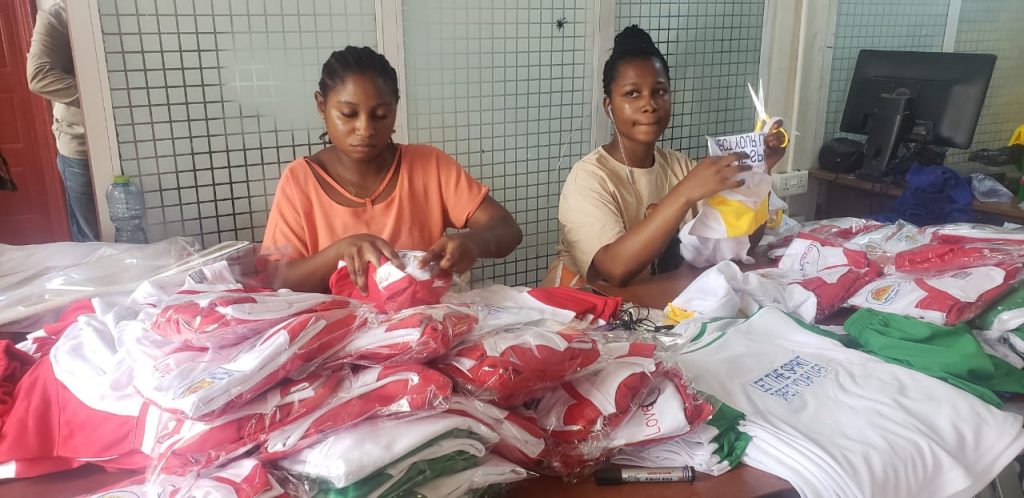
Mr Yeboah said the company required government support to expand, saying that it had no problem with industrial machines, but required larger space to be able to absorb and train more of the interested youth free of charge.
“As a native of Sunyani, that has been my contribution towards job creation and poverty reduction not only among the Sunyani natives, but young people interested in employable skills training in general,” he said.
Nonetheless, Mr Yeboah regretted that successive governments had failed to support the expansion of the MGL for decades now and called for the intervention of President John Dramani Mahama for the company to do more for the youth.
“We are trying to acquire a spacious training place and we need government intervention,” he said
Mr Yeboah indicated that the interest rates were too high, and they could not continue borrowing.
GNA
Edited by Benjamin Mensah