By Emelia B. Addae
Koforidua, Feb. 28, GNA – The National Commission for Civic Education (NCCE) and its partners have held a regional dialogue in Koforidua on strengthening local accountability through citizen engagement.
The dialogue formed part of the “Civic Engagement on the Rule of Law and the Fight Against Corruption in Ghana” project under the Participation, Accountability and Integrity for a Resilient Democracy (PAIReD) Programme.
The programme is implemented by GIZ, the Ministry of Finance and the NCCE to promote good governance and accountability.
Addressing participants, Ms Kathleen Addy, Chairperson of the NCCE, said the PAIReD Programme was commissioned by the German Federal Ministry for Economic Cooperation and Development and co‑financed by the European Union and the Swiss State Secretariat for Economic Affairs.
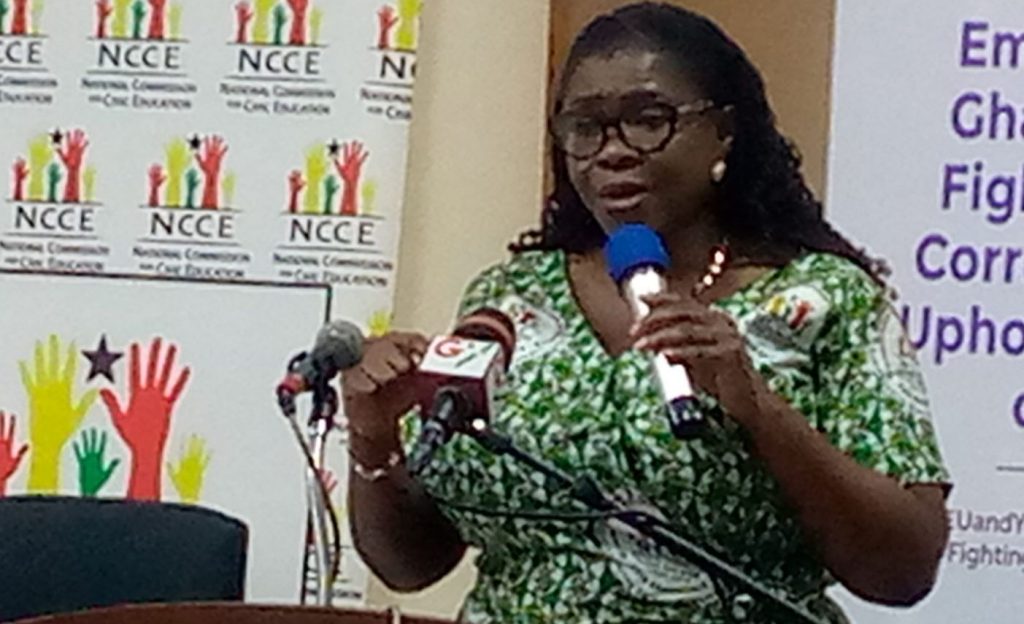
She said the rule of law and public accountability remained central to democratic governance, influencing fairness in public service delivery and access to information.
“When laws are clear and fairly applied, and when citizens understand their rights and responsibilities, public trust grows, and accountability is strengthened,” she said.
She noted that many citizens at the regional and district levels still struggled to access information, navigate legal systems, and engage public institutions.
These gaps, she said, weakened accountability and reduced public confidence.
Ms Addy said Ghana continued to confront corruption and that progress required responsive institutions and informed citizens.
She stressed that civic education and dialogue remained essential.
The dialogue brought together state institutions, students, youth groups, civil society, traditional leaders and the media to clarify reporting channels, strengthen trust in lawful processes and encourage responsible civic participation.
A speech read by Mr Ebenezer Amoah, Chief Director of the Eastern Regional Coordinating Council, on behalf of the Regional Minister, said accountability at the regional and district levels affected daily life.
“It is reflected in our roads, schools, healthcare, water systems, sanitation and community safety. When accountability mechanisms work, development becomes visible and sustainable,” he said.
He added that the credibility of government rested on responsible management of public resources and responsiveness to citizens’ needs.
He urged the Regional Coordinating Council and the local assemblies to uphold financial discipline, procurement compliance and ethical leadership.
“Addressing corruption requires prevention, vigilance and collective responsibility,” he said. He noted that oversight bodies must be empowered to work effectively and that public officials must show integrity in decision‑making and implementation.
Speakers who guided the discussions included Mrs Mary Awelana Addah, Executive Director of Transparency International Ghana; Dr Daniel Appiah, Lecturer at the Department of Public Administration, University of Ghana Business School; and Mr Michael Nkansah, Eastern Regional Director of CHRAJ.
GNA
Edited by D.I. Laary/George-Ramsey Benamba