Accra, Feb. 27, GNA – Fairtrade Africa has called for the national adoption of the Dynamic Agroforestry (DAF) approach to help rehabilitate cocoa farms and address climate-related challenges confronting Ghana’s cocoa sector.
The call was made at a learning and exchange event organised on Wednesday under the Ghana Agroforestry for Impact (GAIM) project, being implemented by Fairtrade Africa with support from Max Havelaar France and the French Development Agency (AFD France).
The meeting offered participants and stakeholders the opportunity to learn about the DAF approach and provide inputs to enhance its implementation.
Mr Samuel Osei Kwadwo, Project Manager of GAIM at Fairtrade Africa, said scaling up the approach nationwide would help restore degraded cocoa farms, improve soil fertility and build farmers’ resilience against climate change.
“We are all looking at sustainable cocoa production in Ghana. To achieve that, we need to address environmental, economic and social challenges. The dynamic agroforestry approach brings all these components together,” he said.
Agroforestry is a sustainable land-use system that integrates trees with crops and sometimes livestock on the same land to improve productivity and environmental health.
Mr Kwadwo explained that erratic rainfall, rising temperatures and prolonged sunshine had reduced yields across many cocoa-growing areas, leaving several farms unproductive.
“As we speak, most farms are yielding below average. Climate change has become one of the main challenges in the cocoa industry. If we don’t address it, farmers will continue to lose interest or convert their cocoa farms to other uses,” he said.
He noted that the DAF approach rehabilitates cocoa farms by integrating cocoa with fruit trees, timber species and staple crops to diversify income sources and reduce farmers’ dependence on cocoa alone.
“With dynamic agroforestry, we don’t integrate only cocoa. We add fruits and other crops so farmers can earn additional income. That way, their livelihood does not depend solely on cocoa,” he said.
He added that a key principle of the approach was “slash without burning,” which increases soil fertility through organic matter incorporation while reducing carbon emissions.
“Once we stop burning, we improve soil health and also reduce carbon dioxide emissions. It addresses both productivity and climate concerns,” Mr Kwadwo stated.
The GAIM project, which began in January 2024, is in its first phase ending in June 2026, with a second phase expected to run until 2029 and focus on scaling up the model to reach more farmers and cooperatives.
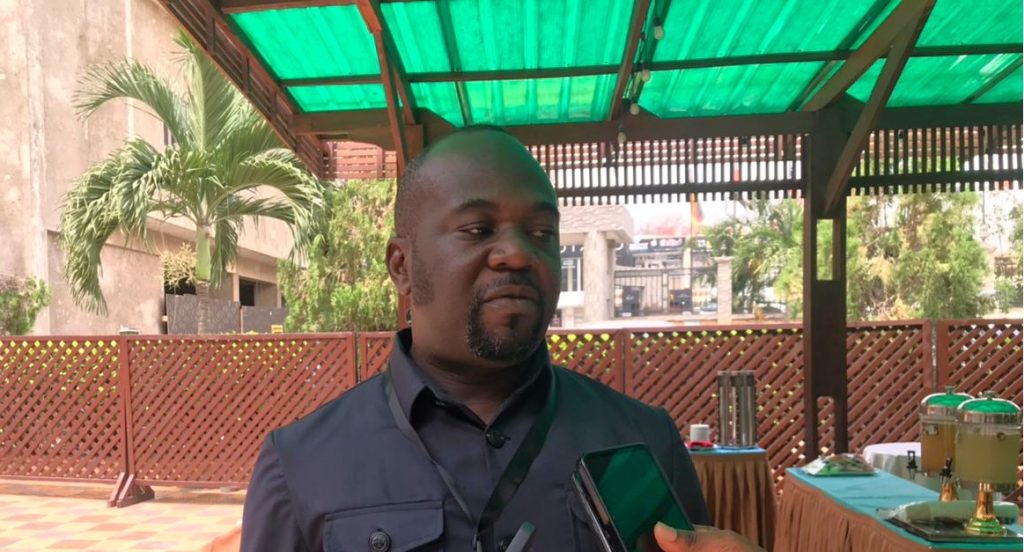
Mr Kwadwo said the project also had gender and youth components to encourage intergenerational participation in cocoa farming, noting that the average cocoa farmer in Ghana was about 55 years old.
“We need more youth to come into cocoa. If we make farming more sustainable and profitable, the younger generation will see value in it,” he said.
He said the project provided free cocoa, timber and fruit seedlings, as well as leguminous crops and technical support to participating farmers to ease the initial establishment of farms.
Ms Sarah Botton, Project Manager, Civil Society Division at AFD France, said the initiative aligned with the Agency’s mandate to fight poverty and promote sustainable development.
She encouraged participants to share experiences and insights to strengthen the delivery of the project and enhance its long-term impact on Ghana’s cocoa landscape.
The GAIM project seeks to promote climate resilience, diversify livelihoods and support the rehabilitation of cocoa farms through sustainable agroforestry practices.
GNA