By Morkporkpor Anku
Accra, Jan. 13, GNA – Dr Johnson Asiama, the Governor of the Bank of Ghana (BoG), says the country’s underlying economic fundamentals have improved significantly, reflected in declining inflation, stronger external buffers and improved exchange rate performance.
He attributed the disinflation trend to sustained monetary discipline, improved food supply conditions and closer coordination between the BoG and the Ministry of Finance.
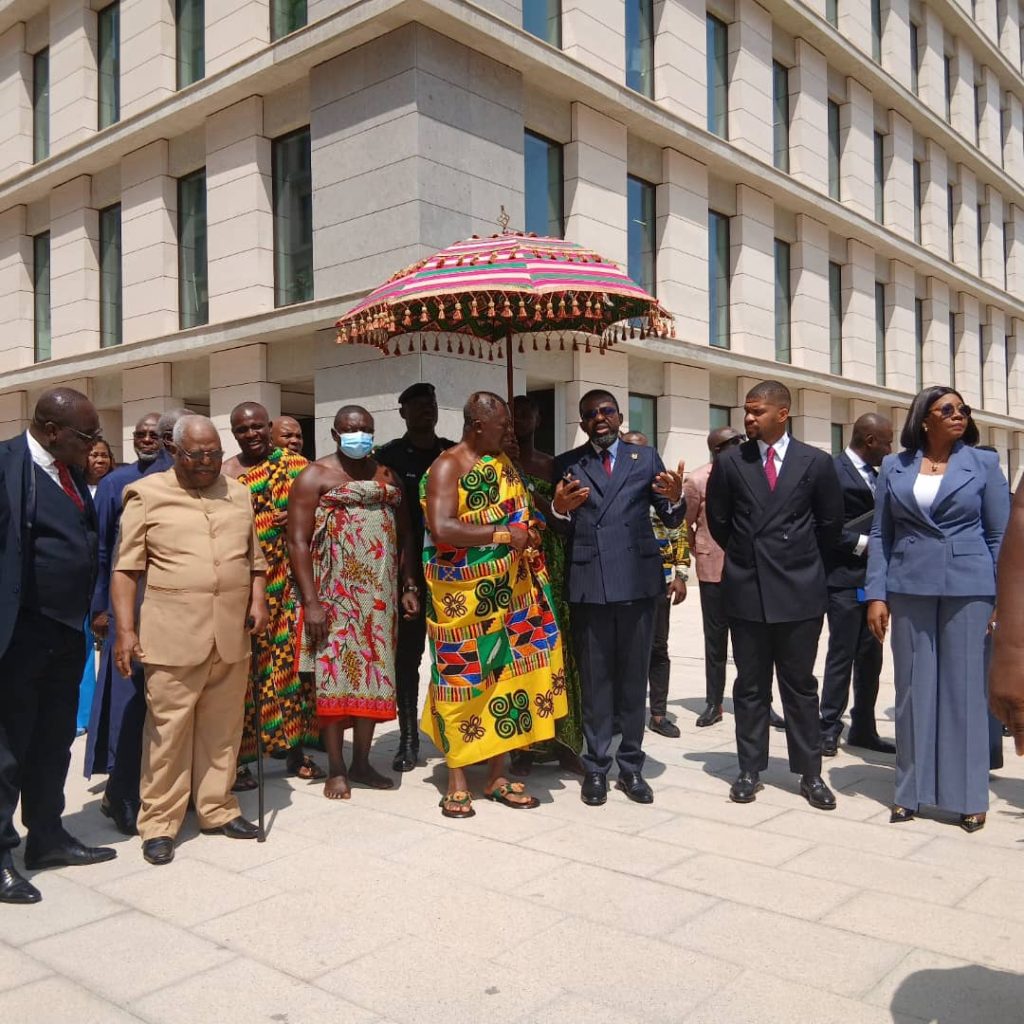
The Governor was speaking during the recent courtesy visit by Otumfuo Osei Tutu II, the Asantehene, to the Bank.
Dr Asiama and other Bank officials guided the traditional leader and his retinue to tour selected offices and facilities at the Bank Square.
The Governor said the easing inflationary pressures allowed the Bank to recalibrate its monetary policy stance, reducing the policy rate from 27 per cent to 18 per cent by October 2025, while maintaining price stability and supporting credit growth and economic recovery.
He expressed optimism that lending rates could fall to about 10 per cent by the end of his four-year tenure, noting that market interest rates had begun to ease in response to the policy adjustments.
On the external sector, Dr Asiama said Ghana’s gross international reserves had risen to a historic high of about 13.8 billion United States dollars, providing nearly six months of import cover and strengthening the country’s resilience to external shocks.
He said the improved reserve position, together with reduced inflation and restored policy credibility, helped the cedi end the year at about GH¢10.67 to the US dollar, placing it among the strongest-performing currencies in Africa, according to Forbes.
The Governor, however, cautioned that exchange rate stability should not be mistaken for permanence, and that a strong currency must be supported by a competitive real economy and sustained fiscal discipline.
He said long-term stability depended on prioritising production over consumption, exports over imports, fiscal restraint, reduced waste and long-term policy planning.
Dr Asiama emphasised the translation of the ongoing economic recovery into improved livelihoods, particularly through job creation, stronger local industries, affordable credit for businesses and a financial system that supports long-term investment without reigniting inflation.
He reaffirmed the Bank of Ghana’s commitment to acting independently and professionally to ensure that recent gains were sustained and translated into inclusive national development.
GNA
Edited by Agnes Boye-Doe