A GNA Feature by Solomon Gumah
Tamale, July 12, GNA – For many couples, infertility is a private medical condition. But for some women in Northern Ghana, it becomes a public trial marked by insults, suspicion and emotional torment.
In communities where marriage is closely tied to childbearing, the inability to conceive often shifts from a health concern to a social accusation.
Women, more often than men, bear the brunt of the blame, sometimes without medical evidence.
For 24-year-old Leila from Nabela in the Yendi Municipality of the Northern Region, the pain of childlessness extended beyond just a medical condition.
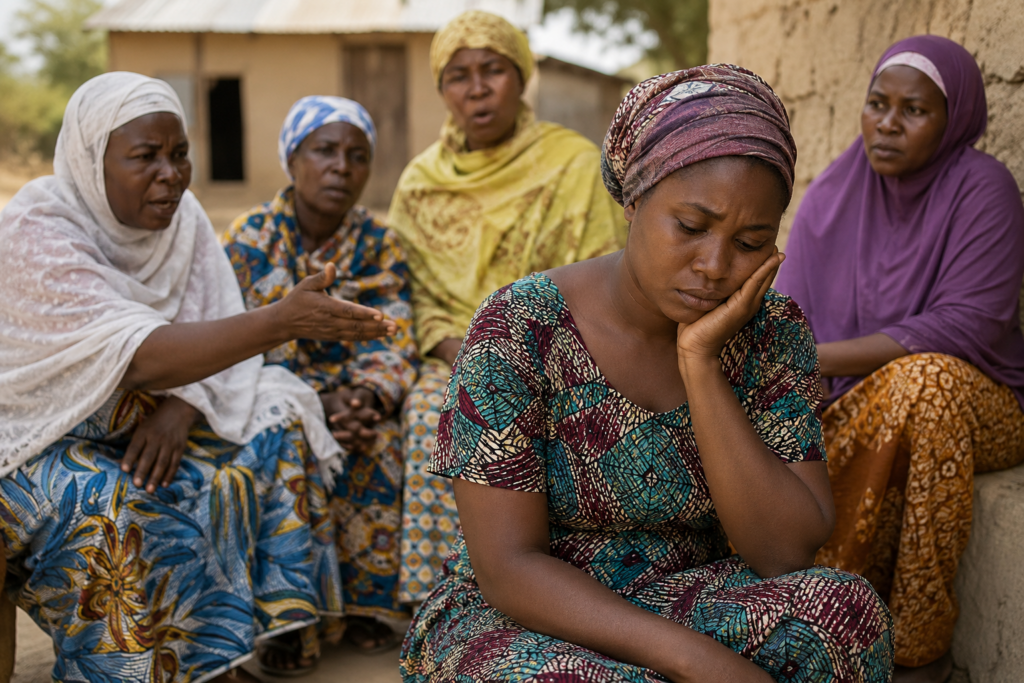
She got married at the age of 22 and had hoped to have a child soon after marriage. However, after two years without conceiving, she began facing intense pressure from her husband’s family.
“Our condition had not yet been medically diagnosed when one day my husband’s aunt walked into our compound and verbally attacked me,” she told the Ghana News Agency (GNA).
“It has become obvious that the only reason you are still married to our son is to eat our food and nothing else,” the aunt yelled
Those words, she said, pierced deeper than any physical wound. She endured ridicule, accusations and whispers that she had committed abortions in her youth.
“There were several times I cried and contemplated suicide,” she said quietly.
Her story is not isolated.
Fuseina, 27, a resident of Jabilajo in the Mion District, got married at the age of 24. After three years without conceiving, she also began experiencing mounting pressure that eventually contributed to the collapse of her first marriage.
“My ex-husband was somewhat supportive but his family members were like a thorn in my flesh,” she said.
“At a point, I stopped attending weddings and social gatherings just to avoid questions about when I would give them a child,” she added
Although she is now remarried with a child, she said the emotional scars remained.
Across parts of Ghana, particularly in the North, infertility continues to strain marriages, fuel emotional abuse and, in some cases, dissolve unions.
Cultural interpretations often overshadow medical explanations reinforcing the perception that childlessness is primarily a woman’s failure.
Unfortunately, due to poverty and illiteracy, some victims of infertility cannot access scientific innovations such as In Vitro Fertilisation (IVF) services and mental health support systems, further exacerbating their vulnerabilities.
Medical Perspective on Infertility
Medically, infertility is defined as the inability of a couple to achieve pregnancy after 12 months or more of regular, unprotected sexual intercourse.
Even though national statistics on infertility cases remain limited, the World Health Organization (WHO) estimates that infertility affects about one in six people globally represent 17.5 per cent of lifetime prevalence.
In 2025, the WHO recognised infertility as a significant public health issue and issued its first global guideline on infertility prevention, diagnosis and treatment underscoring the scale of the challenge worldwide.
Dr Hawa Malechi, an obstetrician-gynaecologist at the Tamale Teaching Hospital, explained that infertility affected men and women almost equally.
“The notion that women are solely responsible for infertility in marriage is medically incorrect,” she said.
She noted that female infertility may result from blocked fallopian tubes, fibroids, hormonal disorders or untreated infections.
Male infertility, she added, could be caused by low sperm count, poor sperm quality, hormonal imbalances and lifestyle factors such as smoking, alcohol abuse and certain infections.
“In many cases, only the woman is pressured to seek medical care first,” Dr Malechi said, adding, “this delays proper diagnosis because infertility evaluation should involve both partners from the beginning.”
She observed that couples often resorted to unregulated herbal remedies or spiritual interventions before seeking professional medical care, sometimes losing valuable time in the process.
Treatment options, she explained, ranged from medication and minor surgical procedures to assisted reproductive techniques depending on the cause adding that early and joint medical assessment significantly improved the chances of identifying and addressing the problem.
Mr Mahama Adams, a resident of the Sagnarigu Municipality, said it took seven years for him and his wife to have their first child. Despite the pressure from relatives, he chose to stand by her.
“Infertility affects both men and women. Why always blame the woman? he asked.
His stance, though commendable, remains uncommon in many communities where masculinity is rarely questioned in matters of reproduction.
Beyond the medical implications, infertility carries heavy psychological consequences. Feelings of shame, isolation and inadequacy often accompany the condition. Women may withdraw from social activities to avoid intrusive questions while some experience anxiety and depression.
Infertility versus Faith
Reverend Peter Enibo Gagara, the Northern Regional Director of Missions of the International Central Gospel Church, cautioned against weaponising infertility against women.
“Infertility must be seen as a shared challenge,” he said.
He added: “Couples must protect their unity and seek both medical and spiritual counselling.”
She quoted the Bible Book of Psalm 127:3: “Children are a heritage from the Lord,” and emphasised that childbirth was a gift, not a guarantee.
“God can heal, but He also works through doctors and knowledge,” he added, warning against excessive spiritualisation that discouraged medical evaluation.
The Way Forward
Addressing infertility stigma requires deliberate public education and policy attention.
The Ministry of Health and the Ghana Health Service must intensify awareness campaigns to demystify infertility with emphasis that it affects both sexes.
Promoting couple-based testing, encouraging early medical consultation and integrating fertility counselling into reproductive health services could reduce blame and delays in treatment.
Traditional and religious leaders also have a critical role to play in challenging harmful cultural narratives that equate womanhood solely with motherhood.
In conclusion, without a shift from accusation to understanding, infertility will remain more than a medical condition. It will continue to be a silent social crisis, one that women disproportionately carry.
For women like and Fuseina, the hope is not only for a child but for dignity, empathy and fairness in a society that too often judges before it understands.
GNA
Edited by Eric K Amoh/Benjamin Mensah
Writer’s Email: [email protected]