A GNA Feature by Solomon Gumah
Kadua (NR), July 12, GNA- By six-thirty in the morning, 11-year-old Amina Mohammed is already seated in her classroom at Kadua D/A Primary School in the Nanton District of the Northern Region.
Her early arrival is not only motivated by eagerness to begin lessons ahead of her colleagues but also by the need to secure one of very few desks in the school.
For Amina and her colleagues, arriving late means spending the entire school day seated on the bare floor.
During a visit to the school, the Ghana News Agency (GNA) observed that while a few pupils occupied the limited desks available, many others sat on the dusty cement floor balancing exercise books on their laps as they struggled to write.
“It is difficult to learn on the floor. Our uniforms get dirty, and sometimes we struggle for the few desks available. When lessons are going on, it becomes difficult to write properly,” Amina told the GNA.
The situation reflects the severe shortage of classroom furniture confronting many schools in the district.
Sadly, with an enrolment of 121 pupils, the Kadua D/A Primary School has only 10 dual desks leaving the majority of learners without proper seating.
The Ministry of Education and the Ghana Education Service recommend a pupil-to-desk ratio of 2:1, meaning each dual desk should accommodate two pupils. However, the reality at Kadua falls far short of this standard.
Poor Learning Environment
The furniture shortage is compounded by deteriorating infrastructure.
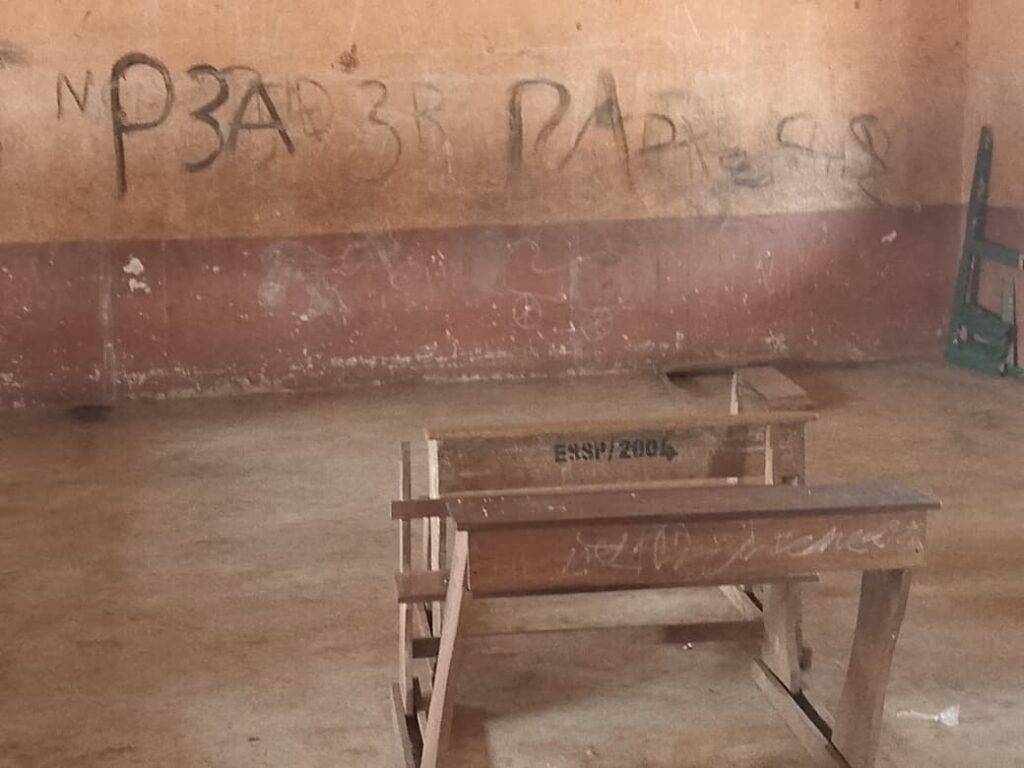
Several desks, doors and windows are broken and unusable while classrooms lack the basic facilities needed for effective teaching and learning. Pupils are forced to learn under uncomfortable conditions that affect concentration, participation and academic performance.
The GNA also observed that Kadua D/A Primary School has only three classrooms instead of the six required to accommodate all classes, compelling some classes to share the same classroom.
A similar situation exists at the Zoggu D/A Primary School, which has an enrolment of 391 pupils but only 110 dual desks.
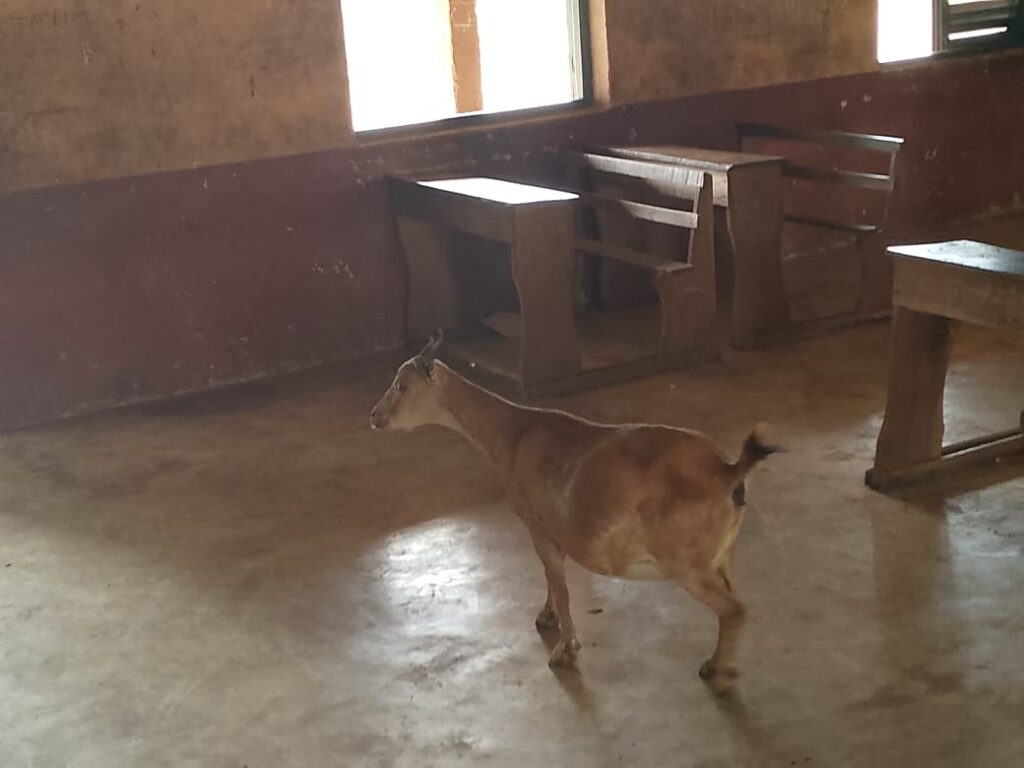
The shortage is particularly severe in the kindergarten and lower primary sections where there are no desks at all. Pupils conduct lessons entirely on the floor writing on their laps or placing exercise books on the dusty classroom surface.
Beyond the furniture shortage, the school’s infrastructure is in poor condition.
Broken doors and windows expose pupils and teachers to harsh weather and other uncontrollable conditions. Animals stray into the classrooms at will during lessons.
The teachers’ quarters are also in a deplorable state.
The schools also lack adequate Water, Sanitation and Hygiene (WASH) facilities. The absence of functional toilets and reliable access to safe drinking water exposes pupils to health risks and disproportionately affects adolescent girls.
Parents Express Concern
Parents say the situation is already affecting the academic performance of their children.
Mr Alhassan Yushawu, a parent at Zoggu, expressed concern about the impact of the furniture shortage on learning outcomes.
“My ward’s academic performance keeps deteriorating because he does not have a comfortable place to sit and learn. How can a child concentrate on lessons while sitting on the floor throughout the day? he questioned.
He also expressed concern about the absence of WASH facilities and said his daughter sometimes prefers to stay back home during her menstrual period because of the lack of privacy and comfort in school.
The Bigger Picture
The challenges facing Kadua and Zoggu schools reflect a broader classroom furniture deficit across the Northern Region and the Nanton District.
A survey conducted by the Northern Regional Directorate of the Ghana Education Service during the 2021/2022 academic year revealed significant shortages in school furniture.
At the kindergarten level, enrolments stood at 156,881 pupils against 52,643 pieces of furniture leaving a deficit of 104,238.
At the primary level, 339,588 pupils had access to only 149,358 furniture units resulting in a deficit of 190,230.
Data from the Nanton District Assembly’s Medium-Term Development Plan further indicates that public Basic Schools in the district face a deficit of 3,625 dual desks for an enrolment of 14,525 pupils with primary schools accounting for 2,441 of the shortfall.
Impact on Education
Mr Amadu Zulyaden, the Programmes Manager at School for Life, said inadequate furniture negatively affects teaching and learning.
According to him, pupils who sit on floors or share overcrowded desks often struggle to write comfortably, concentrate on lessons and actively participate in classroom activities.
He noted that such conditions contributed to poor academic performance, low retention rates and declining interest in schooling.
Mr Baba Fuseini, the Chairman of the School Management Committee of Zoggu D/A Primary School said the challenges were contributing to absenteeism, poor academic performance and increasing dropout rates.
He appealed to the government, development partners, philanthropists and corporate organisations to support schools with furniture, classroom infrastructure, teachers’ accommodation and WASH facilities and said addressing these challenges would contribute significantly to the attainment of Sustainable Development Goal Four on Quality Education, while also supporting goals on health, gender equality and reduced inequalities.
Government’s Response
Madam Janet Adua, Nanton District Director of Education acknowledged the furniture shortage and infrastructure challenges confronting schools in the district.
She said the Directorate had consistently engaged the District Assembly, the Member of Parliament and development partners to support schools with furniture and teaching and learning resources.
She indicated that some schools have benefited from furniture distributions in recent years, however, increasing enrolment and the deteriorating condition of existing furniture continued to widen the deficit.
She expressed optimism that sustained collaboration among stakeholders would help improve learning conditions across the district.
Recommendations/Way Forward
The government, through the Ministry of Education, the Ghana Education Service and the District Assembly should prioritise the procurement and distribution of dual desks to schools, especially those facing the most critical shortages.
The Nanton District Assembly should allocate more resources towards the provision of furniture and the rehabilitation of dilapidated classrooms and teachers’ accommodation.
It is recommended that development partners, corporate institutions, philanthropists and non-governmental organisations should support schools with furniture, WASH facilities, classroom rehabilitation and teachers’ accommodation.
Besides the above recommendations, School Management Committees, Parent-Teacher Associations and community leaders should strengthen community participation in school development initiatives, including local furniture production, infrastructure maintenance and resource mobilisation.
GNA
Edited by Eric K Amoh/Benjamin Mensah
Feature Writer’s email: [email protected]