By Edward Dankwah (Stringer)
Accra, Dec 5, GNA – Professor Kwaku Atuahene-Gima, President and Founder, NiBS University, has called on members of the Certified Innovation Professionals Association (CIPA) to intensify efforts in spreading the message of innovation across Ghana and beyond.
He said without innovation, Ghana and the continent as a whole would struggle to make meaningful progress, particularly in an era of rapid global change.
The President and Founder of NiBS University was speaking at the CIPA Innovation Forum 2025, under the theme, “Sustainability through Innovation: Building Resilient Systems for Tomorrow.”
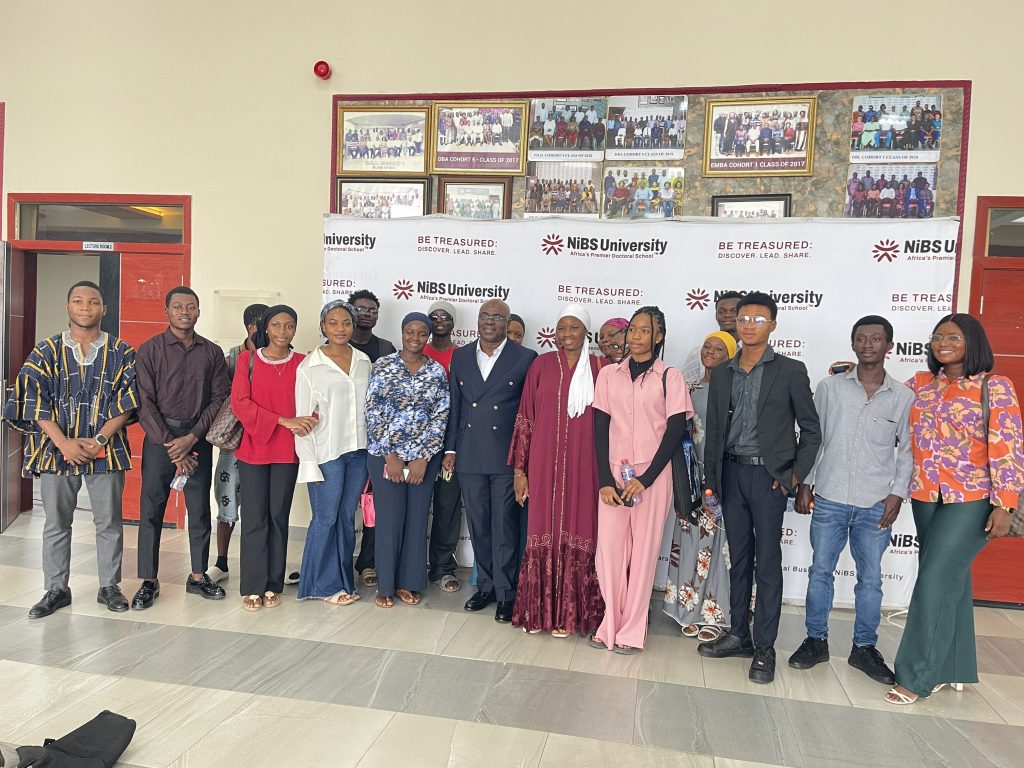
The forum also saw the awarding of 12 graduating students of the cohort five Certified Innovations Professionals.
Prof Atuahene-Gima explained that his motivation for establishing the CIP programme years ago was to create a community of innovators who could engage, learn and collaborate on practical solutions.
“No country can prosper without innovation, a principle Ghana must take seriously,” he stressed.
He said while many nations, especially across Asia, were committed firmly to innovation, African countries often misunderstood the concept.
He emphasized that innovation was not limited to breakthrough technologies but included any product or process that solved a problem for a specific group.
Prof Atuahene-Gima urged Africans to begin thinking differently by using existing technologies to address local challenges rather than waiting for entirely new inventions.
“There are so many problems we can solve with what already exists, without spending huge amounts to develop new technologies,” he added.
Dr. Richard Ampofo Boadu, President of CIPA, underscored the need for Ghana to build an environment that actively supported creativity and innovation, noting that innovators continued to face cultural and systemic barriers that limited progress.
He explained that innovation was a journey that began with mindset, evolved through creativity, and culminated in practical solutions.
Dr. Boadu said many potential innovators in Ghana struggled to overcome fear, uncertainty, and risk because the broader national environment does not sufficiently encourage experimentation or protect innovation efforts.
He noted that CIPA was established to help address these gaps by bringing together professionals from diverse backgrounds to learn, collaborate, and explore ways innovation could improve processes across sectors.
The President of CIPA said the Association served as a resource pool for organizations seeking fresh ideas, technological solutions, or new approaches to problem-solving.
He highlighted that socio-cultural norms remained major obstacles to Ghana’s development, pointing out that inherited beliefs and attitudes sometimes restricted who was seen as capable of innovating.
“Innovation is not limited to technology or corporate settings, but is a way of life that should reflect in families, workplaces, schools, and communities,” he added.
He urged Ghanaians to embrace self-awareness, challenge limiting norms, and develop the mindset needed to create solutions at all levels of society.
GNA
Edited by Christian Akorlie