By Eric Appah Marfo
Accra, Dec. 22, GNA – The Domeabra Traditional Authority has appealed to government to provide treated potable water and improved road networks to enhance the health and development of residents.
Nana Adwoa Ohene, Gyantuahemaa of Domeabra, speaking on behalf of Barima Osahene Dr Twumasi Addo Dankwa I, the Domeabrahene, said the community continued to rely on untreated borehole water for drinking, cooking and other domestic use, exposing residents to water‑borne diseases.
“Although we have managed to dig boreholes, the water is not treated. We use the same water for washing, cooking and drinking, and this is affecting our health. We are appealing to government to come to our aid,” she said over the weekend during a maiden community health screening exercise at Domeabra Amponsahene in the Eastern Region
The event, dubbed “December Health+ Outreach,” was organised by the Domeabra Traditional Area in collaboration with Health Enhancement and Access Link (HEAL) and the National Health Insurance Authority.
About 300 residents benefited from health education sessions, free medications, and free National Health Insurance Scheme registration and renewal.
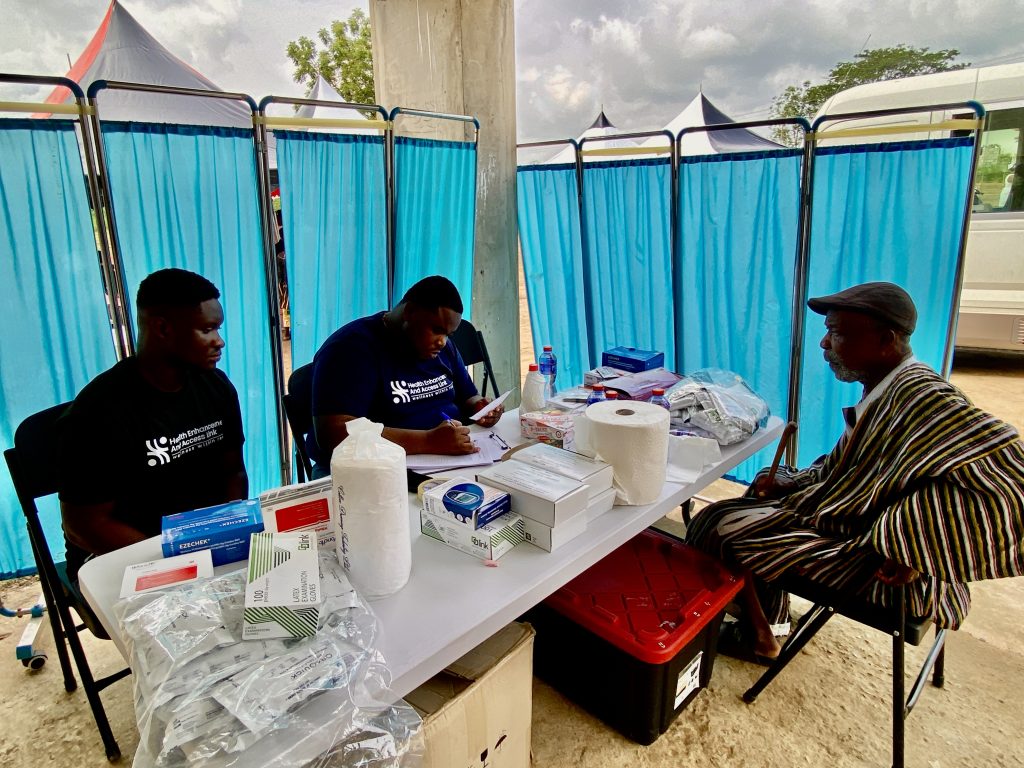
Activities undertaken included general medical consultations, screening for HIV and Hepatitis B, malaria and pregnancy tests, pre‑test counselling, linkage to care, mass deworming, and the distribution of folic acid and iron supplements to adolescent girls.
Nana Adwoa Ohene said the traditional authority invited health professionals due to increasing health challenges among residents and pledged that such outreach programmes would be sustained.
She highlighted mosquito infestations as a major burden compounding health risks.
Nana Adwoa Ohene also appealed for more road networks within and around the community, noting that inadequate roads hindered movement, restricted access to markets and schools, and made it difficult for residents to reach health facilities and emergency services.
She used the occasion to wish residents a merry Christmas and a prosperous New Year, urging moderation during the festivities and caution at social gatherings.
“As you celebrate, be vigilant. Do not leave your food or drinks unattended and take care of one another,” she advised.
Dr Emmanuel Anim, Founder of HEAL, said the screening exercise uncovered cases of hypertension, diabetes, anaemia and respiratory infections, many of which could be better managed with improved living conditions and consistent access to healthcare.
He explained that HEAL, established earlier this year, aimed at bridging the gap between underserved communities and access to quality healthcare by taking essential services directly to people who faced challenges of accessing health facilities.
Dr Anim said the initiative had received positive reception from communities visited so far, describing it as encouraging and motivating.
He said that HEAL planned to extend services to corporate organisations, noting that many workers often failed to undergo regular medical check‑ups.
Dr Anim disclosed that the organisation was exploring ways of engaging companies to allow routine health screenings for staff, while creating opportunities for corporate support for community outreach programmes.
He identified funding as a major challenge, describing it as common among non‑governmental organisations.
Dr Anim called for government support to scale up HEAL’s initiatives, including plans to introduce waste management services to educate communities on recycling and managing waste to address environmental and health challenges.
Residents who benefited from the exercise expressed appreciation to the traditional rulers and HEAL, saying it was their first‑ever health screening.
“We didn’t see the need before because there was previously no hospital nearby. Today, we have learned a lot about our health,” one beneficiary said.
Others appealed to the government to strengthen the local CHIPS compound by supplying it with essential medicines, diagnostic equipment, and trained personnel to improve healthcare delivery.
GNA
Edited by Kenneth Sackey