By Anthony Adongo Apubeo
Bongo (U/E), Dec. 9, GNA – The Upper East Regional office of the Department of Gender has called on members of the Ghana Private Road Transport Union (GPRTU) and commercial drivers to play a more active role in identifying and reporting cases of Gender-Based Violence (GBV) occurring at lorry stations and along transport routes.
Mr James Twene, Acting Upper East Regional Director of the Department of Gender, made the call during separate engagements with members of the GPRTU in Bolgatanga, Navrongo, Bongo, and Zebilla.
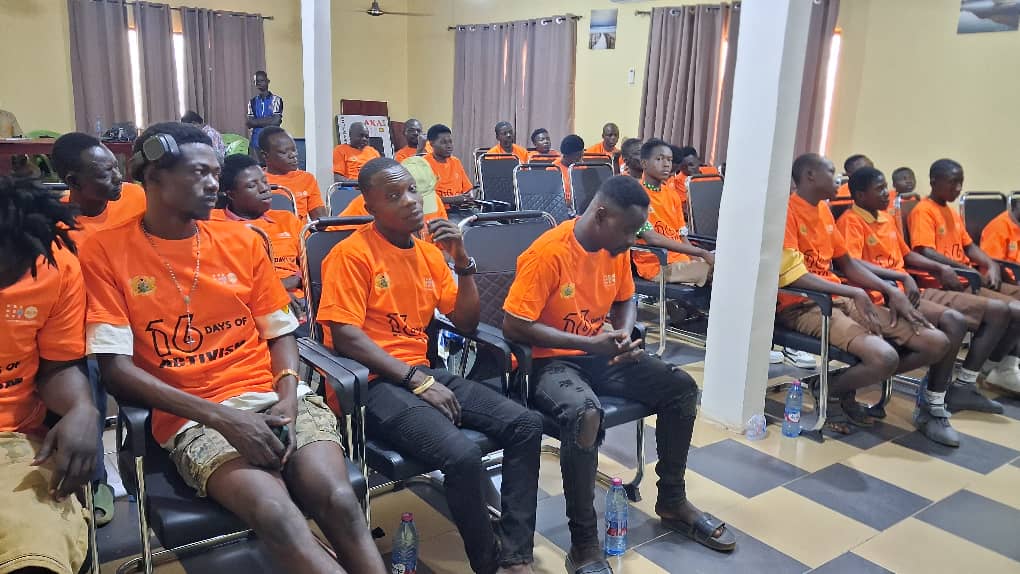
The engagements, with funding support from the United Nations Population Fund (UNFPA), formed part of activities marking the 16 Days of Activism Against Gender-Based Violence.
This year’s campaign is being commemorated under the theme: “Unite! End Digital Violence Against Women and Girls in Ghana.”
The programme also brought together members of the men and boys’ clubs established by the Department in partnership with UNFPA to fight teenage pregnancy, child marriage, and GBV.
“This year’s campaign is focusing on the transport sector because GPRTU members, tricycle operators, vendors, and other workers spend long hours at lorry stations, spaces where various forms of physical, emotional, and verbal abuse frequently occur,” Mr Twene said.
He explained that drivers and transport workers were often the first witnesses to incidents of abuse, yet their participation in sensitisation programmes had been historically low due to the nature of their work.
To bridge this gap, UNFPA introduced the ‘16 Regions, 16 Routes, 16 Destinations’ initiative to encourage nationwide engagement with GPRTU members, he added.
“Gender-based violence affects everyone, everywhere. Drivers, station secretaries, porters, and vendors see these incidents happening, whether it is a driver and a mate arguing, a mate and a passenger exchanging insults, or a woman being verbally abused.
“We want them to know what constitutes GBV and to report such cases to the appropriate authorities,” he added.
Mr Twene noted that UNFPA had earlier engaged national and regional GPRTU leadership to equip them with knowledge on GBV and referral processes, explaining that the current phase of the campaign was targeted at grassroots members to ensure their full understanding of the forms, examples, and consequences of abuse.
He observed that many transport workers were raised in environments where men were encouraged to exert control, reinforcing harmful norms that fuel gender inequality.
The sensitisation sessions, he said, were aimed at breaking these cycles by promoting respect, accountability, and balanced power relations.
He urged the drivers to support their spouses so they could grow together, stating, “when you support each other, you grow faster and more sustainably.”
Madam Yvonne Wonchua, the Upper East Regional Focal Person for UNFPA, encouraged the drivers to extend the education to their colleagues to ensure the information trickled down to everyone.
She urged them to lead by example so that their children would not see violence as normal, enabling them to grow into responsible citizens who contributed positively to society.
Mr Seidu Musah, Chairman of the Mahama Can Do tricycle drivers in Bongo, commended the Department of Gender and UNFPA for the training, which he described as refreshing and an eye-opener, noting that he now understands that GBV is a crime that hinders family development.
He pledged to extend the training to their members to empower them to help combat the issue, particularly at the lorry stations.
GNA
Edited by Caesar Abagali/Christian Akorlie