By Anthony Adongo Apubeo, GNA
Wiesi (U/E), Oct. 30, GNA – A solar-powered mechanised water system has been commissioned at Wiesi, a farming community in the Builsa district to address water scarcity and promote peaceful coexistence between local residents and transhumant herders.
The facility, valued at about GH¢350,000, was constructed under the Peaceful Cross-Border Pastoral Mobility and Social Stability in the Sahel (MOPSS) Phase II project (2023-2026), implemented by the Netherlands Development Organisation (SNV) and its consortium partners with funding support from the Danish International Development Agency (DANIDA).
The other consortium partners include the Maroobé Billital Network (RBM), the Association for the Promotion of Livestock in the Sahel and Savannah (APESS), the Network of Farmers’ and Producers’ Organisations of West Africa (ROPPA), Rural Hub, and CARE Denmark.
The commissioning formed part of MOPSS’ broader efforts to promote peaceful co-existence, inclusive natural resource management, and livelihood resilience among pastoralist and farming communities across northern Ghana to reduce conflicts over water resources.
The MOPSS project is a regional initiative being implemented in seven West African countries, namely Ghana, Burkina Faso, Mali, Niger, Benin, Togo, and Côte d’Ivoire, to strengthen social stability and improve cross-border pastoral mobility and inclusive local economy.
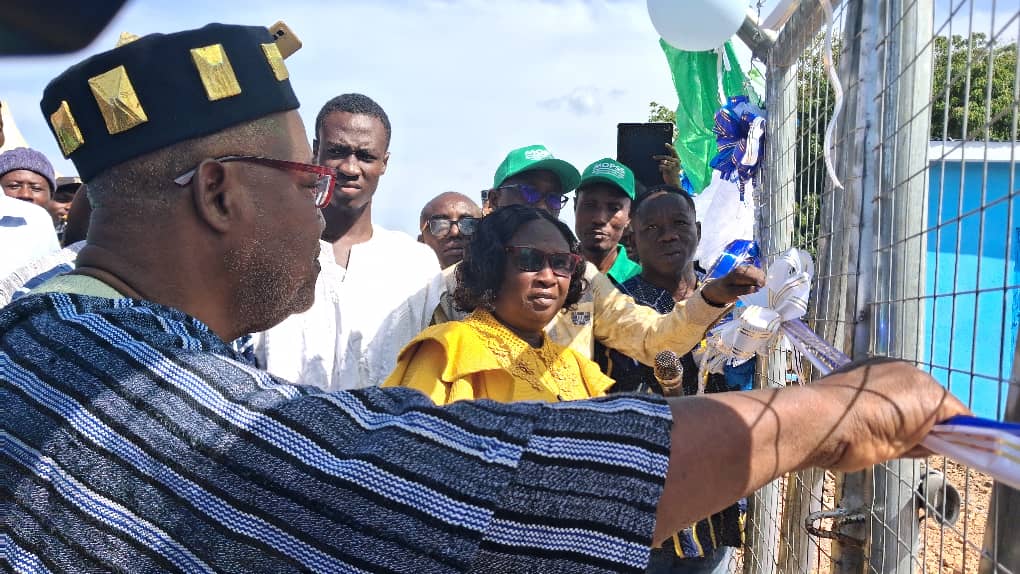
Speaking at the commissioning ceremony in Wiesi, Mr Amadi Coulibaly, MOPSS Project Manager, SNV, said the mechanised borehole marked another milestone in the consortium’s commitment to improving access to safe and reliable water for both people and livestock, while fostering peaceful coexistence between pastoral and host communities.
“The borehole we inaugurate today represents more than just access to clean water. It symbolises hope, inclusion, and collaboration, a testament to what is possible when communities, local authorities, and development partners work together with a shared vision,” he said.
He expressed appreciation to the Government and people of Denmark for their generous support and partnership through DANIDA and encouraged the Builsa South District Assembly and the beneficiaries to take full ownership of the facility to ensure proper maintenance and equitable access.
“SNV remains committed to working with the Government of Ghana, local authorities, and communities to strengthen livelihoods, promote peace, and build climate-resilient systems that serve everyone,” he added.
The solar-powered water system includes a high-yield borehole and a 5,000 litre capacity overhead tank, capable of providing a steady water supply throughout the year and it is designed to serve both human and livestock needs.
It has separate sections but multiple fetching points and drinking troughs for residents and animals, with different taps for fetching water, and four watering troughs, three for cattle and one for small ruminants such as goats and sheep.
To ensure long-term sustainability, a Borehole Management Committee (BMC) comprising representatives of traditional authorities, pastoralists, farmers, agricultural officers, women, and youth has been established and trained to oversee maintenance, cost recovery, and equitable access.
Mr Mohammed Abdul-Ganiyu Shitu, Technical Advisor on the MOPSS project, SNV, said the design ensured that people and livestock did not interfere with one another, promoting hygiene and reducing potential sources of conflict.
“This project is aimed at easing the pressure on local water sources and promoting peaceful coexistence between farmers and herders. When people and animals have access to water, the chances of conflict reduce drastically,” he said.
Imam Hanafi Sonde, National President, Ghana National Association of Cattle Farmers, commended the choice of the Wiesi as it laid along, a major livestock movement corridor and hosts several pastoralists from Burkina Faso and other neighbouring countries and urged the government to invest in similar projects to reduce farmer-herder conflicts in farming communities.
Madam Anne Musah, the Builsa South District Chief Executive, commended the MOPSS’ consortium and their sponsors, for investing in water, which was a major challenge in the area, adding that it would help reduce tension in the community over access to water.
Nab Akanaab Apoom-Ween, the Chief of Wiesi Community, expressed gratitude for the gesture and added that the water system would strengthen the unity and social cohesion between the residents and the pastoralists in the community for shared development.
GNA
Edited by Caesar Abagali/Linda Asante Agyei