By Albert Oppong-Ansah
Accra, May 9, GNA – Solar and wind energy combined with battery storage can now deliver reliable and cost-effective round-the-clock electricity, a new report by the International Renewable Energy Agency (IRENA) has said.
The report, The Economics of Firm Solar and Wind, said hybrid renewable energy systems with storage were already providing electricity at lower costs than fossil fuels in regions with strong solar and wind resources.
Commenting on the findings, António Guterres, United Nations Secretary-General, said the global energy crisis had exposed the true cost of dependence on fossil fuels.
“Renewable power is increasingly the most affordable, reliable and secure option. Let us accelerate the transition, invest in energy infrastructure and strengthen international cooperation to deliver clean, homegrown power to people everywhere,” he said.
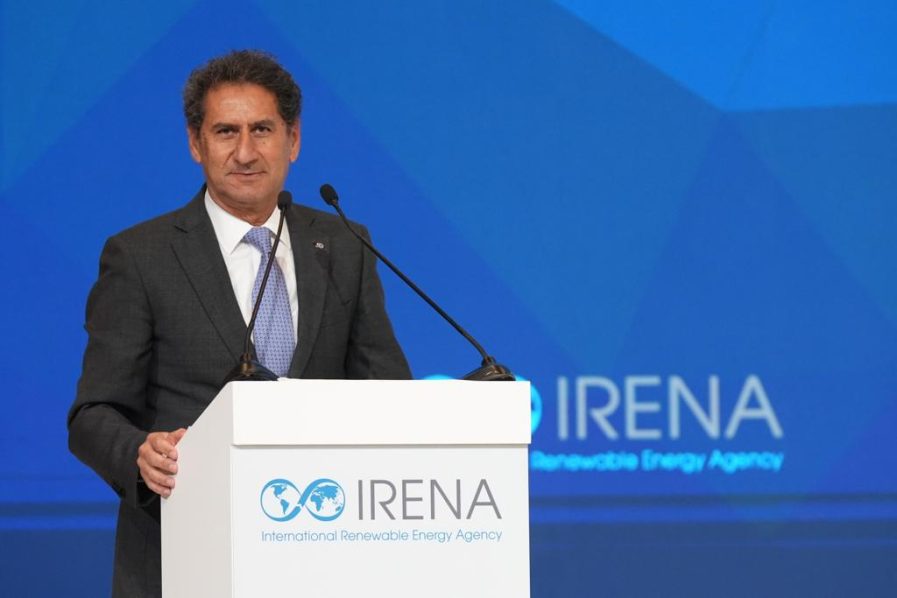
Francesco La Camera, Director-General of IRENA, said the long-standing argument that renewable energy lacked reliability no longer held.
“Today, renewables can deliver reliable, roundtheclock power. As oil and gas markets remain exposed to geopolitical shocks, including ongoing disruptions in the Strait of Hormuz, we must insulate our economies with resilient renewable systems.
“The economics of the entire energy system have shifted: the battery revolution has driven down costs while accelerating advances in storage. The advantage of renewables is not only economic but strategic, strengthening resilience, stability, and energy security in times of crisis,” he said.
The report noted that hybrid renewable systems were increasingly suitable for energyintensive sectors such as artificial intelligence and data centres, which required uninterrupted electricity supply.
In Ghana, government is targeting at least 10 per cent from modern renewable energy sources, including solar, wind and wave energy, as part of its clean energy transition agenda.

Mr Seth Mahu, Director in charge of Renewable Energy at the Ministry of Energy and Green Transition, said Ghana was witnessing rapid growth in solar projects through public and private investments in mini-grids, rooftop systems and utility-scale plants.
He said the country had unveiled investment opportunities worth 3.4 billion dollars in the renewable energy sector to support its transition to a low-carbon economy by 2030.
Under Ghana’s Energy Transition Framework, the country plans to add 400 megawatts of renewable energy capacity within five years through public and private sector funding.
The investments include utility-scale solar, wind and landfill gas projects, distribution of 1.5 million clean cookstoves, expansion of solar street lighting and the establishment of 400 solar-powered irrigation schemes covering about 400,000 hectares of farmland.
“These initiatives will help raise the share of renewables in Ghana’s generation mix from seven per cent to 15 per cent by 2030 while creating thousands of green jobs,” Mr. Mahu said.
IRENA reported that costs for solar photovoltaic systems had fallen by 87 per cent since 2010, onshore wind costs by 55 per cent, and battery storage costs by 93 per cent.
It projected that continued technological improvements and manufacturing scale would further reduce renewable energy costs by up to 40 per cent by 2035, with some projects expected to generate electricity at below 50 dollars per megawatthour.
GNA
Edited by Kenneth Sackey
9 May 2026
Reporter: Albert Oppong-Ansah
Email: [email protected]