By Sandra Lartey
Accra, Oct 2, GNA – As part of efforts to increase civic awareness among the youth, the Ablekuma Central Municipal National Commission for Civic Education (NCCE) has launched a civic education club at the Grace preparatory school.
The initiative aims to promote responsible citizenship among young people and deepen their understanding of Ghana’s democratic values and constitutional rights.
Mrs. Comfort Azalletey Lumorvi, the Ablekuma Central Municipal Director of NCCE, said the Commission was reactivating and establishing Civic Education Clubs in basic schools across the country.
This initiative, she said, formed part of the Commission’s core mandate to educate Ghanaians, especially the youth, on their civic rights and responsibilities.
She encouraged the students to actively learn and uphold the tenets of the Constitution, stressing that such knowledge would empower them to contribute meaningfully to national development and make informed decisions in their daily lives.
Mr. Samuel Aguh a Patron of the civic education club at the grace preparatory school, in an interview with the Ghana News Agency, emphasised the crucial role of school clubs in instilling societal values and civic responsibility in children from an early age.
“As children, we have to inculcate in them the values of society right from the early years,” Mr. Aguh stated.
He believes that when children grow up with a clear understanding of their rights and responsibilities, these principles become part of their character for life. “If they know it from childhood, it becomes habit and they will never depart from it,” he added.
Mr. Aguh, is to engage children in learning about their role in society and to help them understand what was expected of them as future citizens.
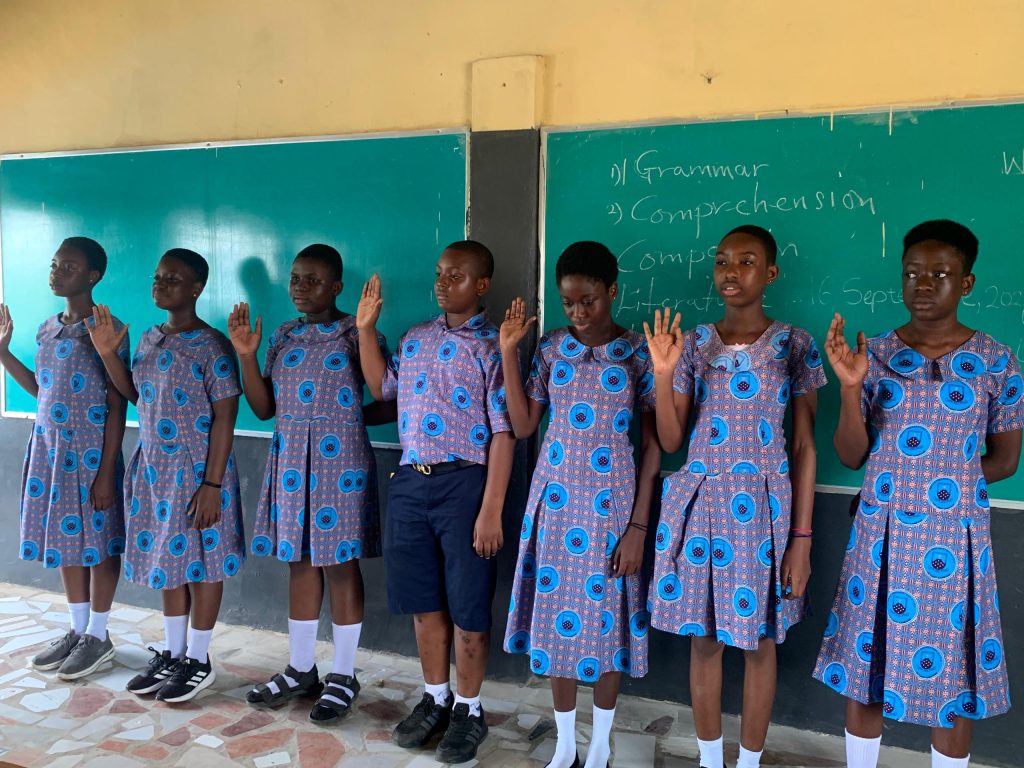
“We need to connect the children to society, to let them know what is expected of them and how their actions affect others,” he explained.
He added that such a club would expose the children to the Constitution at an early age, increase their desire to participate in shaping public discourse and enable them to take up public positions when the need arose.
Mr. Aguh indicated that schools were actively involved in providing students with opportunities to learn beyond the classroom.
“The school tries as much as possible to expose students to what they need to do at this stage in their lives,” he said. “This helps them understand society better and prepares them to be good citizens.”
“We can’t do this in isolation,” he said. “Collaboration is key—not only can we share ideas, but we can also build stronger programmes that benefit students across different schools.”
Mr. Jibrael Ninson, the Programme Officer, urged private school proprietors to open their doors to the National Commission for Civic Education (NCCE) for partnership to enhance civic education.
He also encouraged the patrons of civic clubs to organize educative trips.
GNA
Edited by George-Ramsey Benamba