By Morkporkpor Anku
Accra, Sept. 1, GNA- Dr Nii Narku Quaynor, a Ghanaian Scientist, says Africa’s emerging Internet communities are fortunate to have the open practices of the Internet, which gives them a chance to be globally involved.
He said the open standards, documentation, and participation had been particularly helpful in building capacity and networks over the years.
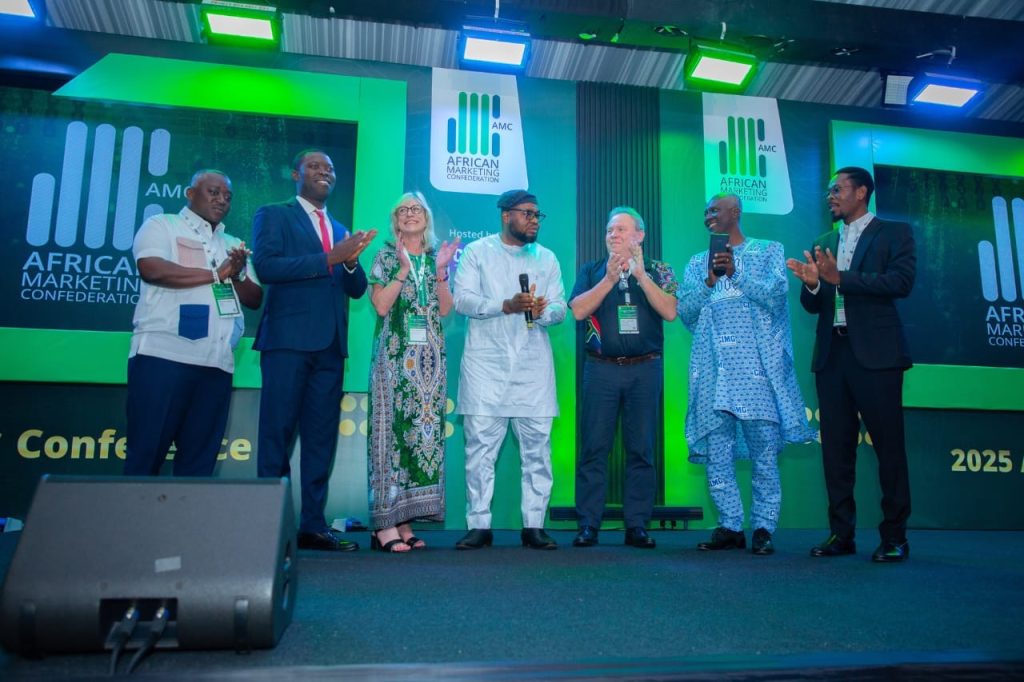
Nii Quaynor was speaking at the African Marketing Confederation (AMC) and Technology Information Confederation (TICON Africa) AMC-TICON 2025 Joint Conference in Accra.
The event was co-hosted by the Chartered Institute of Marketing Ghana (CIMG) and the Institute of ICT Professionals Ghana (llPGH).
The Conference brought together over 500 delegates from across Africa and beyond, marking a significant milestone in the continent’s journey toward digital transformation, inclusive trade, and cross-sectoral collaboration.
The year’s Conference was guided by two themes: “Thriving in Africa’s Evolving Markets: Trust, Trends and Technology and Empowering Africa’s Tech Future: Innovation, Standards and Global Influence.”
He said that though progress was made with the Internet, there were also several challenges.
“Observations on resilience of Internet in Africa show a ready digital economy, at about midway user penetration but has fragile infrastructure and known technical capacity deficiencies,” he said.
He said in spite of these challenges, the number of data centres, connectivity, exchange points, capacity, and users were all improving.
On successes, he said they offered access to the internet from UUCP to satellite, to fibre and to 4G, they were literate and comfortable users of tools in cyberspace, and the governments were making laws and policies and internet penetration from 0 per cent to 40 per cent in 30 years.
He said being a latecomer and the race to catch up did not help, and there was the need to think long term and be consistent and persistent.
“Policy and regulations must encourage innovation and anticipate new resources and position local industry to domesticate,” he said.
Dr Nii Quaynor said there was the need to make long-term strategies and plans, and avoid firefighting and not impactful actions for immediate results.
Mr Richard Kafui Amanfu, Executive Director, IIPGH, said, “We are gathered at a pivotal moment in Africa’s digital journey, with Ghana demonstrating remarkable progress through bold policies, thriving innovation ecosystems, and impactful digital initiatives that continue to shape the continent’s future.”
He said Ghana was ready, not just as a host nation, but as a strategic hub for innovation and digital transformation.
“Our country is increasingly recognized as a launchpad for scalable tech solutions, a magnet for investment, and a model for inclusive digital development,” he said.
He said from the thriving fintech ecosystem to the national digitalisation agenda, Ghana was demonstrating that Africa could lead, not just follow, in the global digital economy.
He said Africa’s digital future was not a distant dream; it was a present responsibility, and it was there to shape.
Mr David Gowu, President, TICON Africa, said Ghana was proud to be leading the charge in digital transformation and under the leadership of President John Dramani Mahama, they had embraced a bold digital agenda that’s turning heads globally.
“We are building the Ghana-UAE Tech and Innovation Hub in Dawa, a $1 billion investment that will attract over 11,000 global companies, including tech giants like Google, Apple, Microsoft, Oracle, Meta, IBM, and Alphabet,” he said.
He said they were developing a National AI Strategy that was uniquely Ghanaian, balancing innovation with responsibility, growth with sovereignty, and ambition with inclusion.
He said the homegrown companies like Npontu Technologies with AI applications such as Snwolley mobile were already solving real problems in education, health, and finance.
GNA
Christian Akorlie
1 Sept. 2025
Caption: Pictures Attached