By Anthony Adongo Apubeo, GNA
Bolgatanga, April 29, GNA – The Bolgatanga Municipal Assembly has recorded a slight improvement in its Internally Generated Funds (IGF), with collections reaching GH¢2,461,828.78 in 2025, representing 75.11 per cent of its annual target, up from 72.07 per cent in 2024.
This figure is still below the Assembly’s target of GH¢3,278,000.00 for 2025.
Addressing key stakeholders to mark one year in office, Mr Roland Atanga Ayoo, Municipal Chief Executive, described the growth as modest but encouraging, noting that the Assembly remained committed to strengthening revenue mobilisation.
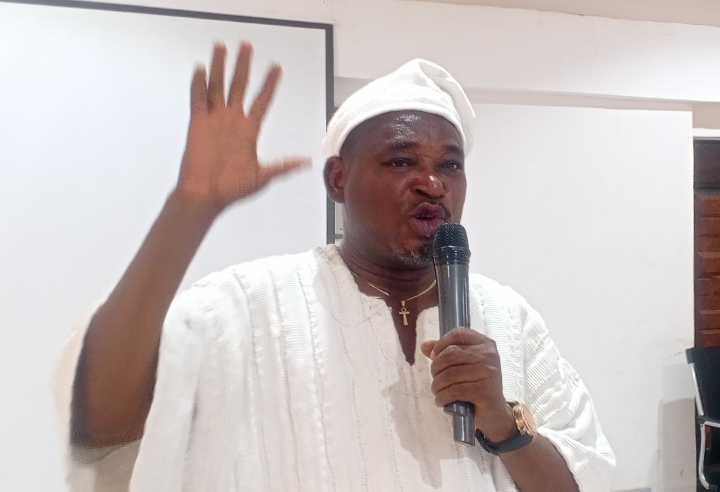
According to the MCE, the Assembly received GH¢10,590,423.31 as the District Assemblies Common Fund (DACF) for the first three quarters of 2025 and has invested the money in critical areas including education, health, sanitation, and infrastructure among others.
Mr Ayoo noted that infrastructure development remained central pillar of the Assembly’s development agenda, citing ongoing rehabilitation and expansion works of roads and drainage systems to improve access, address perennial flooding as well as boosting local economic activity.
He mentioned that several projects were at various stages of completion, including classroom blocks, Community-based Health Planning Services (CHPS) compounds, culverts, and mechanised boreholes across communities such as Kolgu-Agusi, Waribisi-Tanzui, Sawaba, and Sumbrungu.
In the education sector, the Assembly using DACF, has constructed and rehabilitated classroom blocks to reduce overcrowding, while distributing 1,200 dual desks and 11,852 textbooks to basic schools.
Additionally, 629 teachers received training in curriculum interpretation and assessment, while 450 BECE candidates were supported with learning materials to improve academic outcomes and retention, particularly among girls.
In the area of health, he said, the Assembly through the DACF, has expanded access to healthcare through the construction and expansion of several health facilities, including CHPS compounds at Yipala, Zaare East, and Kulbia, and would soon be handed over for use by the Ghana Health Service.
He also outlined other ongoing projects such as the Waribisi CHPS, Sawaba CHPS, and the Sumbrungu Anateem Health Centre, alongside renovations at Daporetindongo.
He added that public health campaigns on maternal health and disease prevention have also been intensified to help reduce maternal deaths and improve health outcomes.
Describing agriculture as the backbone of the local economy, the MCE said more than 800 farmer groups, involving nearly 20,000 farmers, have been registered under the Feed Ghana Programme while another 124 groups were benefiting from the “Akoko Nkitikiti” initiative.
“We have promoted value addition in areas such as food processing and agro-processing. For example, start-up kits including blenders, weighing scales, sealing machines, among others, were distributed to 93 women food processors. Aluminium pots, water containers and silver pans were also distributed to hundred (100) women food processors,” he added.
On social protection, Mr Ayoo disclosed that over GH¢3.1 million had been disbursed to 1,128 beneficiary households under the Livelihood Empowerment Against Poverty (LEAP) programme through seven payment cycles.
He added that reassessment and expansion exercises had identified over 5,000 potential new beneficiary households across 69 communities, pending enrolment.
The Assembly also disbursed over GH¢223,000 from the three per cent DACF allocation to Persons with Disabilities (PWDs), supporting 105 individuals and five organisations with business capital, equipment, and educational and medical assistance.
On sanitation, he noted that the Assembly has conducted 11 major clean-up exercises since May 2025, evacuated 13 refuse heaps, and improved waste disposal operations at the Sherigu landfill site while intensifying public education campaigns to whip up interest.
Despite the gains, the MCE cited limited financial resources, rapid urbanisation, and climate-related pressures as key challenges and noted development was a shared responsibility and underscored the need for stakeholders to drive the needed progress.
Looking ahead, he said the Assembly would continue to prioritise infrastructure expansion, economic transformation, improved revenue mobilisation, and stronger partnerships to drive sustainable urban development.
GNA
Edited by Caesar Abagali /Kenneth Odeng Adade
April 29, 2026
Anthony Adongo Apubeo