By Regina Benneh
Sunyani, (Bono), July 24, GNA – Stakeholders in the Bono Region has met to deliberate and to identify and tackle the growing trend of examination malpractices in the region, as candidates prepare to write the 2025 West African Senior School Certificate Examination (WASSCE).
This year’s WASSCE is set to take place from August 4, to September 19, according to the Ghana Education Service (GES) Accordingly, the Bono Regional Directorate of Education organized the day’s engagement meeting at the Sunyani Senior High School, attended by parents, teachers and civil society actors.
Addressing the stakeholders, Mr Gabriel Antwi, the Bono Regional Director of Education, noted that examination malpractices “have become an existential threat to quality education delivery in the region”.
He said: “Examination malpractices have compromised the integrity of the examination and the expected learning outcome in our schools” noting that many students engaged in the corrupt practice because they were not adequately prepared for the examination.
Mr Antwi said examination malpractices were assuming disturbing proportion, impacting adversely on the WASSCE results of students, saying in 2022, six SHSs in the region had their papers cancelled.
He said 10 schools also had theirs cancelled in 2023 with 19 out of 37 SHSs having at least one of their papers withheld or cancelled.
Nonetheless, Mr Antwi said the directorate with support of other stakeholders were taking proactive steps curb the examination malpractice saying the directorate had ordered all SHSs to hold stakeholder engagements to find lasting solution to the problem.
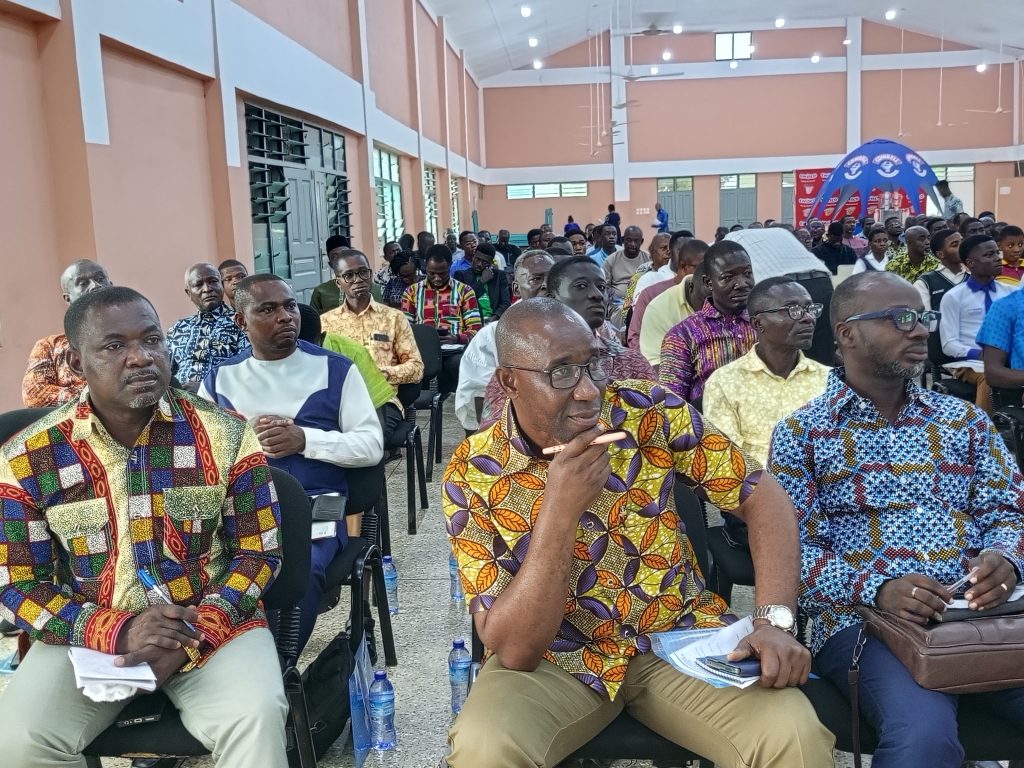
He said the various Municipal and District Directorates of Education had been directed to collaborate with the schools and subsequently submit their report to the regional directorate, saying the school had been tasked to constitute a five-member School Level Malpractice Monitoring Committee.
The Committees will provide and implement their action plans to curb examination malpractices in the various SHS.
Mr Antwi called on all the stakeholders to play their roles actively to stem the malpractices, urging parents in particular to also contribute their quota by refraining from the practice of paying bribes to teachers and invigilators to aid their children in the WASSCE.
He reminded teachers that those who would be caught in any form aiding the students in examination malpractices would be sanctioned accordingly, saying “our profession is a role-modelling institution and we must therefore respect and protect our dignity”.
Mr Antwi emphasized that fighting examination malpractices required collective approach, and urged all stakeholders to contribute and help protect the integrity of the WASSCE results.
GNA
Edited by Dennis Peprah/Christian Akorlie