By Edward Dankwah
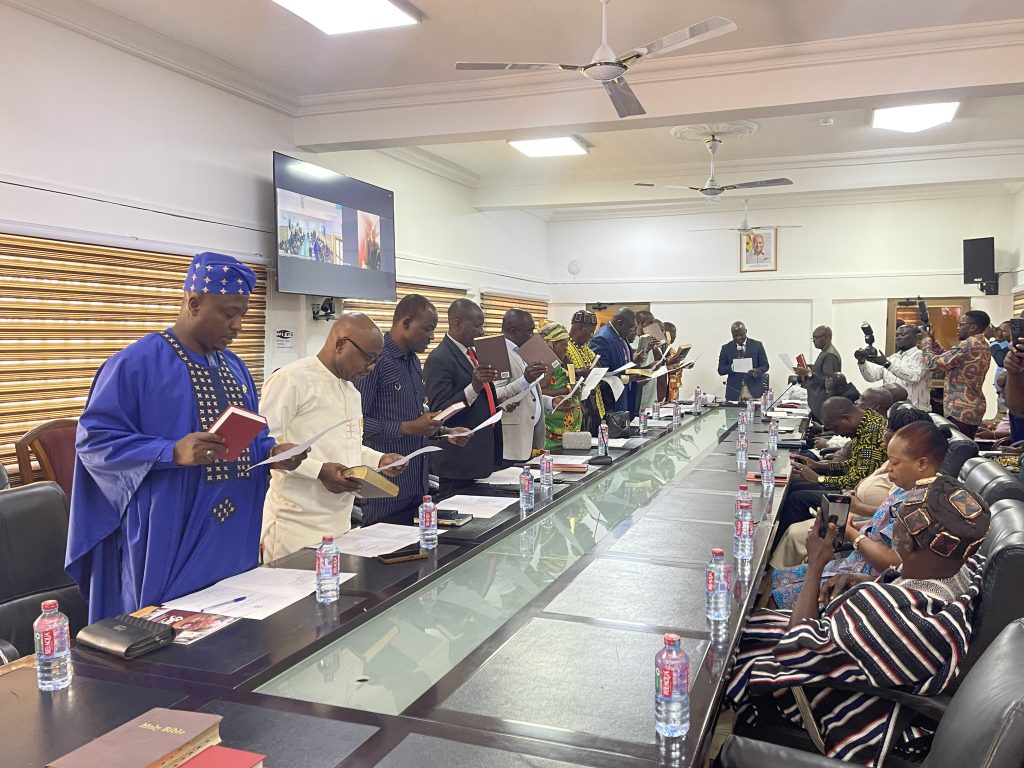
Accra, July 15, GNA – The Government of Ghana, through the Ministry of Local Government, Chieftaincy and Religious Affairs (MLGCRA) has inaugurated the sixth Governing Council of the Local Government Service (LGS).
The LGS Governing Council has 15 members; they have the responsibility of guiding the strategic policy direction of the Service by ensuring coherence with national development priorities while responding to the evolving needs of all communities.
Mr. Ahmed Ibrahim, the Minister for MLGCRA, said the inauguration signaled the President’s renewed commitment to strengthening local governance and enhancing public service delivery at the grassroots as part of the resetting agenda.
He said the Local Government Service represented the frontline of governance, the conduit through which the aspirations of Ghanaians were translated into tangible outcomes.
The Minister said its impact reverberated across every community, influencing livelihoods, promoting inclusion and driving development.
He said the LGS Council played a pivotal role in achieving the objective of the Local Government Service as enshrined in Section 51 of the Local Governance Act, 2016 (Act 936): “to Secure the effective administration and management of the decentralized local government system in the country”.
“The Council’s mandate, as outlined in the law (Sec 54) is both expansive and consequential” he added.
He said every officer at the Office of the Heads of Local Government Service, Regional Coordinating Councils, Metropolitan, Municipal and District Assemblies must be empowered to deliver results that matter.
Mr. Ibrahim said clear and measurable standards for their performance would be the compass of the LGS Council, guiding them toward excellence and enabling fair appraisal of progress.
He said coordinating training and professional development initiatives would be central to their success, and that a skilled and responsive workforce was non-negotiable in the President’s pursuit of a modernised and people-focused Service.
The Minister urged the Council to approach their work with integrity and strategic collaboration, forge strong partnerships across institutions, including development partners who served as co-creators in the progress sought.
Mr. Ibrahim stressed: “Remember, the work of the Council will be marked by openness, accountability and results-oriented engagement. Together, we can make local government a true engine of national transformation.”
“It is important to note that each of the previous Councils has its unique approach to governance, and while we acknowledge their achievements, we expect this sixth Council to excel above all previous accomplishments.”
Mr. Ibrahim said the Ministry was committed to working closely with the Council to positively shape the future of the Service and to provide policies that would strengthen service delivery by the right calibre of Human Resources at the local government level.
Madam Akua Sena Dansua, the Chairperson for the LGS Governing Council, said Ghanaians were counting on the Council to reignite the spirit of local governance and to ensure that citizens, particularly at the grassroots, received the quality of service and development they rightfully deserved.
Recognising the challenges ahead, Madam Dansua assured the President and the leadership of the Ministry that with their support, guidance, and wise counsel, they were ever ready to delivering on their mandate.
“With the collective expertise, experience, and insight of the Council Members, I have no doubt that we will rise to the occasion,” she stressed.
GNA
Edited by Benjamin Mensah