By Eunice Hilda A. Mensah
Accra, June 27, GNA – Dr Kamal-Deen Ali, the Director-General of the Ghana Maritime Authority (GMA), has called on industry players to address directly and frontally, harassment of seafarers on board ships to protect the dignity of the profession.
He said some of them were subjected to a lot of abuse, verbally, mentally and psychologically, from vessel managers and crew members, including their peers, whereas they were those that gallantly served the entire nation.
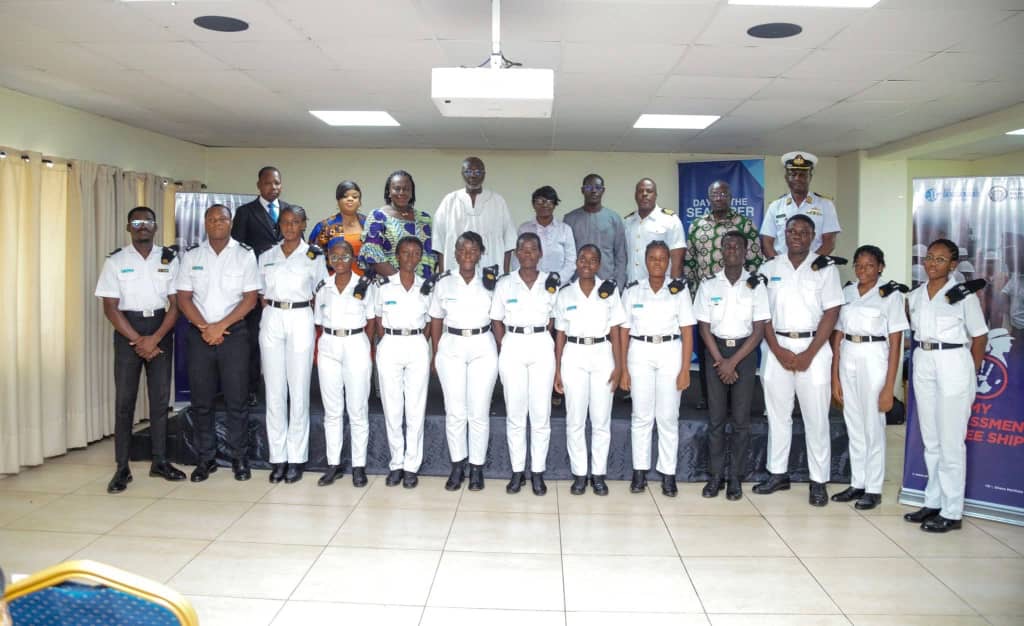
Dr Ali made the call at the observation of the 2025 Day of the Seafarer in Accra on the theme: “My Harassment-Free Ship”.
“For too long, harassment has been an issue in any area whatsoever. It has been swept under the carpet, but much so in the maritime sector, where seafarers may be at sea for months and for years without having a normal environment.
“So if harassment is a problem generally, we can imagine what it would be for that seafarer, whether male or female, that is confined in that important but small floating object that is sailing in unknown waters, in unknown countries, where the seafarer has nobody to relate to except a ship’s complement,” he said.
The Director-General stated: ” As Acting Director of the Ghana Maritime Authority, I stand here today with a renewed sense of purpose and the commitment to ensuring that Ghana’s flag vessels and our seafarers, both at home and abroad, are protected from any form of harassment, be it sexual, verbal, psychological or physical.”
Speaking on the theme, Dr Ali said it emphasized accountability and ownership, challenging everyone to take responsibility for the culture in workplaces, training facilities and aboard ships, not just as employers but as stakeholders in the wider maritime industry.
“So we are looking at charting the course with all of us. That will let us be able to increase our numbers at sea and be able to reclaim the glory that some of our distinguished seafarers have shown for Ghana. That potential, that dignity and that flag of a Ghanaian seafarer being one of the best in the world is with us today and will forever remain,” he noted.
Mr Teddy Mensah, a Chief Engineer with the Regional Maritime University, on behalf of the seafarers, said harassment in uniform was not to be condoned, especially in this day and age, when technology had brought all together in a global village and when gender equality was the norm.
“I do not see any basis for harassment in uniform, whether religious, cultural, tribal, or whatever it may be. It would be awesome for all of us, for locations like this, to encourage seafarers to be vocal on such issues, where harassment would not be entertained. I believe our cadets will bear this at the back of their minds when they do get the opportunity to go on board ship,” he said.
He said reporting formats were available on ships for reporting any form of harassment and encouraged the recruitment agencies to take reports of such harassments seriously, to prevent seafarers from being intimidated.
“We need to also do our bit to ensure that such reports are properly followed up and proper action is taken. All together, making us one, we can do our bit to keep harassment out of this noble profession,” he added.
Mr Joseph Bukari Nikpe, the Minister of Transport, in a speech delivered on his behalf, said seafarers were proned to health hazards due to the nature of onboard work, change in climatic conditions, type of cargo carriage, working hours, materials being handled, and diseases among other risk factors.
To add harassment, discrimination, and fear into the equation, he said was to strip away the dignity and safety that every human being deserved.
“Indeed, harassment of any kind is not acceptable, whether it comes from a superior officer, a crewmate, or a passenger,” he said.
Mr Nikpe explained that it went against the basic principles of decency, fairness, and respect, as well as international maritime regulations.
“As the Ministry with oversight over Ghana’s maritime development, we recognise that we have a responsibility to ensure that the human element of shipping is on the front banner. This is in addition to working with the Ghana Maritime Authority to enforce safety and dignity on both vessels,” he said.
The Minister said Ghana’s maritime sector and, for that matter, Ghana’s seaports were the main gateways for international trade, accounting for over 90 per cent of Ghana’s international trade, with human effect and potential for boosting GDP growth, while remaining pivotal for socioeconomic development.
“Indeed, seafarers are in high demand over the world, and Ghana is privileged to have one of the foremost maritime training institutions within the West African South region here in our country. Government’s strategy is to leverage the regional maritime investing to create jobs for our team and youth.
“In this regard, I urge the GMA to continue to collaborate with the Regional Maritime University to train and prepare more seafarers for export,” he said.
As part of government’s broader transport and labour policy, Mr Nikpe said they were working to increase Ghana’s presence in the global market by expanding training opportunities, building international partnerships, and facilitating cadets, placement schemes, and repeatable shipping lines.
“We strongly believe that seafarers can serve as a vital country for employment, skills, development, and foreign maintenance generation,” he said.
A seafarer is a person who works on or travels by sea, primarily as part of a ship’s crew or in a maritime profession.
The term encompasses a wide range of roles, from officers and engineers to deckhands and catering staff.
Seafarers are essential to global trade and maritime operations, ensuring the safe and efficient movement of goods and people across the world’s oceans.
GNA
Edited by George-Ramsey Benamba