By Anthony Adongo Apubeo
Bolgatanga, Sept. 09, GNA – The National Peace Council (NPC) has brought together security services and media practitioners, to dialogue on practical pathways to de-escalate the protracted Bawku conflict to support efforts towards sustainable peace in the area.
The two-day engagement, held in Bolgatanga, was organised by the NPC with funding support from the Government of Japan through the United Nations Development Programme (UNDP).
The engagement sought to strengthen collaboration among security institutions and the media, improve intelligence coordination and promote responsible communication and reporting to support peacebuilding efforts in Bawku.
Dr George Amoh, the Executive Secretary of the NPC, said the Bawku conflict remained one of the most difficult and protracted conflicts in Ghana, requiring sustained and inclusive efforts to address the underlying issues.
He said the Council had placed Bawku at the centre of its activities for the year and had embarked on engagements with key stakeholders as part of efforts to identify outstanding issues and develop a pathway towards resolving the conflict.
Dr Amoh said following engagements with stakeholders from the Kusasi and Mamprusi sides, several issues emerged, including concerns about the roles of security agencies and the media in the conflict.
“The two groups mentioned the media as being one of the contributory parties. So, what we told ourselves is, then let us bring our media and our security together, so that we would find a common path to help them de-escalate,” he said.
He explained that the dialogue was deliberately designed not as a conventional training programme but as an opportunity for participants to have frank discussions and identify practical measures that could contribute to peace in Bawku.
Dr Amoh said Bawku’s strategic location, sharing borders with Togo and Burkina Faso, made peace in the area critical to Ghana’s security and development, adding that restoring lasting peace would create opportunities for development and improve relations among communities while strengthening Ghana’s position in the sub-region.
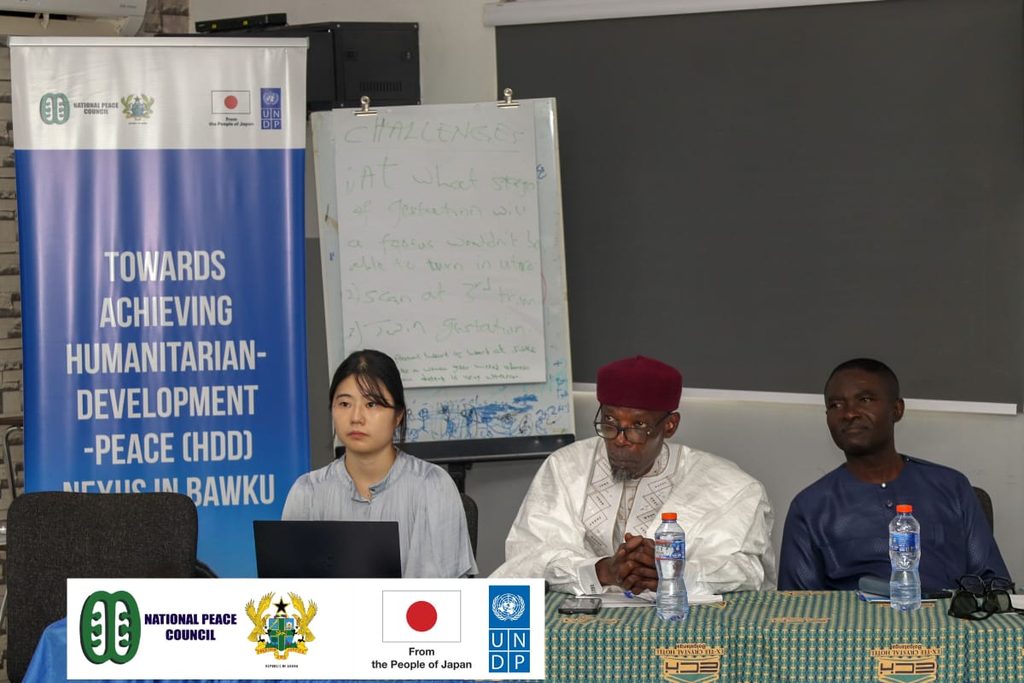
Sheikh Armiyawo Shaibu, a Member of the Governing Board of the NPC, urged media practitioners to exercise professionalism and responsibility in their reporting on the Bawku conflict.
He said the media had a moral and ethical responsibility to ensure that their work did not contribute to escalating tensions or deepening divisions among communities.
“Your work should look at promoting peace in a professional manner devoid of sensationalism, incitement and biases,” he said.
He urged journalists and other media actors to look beyond individual interests and contribute to national cohesion, social cohesion and good neighbourliness.
He said the dialogue was expected to enhance the knowledge of media practitioners and journalists on peaceful, responsible messaging and reporting while improving cooperation between the media and security institutions.
Ms Izumi Kume, the Coordinator for Economic Cooperation at the Embassy of Japan in Ghana, said Japan considered supporting the peace process in Bawku important and meaningful.
She said Japan began discussions on supporting the peace process following a request from the Office of the President and subsequently worked with relevant national institutions, including the NPC and the National Security Council.
Ms Kume said Japan hoped the engagement would contribute to peacebuilding in Bawku and eventually create an environment conducive to development.
The engagement brought together representatives of the security services, media practitioners and other stakeholders to identify areas of collaboration and develop practical approaches towards de-escalating tensions, rebuilding trust and promoting lasting peace in Bawku.
Mr Akamugri Donatus Atanga, the Upper East Regional Minister, in a speech read on his behalf, commended the NPC for convening the engagement to deepen inter-agency cooperation and promote practical, intelligence-led and problem-solving approaches to challenges confronting Bawku.
He expressed appreciation to the security services and traditional leaders for their “tireless efforts, restraint and commitment” in maintaining the fragile peace and ceasefire that had prevailed in Bawku over the preceding three months.
“While we recognise that the peace remains fragile, these three months of relative calm demonstrate what can be achieved when our security agencies, traditional authorities and other stakeholders work together,” he said.
GNA
Edited by Caesar Abagali/ Christabel Addo
Reporter: Anthony Adongo Apubeo
Reporter’s email: [email protected]