By Edward Dankwah
Accra, Sept. 20, GNA – Mrs Kate Opoku, Country Lead, Let’s Do It Ghana, an NGO, has urged Ghanaians to take personal responsibility for keeping the environment clean, saying collective action is critical to addressing the growing global waste crisis.
“There is no Planet B, and keeping our environment clean is our responsibility because this is our only home,” she added.
Mrs Opoku made the call during a clean-up exercise at Ananse Beach to mark this year’s World Cleanup Day.
The exercise was organised by Let’s Do It Ghana in collaboration with Mayeko, with support from the Indian High Commission, volunteers, corporate organisations, partners and individuals committed to protecting the environment.
She said World Cleanup Day provided an opportunity for people across the globe to clean their communities and raise awareness about the impact of waste on the environment.
Mrs Opoku said the initiative began in Estonia in 2008, when about 50,000 people came together to clean the country within five hours, and had since developed into a global movement.
She said the United Nations adopted World Cleanup Day two years ago, further strengthening global efforts to address waste management challenges.
Mrs Opoku said about 139 million people from 201 countries participated in World Cleanup Day last year, demonstrating what could be achieved when people united for a common environmental cause.
She said the decision to clean the beach was significant because waste generated inland was often carried through drains and waterways into the sea.
She cautioned against indiscriminate littering, saying the practice contributed to the pollution of beaches and other water bodies.
Mrs Opoku urged the public to change their attitudes towards waste management by reducing their dependence on single-use plastics and adopting reusable and refillable alternatives.
“Environmental protection should not be viewed as the responsibility of government and environmental organisations alone, but as a shared responsibility requiring the active participation of every individual,” she said.
Mr Robert Mills, Partnerships and Programme Lead at Mayeko, a non-governmental organisation, said the organisation had adopted Ananse Beach at Nungua in the Krowor Municipality to undertake regular clean-up exercises for one year.
He said the initiative was being implemented in partnership with the Krowor Municipal Assembly to restore the beach and improve its environmental condition.
Mr Mills said Mayeko had been undertaking clean-up exercises at the beach since April and chose World Cleanup Day to intensify the initiative and draw attention to the need for sustained efforts to protect the coastline.
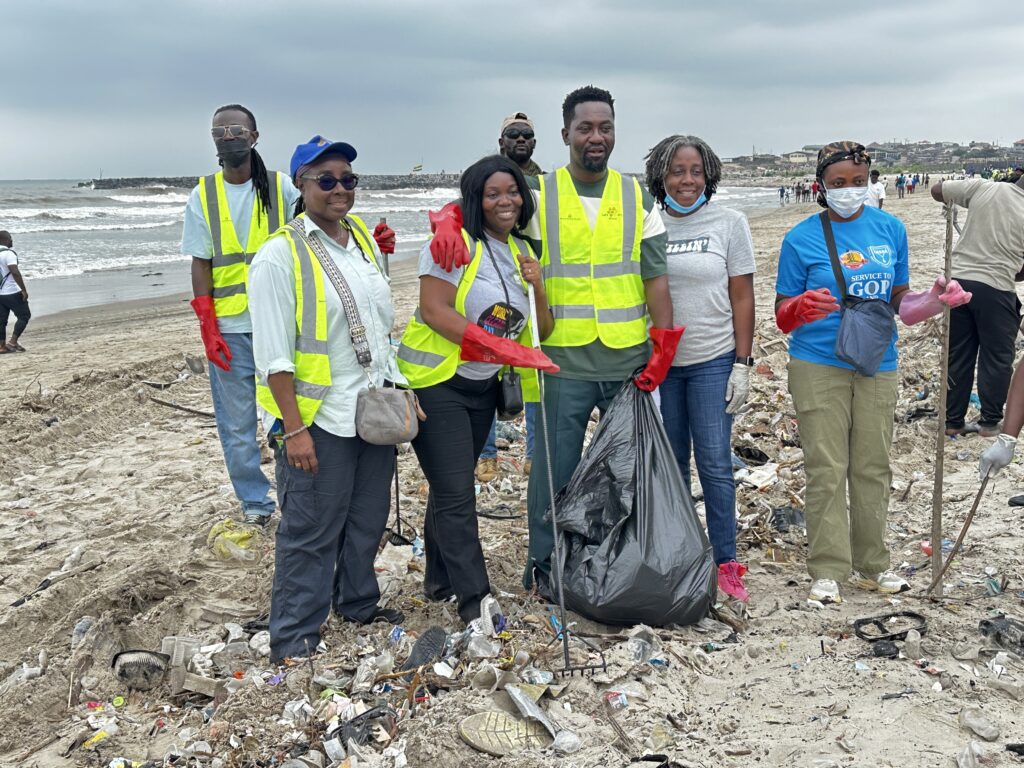
Mr Surinder Bhagat, Indian High Commissioner to Ghana, called for collective action to protect and reclaim the country’s beaches, describing them as valuable assets critical to livelihoods, food security and the environment.
He said Ghana’s marine waters were crucial to the economy, adding that small-scale marine fisheries accounted for more than 90 per cent of marine fishers in the country, according to the Food and Agriculture Organisation.
Mr Bhagat said beaches should be regarded as national treasures and assets but were underutilised and threatened by poor sanitation, stressing the need for sustained efforts to reclaim and protect them.
He said the clean-up formed part of India’s Swachh Bharat (Clean India) campaign, anchored on the principle that “cleanliness is service”, and demonstrated the importance of individuals contributing their physical labour to the wellbeing of society and the environment.
The High Commissioner said the Indian High Commission was ready to collaborate with Mayeko, Let’s Do It Ghana and other partners on initiatives that would deliver long-term benefits to society.
“Cleanliness is not only about preventing diseases; it is also about showing respect for our fellow citizens,” he said.
Quoting India’s independence leader, Mahatma Gandhi, Mr Bhagat said sanitation was more important than political independence, emphasising that cleanliness and a healthy environment were fundamental to human life and dignity.
GNA
Edited by Lydia Kukua Asamoah