By Anthony Adongo Apubeo
Nangodi (U/E), Sept. 05, GNA – Stakeholders in the Nabdam District have called for the expansion of a two-year indigenous land restoration project, to cover more communities and provide alternative livelihood opportunities to residents to sustain gains made in restoring degraded lands.
The project dubbed: “Farmer-Managed Natural Regeneration (FMNR) Heritage,” is being implemented by World Vision Ghana and the Centre for Community Development Initiatives (CODI), with funding from the European Union under the Sustainable Forest and Cocoa Programme through the European Forest Institute.
The two-year project seeks to restore 1,500 hectares of degraded land and improve climate resilience among farming communities in the Nabdam District.
It is expected to benefit more than 10,000 people, particularly women, youth and vulnerable groups across the district.
The stakeholders, made up of the heads of departments of the District Assembly and beneficiary communities, said expanding the project alongside interventions in irrigation, dry-season farming, fish farming and agro-processing, would help reduce communities’ dependence on activities that contribute to environmental degradation.
They made the call when Ms Patience Padikie Olesu-Adjei, the Programme Manager in charge of Natural Resources at the European Union (EU) Delegation to Ghana, paid a visit to the district to assess the implementation of the project.
She was accompanied by Mr Elvis Kuudaar, the Forest Governance and Restoration Expert at the European Forest Institute.
Mr Francis Tobig, the Nabdam District Chief Executive (DCE), said providing alternative livelihoods was critical to the success of efforts to restrict activities that degraded the environment because several residents depended on such activities for their survival.
“When you want to limit their movement within the forest zone, certainly we need to provide a reasonable proof that you will have alternative livelihoods for them, because it is something they do to sustain their livelihoods,” he said.
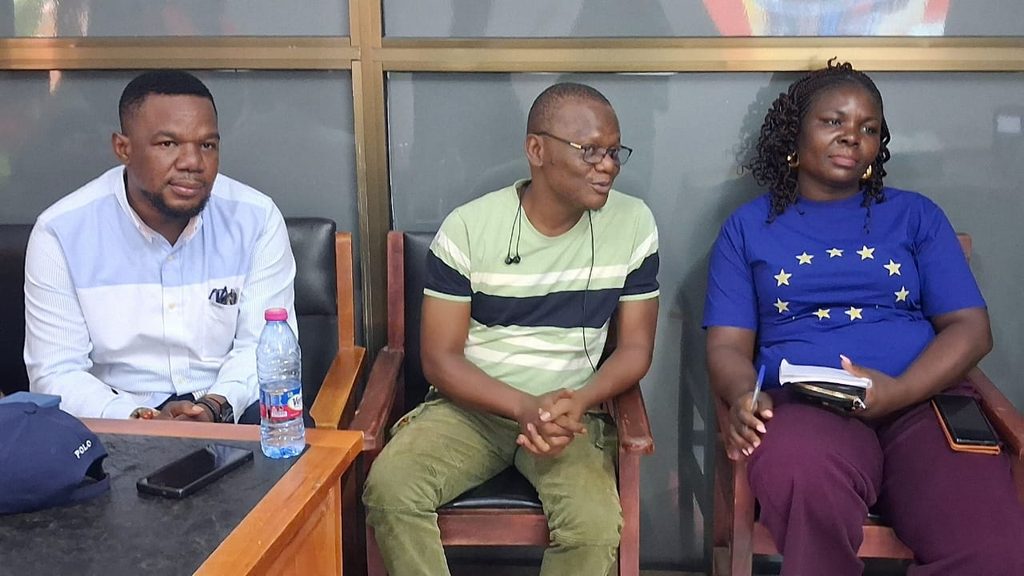
He identified irrigation as one of the key interventions that could support livelihoods, particularly during the dry season, and enable young people to remain in their communities, adding that the Assembly was exploring the use of solar-powered boreholes for dry-season farming.
He also identified fish farming as another viable alternative, saying communities with dams could be trained and supported to engage in aquaculture and generate income while reducing pressure on natural vegetation.
Mr Rasheed Imoro, the Nabdam District Director of the Department of Agriculture, said relatively small plots of land could sustain households through dry-season vegetable farming if farmers had access to water and adequate protection from stray animals.
He advocated the provision of boreholes, solar-powered pumping systems and storage tanks to support small-scale irrigation, rather than relying solely on expensive large-scale irrigation schemes.
He said the district could establish such facilities at several locations to enable groups of farmers to cultivate vegetables and generate regular income.
Mr Michael Nanor, the Nabdam Forest Range Manager of the Forestry Commission, said the intervention aligned with the government’s Tree for Life reforestation initiative and had supported the distribution of seedlings to schools, adding that the use of indigenous tree species adapted to the local environment was important.
The Benzure community, one of the beneficiary communities of the project, lauded the project and appealed for alternatives such as ruminants and water for dry-season farming to reduce their dependence on the forest.
Mr Rexford Bugre, the Northern Operations Manager of World Vision Ghana, said alternative livelihoods were central to successful restoration and re-greening efforts, noting that household-level processing and dry-season gardening had demonstrated the potential to generate income for community members.
He called for an extension of the project, both in terms of geographical coverage and duration, to enable more communities to benefit from the interventions.
Mr Jonas Bugre, the Project Officer, World Vision Ghana, said the project had already trained 865 farmers from communities in FMNR approaches and mapped out 264.6 hectares of degraded lands for restoration.
On her part, Ms Olesu-Adjei expressed happiness that the project was embraced by the communities and stakeholders, adding that their concerns were noted and would be relayed to the appropriate authorities for consideration.
GNA
Edited by Caesar Abagali/ Christabel Addo
Reporter: Anthony Adongo Apubeo
Reporter’s email: [email protected]