By Benjamin Adamafio Commey
Accra, Sept. 14, GNA – Two artists from Ghana and Italy have joined forces to confront climate change, marine degradation, waste colonialism and humanity’s strained relationship with nature through a joint exhibition in Accra.
The exhibition, dubbed “Tides of Humanity,” brought together the photographic works of Sicilian photographer Francesco Bellina and textile artist Emmanuel Aggrey Tieku, creating an artistic dialogue between Ghana, Italy and the wider global community over the future of the oceans and the people whose lives depend on them.
The exhibition examined the interconnectedness of the sea and its peoples, while drawing attention to environmental practices that threatened marine ecosystems and livelihoods, particularly those of fishing communities.
Bellina, who is based between Palermo and Accra, said his connection with Ghana began before his first visit to the country in 2019, through the Ghanaian community in Palermo, where he lived.
He said his upbringing in Trapani, a Sicilian fishing community, and subsequent engagement with Ghanaian fishing communities, particularly in Jamestown, enabled him to draw parallels between the challenges confronting fishermen in Ghana and Sicily.
“I wanted to involve local artists… to say something to respect not only the environment but also the people,” Bellina told journalists in an interview.
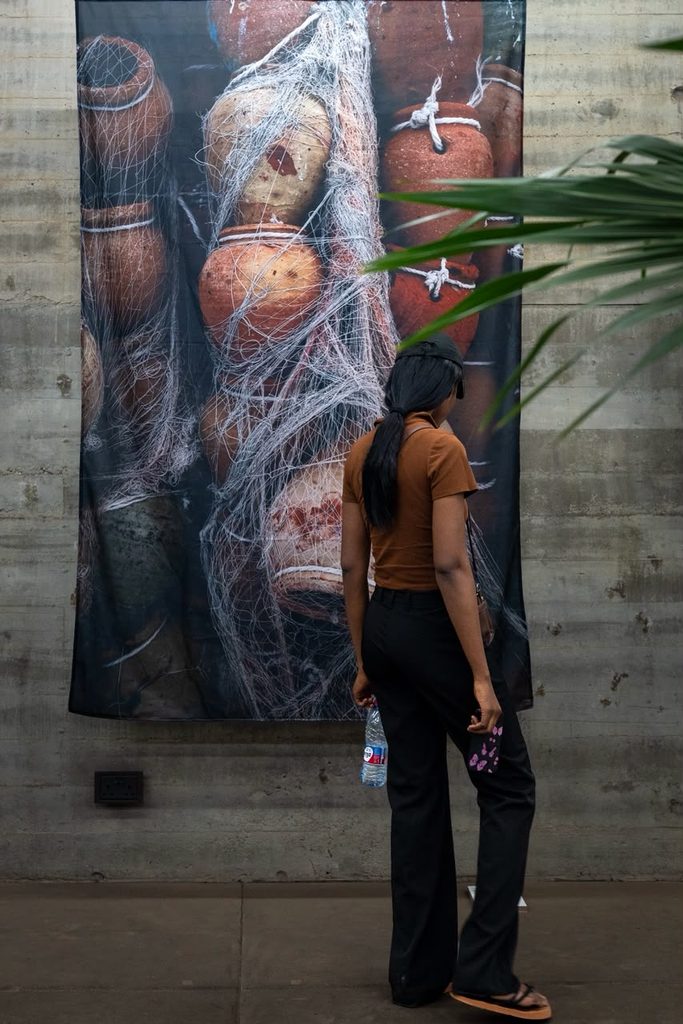
His contribution to the exhibition drew on his family’s fishing heritage, including photographs of relatives engaged in fishing and a fishing net belonging to his family in Trapani.
He said climate change was increasingly affecting fishing communities through rising sea temperatures, declining fish stocks and the emergence of invasive species.
Bellina’s installation also references religious and cultural traditions, combining a Sicilian devotional object with Ghanaian cultural symbolism to express hope and respect for different belief systems.
He also called for greater public education on environmental responsibility, arguing that enforcement alone could not solve pollution and climate-related challenges.
“What is needed is education. That’s what we have to do. We have to explain that any choice you do in your life is connected with your future,” he said.
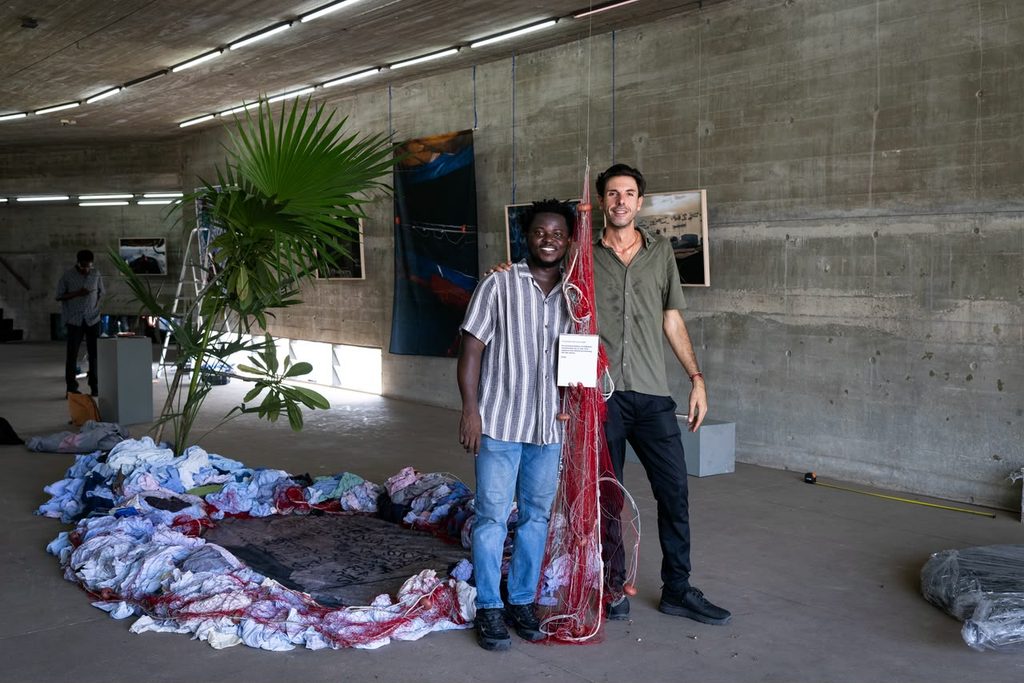
Tieku, a Ghanaian artist and civil engineer, approaches the environmental crisis through discarded second-hand clothing sourced mainly from Kantamanto Market, beaches and landfills.
He said textiles fascinated him because they accompanied people throughout their lives, from birth to death, carrying traces of identity, culture and personal experiences.
“It’s not about how they affect these systems… it’s about how a material so vulnerable, so clinging to the human body, can reinvent itself as the main ingredient of capitalism,” Tieku said.
His work interrogates the huge volumes of used clothing entering Ghana, much of which is discarded after failing to find buyers, eventually accumulating in gutters, beaches, landfills and the ocean.
Tieku described this phenomenon as part of “waste colonialism,” questioning how consumption patterns in wealthier countries transfer environmental burdens to communities in the Global South.
His long-term project, “How to Heal a Broken World,” launched in 2023 and planned to run until 2068, uses textile archiving, material innovation and public interventions to examine waste, identity, consumerism, climate change and sustainability.
He said discarded clothing could be viewed as a form of historical record, carrying stories of people and cultures far beyond Ghana.
The artists said they hoped the exhibition would go beyond documentation by encouraging action, cultural exchange and stronger connections between communities in Ghana and Sicily.
The exhibition brought together government officials, members of the diplomatic corps, civil society organisations and other stakeholders to discuss marine life, environmental sustainability and the implications of human activity on the natural world through art.
GNA
Edited by Kenneth Odeng Adade
Reporter: Benjamin Adamafio Commey
[email protected]