By Morkporkpor Anku, GNA
Accra, Sept. 3, GNA – ln 2013, when the Ghana Garden and Flower Show took root, few imagined it would blossom into one of the country’s most enduring environmental and horticultural movements.
What began as a modest campaign to encourage sustainable gardening has, over 13 editions, evolved into a national platform championing climate action, urban greening, business innovation and environmental stewardship.
The inaugural show on the theme “Sustainable Gardening in Ghana,” focused on creating awareness of the environmental, health and economic benefits of gardening. It planted the first seeds of a movement that encouraged households, schools and institutions to embrace greener lifestyles, while recognising the role of nature in improving livelihoods.
The momentum gathered in 2014 on the theme “Gardening for Value, Health, Beauty, Jobs and Income” and for the first time, the show shifted beyond beautification to highlighting horticulture and floriculture as viable commercial enterprises capable of creating employment, generating income and contributing to local economic development.
By 2015, the organisers, Strategic Communications Africa Limited (Stratcomm) had expanded the conversation with “The World is Your Garden,” encouraging Ghanaians to view environmental protection as both a personal responsibility and a collective national duty.
The message resonated with communities increasingly confronted with climate change, deforestation and environmental degradation.
The fourth edition in 2016, themed “Dream It, Discover It, Live It,” aligned gardening with ecotourism and the United Nations Sustainable Development Goals, demonstrating that green spaces could become engines for tourism, education and sustainable development.
A year later, “Flower Ghana, Grow Ghana” elevated floriculture from a niche activity to a potential economic sector. The 2017 edition advocated greater investment in flower production, landscaping and ornamental horticulture as drivers of economic transformation and environmental renewal.
In 2018, the campaign became more personal with “Reaching Ghana, A Garden at a Time.” Individuals, businesses and communities were encouraged to create gardens in homes, offices and public spaces to improve health, enhance aesthetics and build greener neighbourhoods.
The movement’s call for civic responsibility became even stronger in 2019 through “Be the Change,” which urged citizens to take ownership of sanitation, tree planting and environmental conservation instead of waiting for government intervention.
When the COVID-19 pandemic disrupted public events in 2020, the Ghana Garden and Flower Show demonstrated remarkable resilience. Rather than suspending the programme, organisers staged a virtual edition on the theme “Live the Change,” using digital platforms to promote sustainable living and environmental consciousness during one of the world’s most challenging periods.
The following years reflected a movement growing in confidence and influence on the theme: “9G – Nine Years of Green Living” celebrating nearly a decade of impact in 2021, while “Growth Unleashed” in 2022, theme marked the show’s 10th anniversary by promoting youth entrepreneurship in horticulture and green businesses.
The theme for the 2023 edition, “Green Fusion–Collaborating for Climate Change” encouraged partnerships among government, the private sector and civil society to tackle climate challenges collectively.
The momentum continued with “Cultivating Hope for a Sustainable Future” in 2024, which focused on food security, climate resilience and green innovation.
Last year’s edition on the theme: “Urban Places, Green Spaces,” challenged Ghanaians to transform concrete cities into healthier, greener environments where people and nature could thrive together.
Launching the 2026 edition, Mrs Joyce Bawah Mogtari said the Ghana Garden and Flower Show had grown into a strategic platform demonstrating that environmental sustainability and economic transformation could advance together.
Speaking on the theme: “Green Means Business, Beauty and More,” she said investments in the green economy created stronger economies, healthier communities and better opportunities for future generations.
She urged government, businesses and development partners to deepen collaboration to expand horticulture, floriculture and other green enterprises capable of creating jobs and boosting exports.
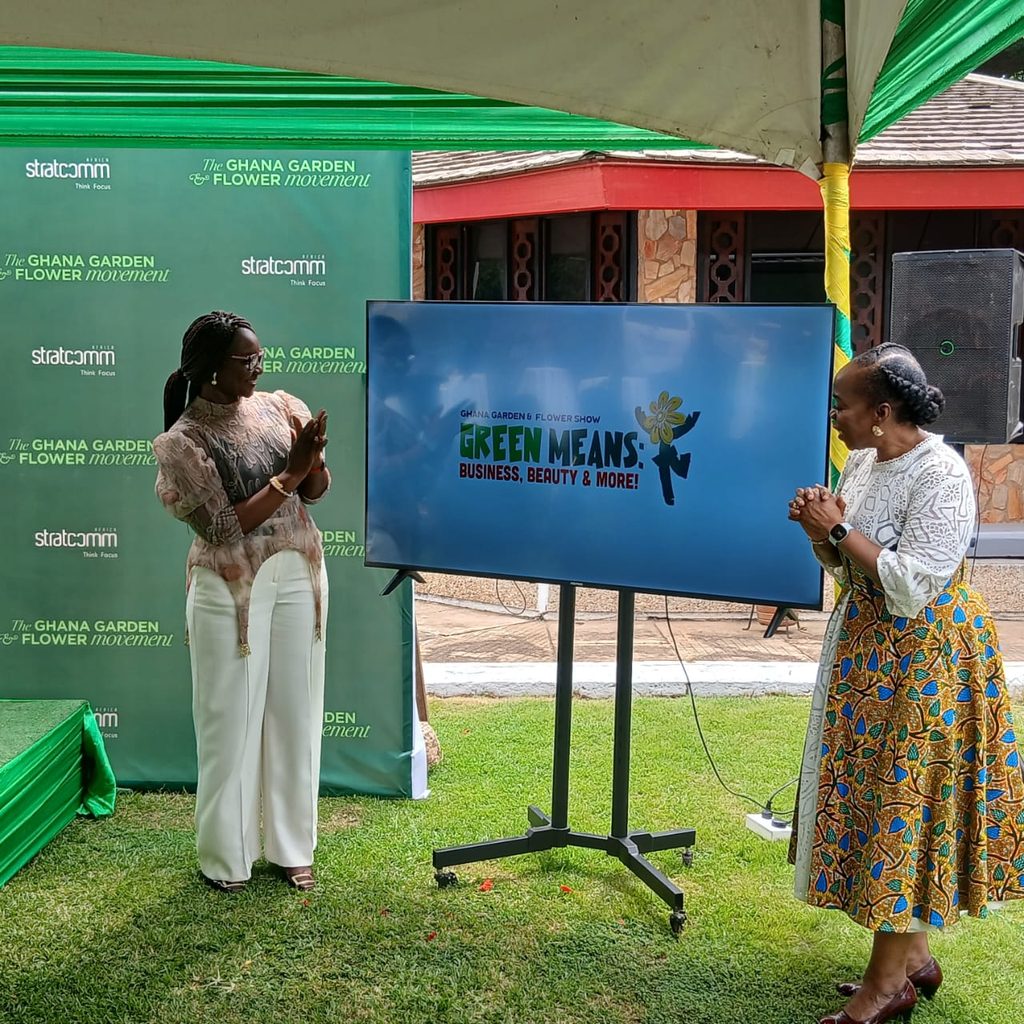
Mrs Bawah Mogtari also drew inspiration from Singapore’s orchid diplomacy and Kenya’s successful flower export industry, saying Ghana possessed the natural resources to become a competitive player in global floriculture.
She encouraged stronger public-private partnerships to support small and medium-sized enterprises, particularly those led by women and young entrepreneurs, and called on all Ghanaians to participate in the 2026 Ghana Garden and Flower Show, scheduled for September 12 to 21 at the Efua Sutherland Children’s Park.
For Ms Esther A. N. Cobbah, Chief Executive Officer of Stratcomm Africa and convener of the show, the movement has always been about changing mindsets as much as changing landscapes.
She said “Green Means Business” reflected President John Dramani Mahama’s vision of positioning Ghana as a country open for enterprise and innovation.
She urged Ghanaians to see their homes, gardens and communities as centres of economic activity, adding that plants grow around the clock and perfectly embody the principles of the 24-hour economy.
She challenged the country to reduce dependence on imported flowers, develop a competitive floriculture industry, earn foreign exchange and use the green economy as a practical weapon in the fight against poverty.
More than a decade after its humble beginnings, the Ghana Garden and Flower Show has grown from an annual exhibition into a national movement.
Its legacy lies not only in the colourful displays of flowers and landscapes but also in the growing conviction that Ghana’s future prosperity may well be rooted in its gardens, its green spaces and the willingness of its people to cultivate them.
GNA
Edited by Kenneth Odeng Adade
Reporter: Morkporkpor Anku
[email protected]