By Alberta Oppong-Ansah, GNA
Accra, Sept. 11, GNA – The Council for Scientific and Industrial Research-Food Research Institute (CSIR-FRI) is leading a study to evaluate improved fish smoking technologies aimed at enhancing food safety.
It is to help reducing smoke related emission environmental impacts and increase adoption among artisanal fish processors in Ghana.
The study forms part of the international “Reimagining Food Systems for Climate Change Adaptation, Mitigation and Social Justice” project, under the Small Fish for Climate Change initiative, which is being implemented in several countries across Africa and India.
In Ghana, the research is being undertaken by CSIR-FRI, led by Dr Amy Atter, a Principal Research Scientist, in partnership with the University of Bergen in Norway, led by Prof. Ragnhild Overå, with funding support from the Research Council of Norway.
Dr Amy Atter told the Ghana News Agency in Accra that the project was comparing two improved fish smoking technologies, the modified Ahotor oven and a retrofitted Chorkor oven, against the traditional Chorkor oven, which remained the most widely used smoking technology among fish processors.
The traditional Chorkor oven, developed in 1969 through collaboration between the Food and Agriculture Organization, CSIR-FRI and women fish processors in the Chorkor fishing community, has significantly improved fish smoking capacity, uniform heat distribution and reduces post-harvest losses over the years
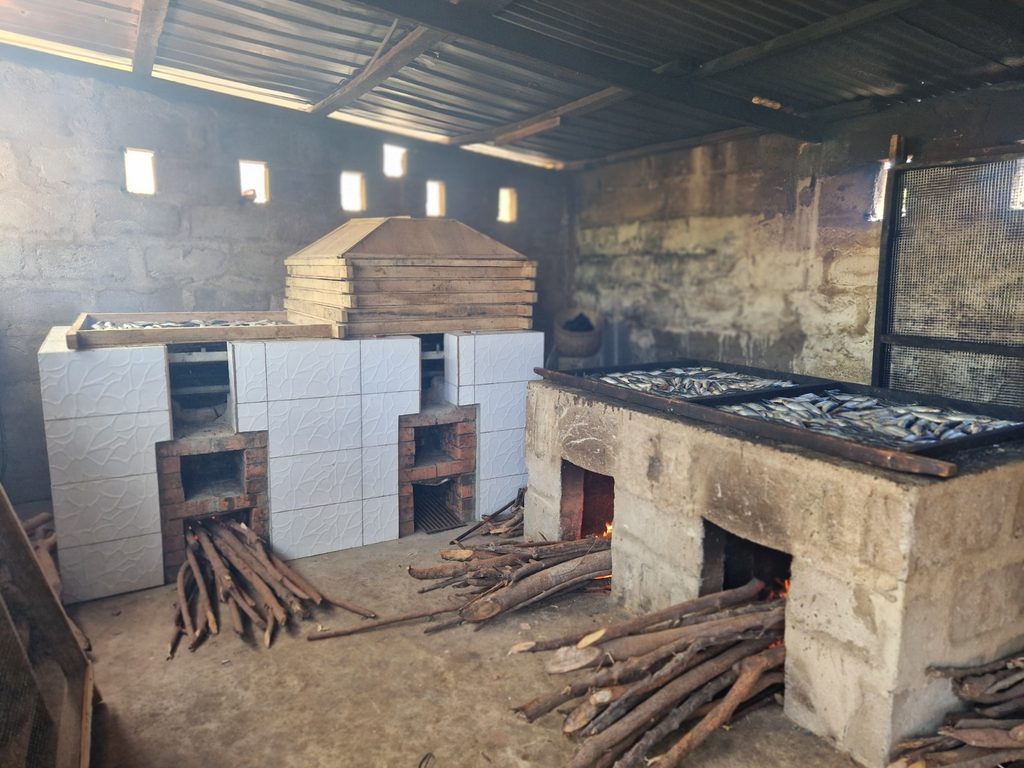
Dr Atter said studies have shown that smoked fish produced with the technology can contain high levels of polycyclic aromatic hydrocarbons (PAHs), chemical compounds associated with cancer risks when consumed frequently. These levels exceed international limits.
“To address these concerns, the Ahotor oven was developed in 2016 by USAID‑funded Sustainable Fisheries Management Project to improve fuel efficiency, reduce smoke emissions and lower PAH contamination in smoked fish”, she noted.
“Despite its technical advantages, including reduced smoke exposure and improved product quality, many processors found the original Ahotor oven expensive, difficult to operate, and with some challenges, leading to limited uptake”.
The Principal Research Scientist said lessons from earlier projects prompted CSIR-FRI in 2022, through the EU- funded HealthyFoodAfrica project, Fisheries Commission, with other partners to redesign the oven, resulting in the modified Ahotor version, while also introducing a retrofitted Chorkor oven fitted with a fat-collecting tray to reduce harmful contamination. However, scientific evidence is needed to show how much these ovens reduce PAH contamination in smoked fish.
Dr. Emmanuel Kwarteng, Fisheries Scientist, said the retrofitted Chorkor oven retains the familiar design and construction materials of the traditional oven but incorporates features intended to improve fish safety at a significantly lower cost.
He noted that research had shown that affordability and simplicity could increase adoption among small-scale fish processors.
Ms. Yaa Tiwaah Amoah, Head, Post-Harvest Management & Trade Division at the Fisheries Commission, said as part of the study, six fish processing communities were selected across the Eastern, Greater Accra, Volta and Central regions following consultations with key stakeholders.
The selected sites include Akosombo, Kpong, Ahwiam, Joma, Vodza and Saltpond-Ankaful.
Selection was based on active fish smoking activities, existing use of fish smoking technologies, and the willingness of processors to participate in the research and monitoring activities.
GNA
Edited by Kenneth Odeng Adade
11 Sept 2026
Reporter: Albert Oppong-Ansah
Email: [email protected]