By Albert Oppong-Ansah, GNA
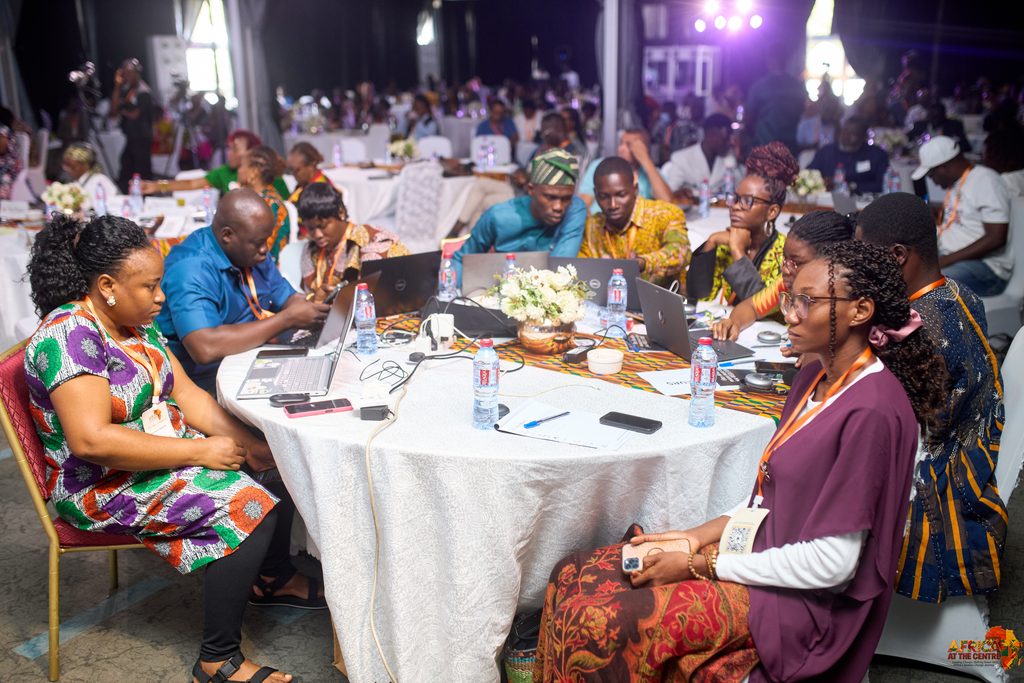
Accra, Sept. 09, GNA – In a conference room filled with activists, philanthropists, policy thinkers, and civil society leaders from across Africa, the conversations often returned to funding, development partnerships and changing global politics.
Yet beneath those discussions lay a deeper question, one that touched on history, identity, and the future of an entire continent: Why does Africa, despite its resources, talent, and resilience, still struggle to determine its own development priorities?
For three days in Accra, participants from across the continent grappled with that question, sometimes agreeing and sometimes challenging one another, but united by a growing belief that Africa can no longer afford to remain on the margins of decisions that affect its future.
The gathering came at a time when the global development landscape is shifting rapidly. Traditional aid budgets are shrinking in many countries; geopolitical alliances are changing and long-standing assumptions about development cooperation are being questioned.
Dr. Nana Asantewa Afadzinu, Executive Director of the West Africa Civil Society Institute (WACSI), told the Ghana News Agency that those changes create both uncertainty and opportunity.
She noted that Africa has reached a point where it must confront uncomfortable truths about the systems that continue to shape its development journey, saying, “For too long we’ve had development done to us.”
“We’ve not been in the driving seat of deciding what the solutions should be to our own problems and resourcing them.”
Dr Afadzinu traced that reality to historical forces that have pushed Africa to the margins of global decision-making for centuries.
But she was equally emphatic that the continent possesses the resources, human capital and values needed to chart a different course.
“We have agency and we have good things in Africa. We have values and principles. We have resources, and those resources are not only money,” she said.
Her comments reflected a recurring theme throughout the convening: that Africa’s challenge may no longer be simply a question of resources, but rather of who controls them and who decides how they are used.
That question resonated deeply with Madam Nafisa Toussaint, Senior Manager for Portfolio Services at African Collaborative, who spoke about what she sees as a subtle but significant shift among some African-led organisations.
She recalled an instance involving a community-based organisation that declined funding because the donor’s expectations did not align with the organisation’s own vision.
The funder wanted rapid expansion into new communities, while the organisation believed it needed to deepen its impact in existing communities before scaling up.
Although declining the funding was difficult, the organisation eventually made the decision because it believed accepting the money would compromise its long-term mission.
Ms Nafissatou Sene, Senior Manager, Portfolio Services, African Collaborative, said that decision represented a growing willingness among local organisations to assert their priorities rather than automatically adapting to external expectations.
“They wanted to send a message. We are not going to take anything just because it comes our way,” she said, yet not everyone believes saying no is easy.
Among the delegates was Edwin C. Mends-Cole, Executive Director of the Youth Climate Change Initiative Liberia, who offered a reflection on the realities facing many grassroots organisations.
Unlike larger institutions with diverse funding streams, smaller organisations often operate in environments where opportunities are limited and competition for resources is intense.
Asked whether organisations could realistically reject funding that did not align with community priorities, his answer was blunt.
He explained that many organisations face pressure to survive, maintain staff, and sustain operations. As a result, they sometimes accept projects that do not fully reflect community needs.
The consequences, he said, are often visible long after project funding ends.
“You go back after a year and you don’t see any trace of the project,” he said.
The damage goes beyond wasted resources. Communities that fail to see meaningful outcomes gradually lose trust in the organisations that operate among them.
“When the community doesn’t trust you any longer, it becomes very difficult to rebuild that relationship.”
His concerns echoed remarks by Mr Khalifa Losene Dunor, founder and Executive Director of Liberia’s Centre for Dignity and Inclusion, who argued that many development interventions fail because communities are rarely involved in defining the problems projects are meant to solve.
Drawing on examples from disability programming and education interventions in Liberia, Mr Dunor questioned why projects are sometimes designed based on assumptions rather than direct engagement with those most affected.
He argued that meaningful development begins not with donor proposals or project documents but with listening.
“If you engage the people most affected by a problem, they will tell you what the problem is,” he said.
For him, community ownership is not merely a development slogan but a practical necessity.
His organisation increasingly relies on what he describes as local assets, including community knowledge, volunteerism, and collaboration, rather than waiting for external resources before acting.
That emphasis on local ownership also emerged in conversations about knowledge itself.
Some participants argued that Africa’s development debates often overlook indigenous knowledge and local solutions that have sustained communities for generations.
Mr Dunor reflected on how traditional beliefs that many young Africans dismiss as superstition often served practical environmental purposes.
Certain trees were protected. Species were preserved. Communities developed unwritten systems for managing natural resources long before concepts such as biodiversity conservation and climate resilience became part of international policy discussions.
“We keep looking for knowledge outside when we already have a huge one,” he said.
The importance of local knowledge was also highlighted Madam Tendisai Chigwedere, Programme Officer at the Hewlett Foundation, one of the organisations supporting the convening.
To her, conversations about indigenous knowledge repeatedly surfaced throughout the discussions, suggesting that many Africans are beginning to reconsider the role traditional knowledge systems can play in addressing contemporary challenges.
“There is something important there to explore,” she said.
At the same time, participants acknowledged that reclaiming voice and ownership requires more than cultural reflection. It also requires reimagining how development itself is financed.
Madam Wanjiru Kanyiha, the Network Coordinator of the Global Public Investment Network argued that Africa must begin thinking beyond traditional donor-recipient relationships.
She advocated a framework known as Global Public Investment, which seeks to ensure that all countries contribute according to their means, all benefit from collective resources and all participate equally in decision-making.
“The old way of thinking made us believe that if you don’t have money, you don’t have a voice,” she said.
Her proposal reflects broader concerns about a global aid architecture that many participants believe no longer reflects contemporary realities.
As aid flows become less predictable and external priorities shift, several speakers argued that African countries and institutions must identify alternative ways of financing development while strengthening their ability to determine their own priorities.
Even so, participants repeatedly emphasised that shifting power from international institutions to African organisations would not automatically solve every problem.
Questions of accountability remained central to the discussions.
How can local organisations ensure that communities, rather than elites, benefit from greater control over resources? How can African institutions hold themselves accountable while seeking greater autonomy?
Madam Toussaint argued that accountability begins with participation.
Communities should not be consulted at the end of a project but involved from the beginning in designing, implementing, and evaluating interventions that affect their lives.
Dr Afadzinu shared a similar view, stressing that Africa’s future depends not only on stronger institutions but on stronger relationships between institutions and the people they serve.
As the convening concluded, participants acknowledged that no three-day meeting could resolve issues rooted in centuries of history and decades of entrenched development practices.
Yet many left convinced that an important shift is underway.
Across governments, civil society organisations, philanthropic institutions and communities, a growing number of Africans are questioning old assumptions and searching for development models built on dignity, partnership, accountability, and local ownership.
For those gathered in Accra, the conversation was ultimately about much more than funding.
It was about whether Africa can move from being the subject of development discussions to becoming the author of its own development story.
GNA
Edited by Linda Asante Agyei
09 September 2026
Reporter: Albert Oppong-Ansah
Email: [email protected]
This story was a collaboration with New Narratives.