By Benjamin Adamafio Commey
Accra, July 24, GNA – The University of Ghana has commissioned a US$500,000 upgraded High-Performance Computing (HPC) facility to enhance climate research, artificial intelligence (AI) and big data analytics in Africa.
The upgraded facility provides students and researchers with centralised computing power and storage capacity to process large datasets, conduct complex simulations and undertake advanced scientific modelling beyond the capabilities of conventional computers.
Speaking at the commissioning ceremony, Professor Nana Aba Appiah Amfo, Vice-Chancellor of the University of Ghana, said the investment marked a major milestone in the University’s efforts to become a leading research institution.
“I am excited about this upgrade because last year I paid a visit to Tsinghua University in China and I had the opportunity to visit their High-Performance Computing Center for Research.
“It was fascinating what those powerful machines could do to facilitate research at the university. Now I can say we have something comparable at my university. I am very happy for this upgrade. Indeed, it aligns with the kind of impact we want to have as a university, as we have articulated in our vision,” she said.
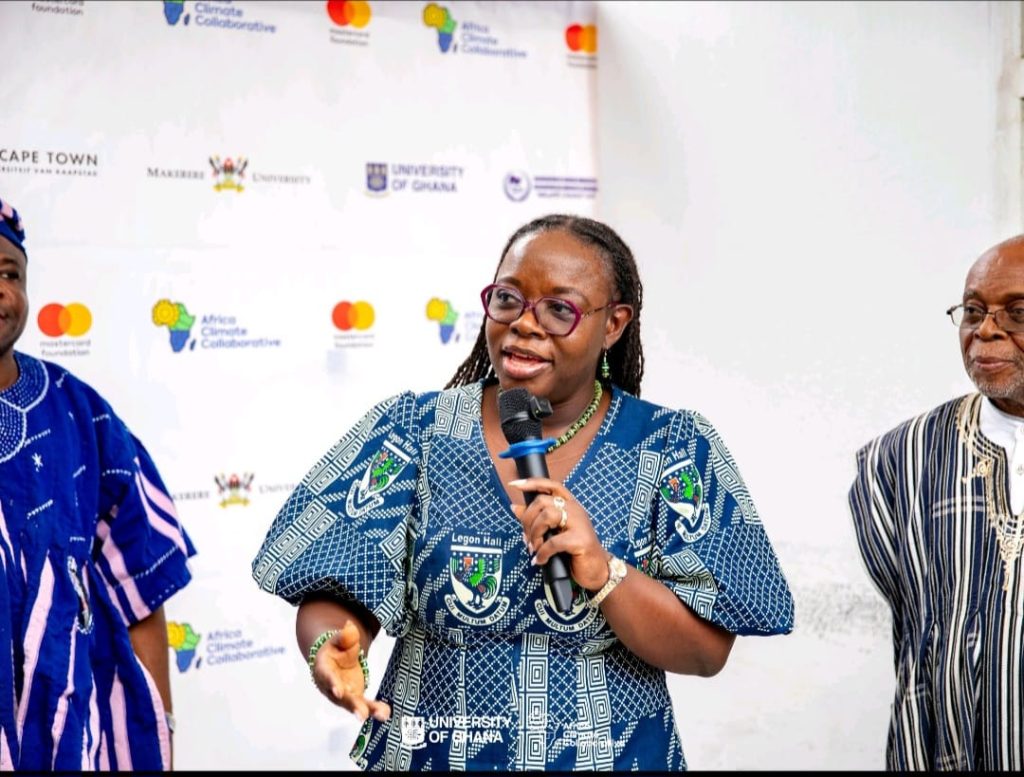
Prof Amfo said the facility would strengthen collaboration among departments by reducing duplication of research infrastructure and promoting the shared use of computing resources.
“We sometimes work in silos and replicate efforts. I believe this facility will help us consolidate our resources, and that is a fantastic thing that has happened,” she said.
Prof Amfo expressed appreciation to the Mastercard Foundation for supporting the upgrade through the Africa Climate Collaborative.
“I would like to express appreciation to the Mastercard Foundation, through its Africa Climate Collaborative. We do what we do because of our partnerships, and that is why engagement and partnerships are one of our four strategic priorities,” she said.
The upgrade forms part of the Africa Climate Collaborative Project and builds on an earlier US$350,000 investment made in 2017 through the World Bank-supported African Centres of Excellence project.
The University has invested a total of US$850,000 in its High-Performance Computing infrastructure over the past decade.
Prof. Gordon Awandare, Pro Vice-Chancellor for Research, Innovation and Development and Lead of the University’s Africa Climate Collaborative, said the upgraded facility had significantly increased the University’s capacity to conduct data-intensive research.
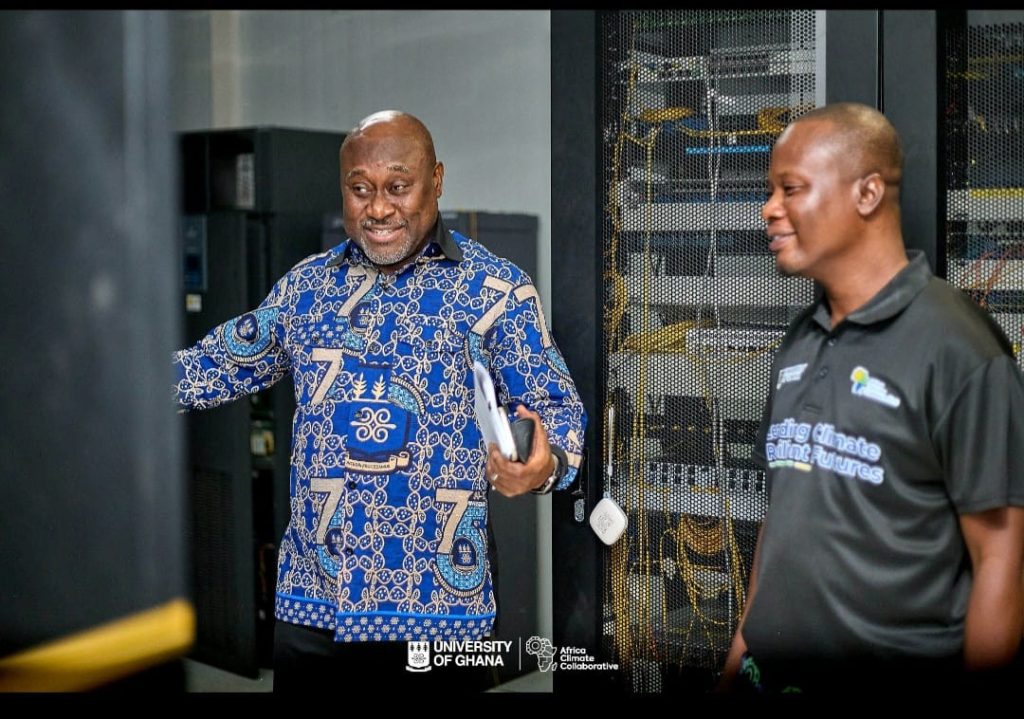
He explained that the system operates like 500 computers working simultaneously, allowing researchers to process several terabytes of data without overburdening individual machines.
“The primary goal is to use it for climate change research.
“Climate research involves Earth observation data, temperature, rainfall, humidity – huge amounts of data aggregated over years or decades. You need high-performance computing capacity to manage that,” he said.
Prof. Awandare said the facility would also support climate modelling, weather forecasting, artificial intelligence applications and other areas of research that required large-scale computational analysis.
He said although climate science remained the primary focus, the facility would support researchers across the University, including those in epidemiology, physics, engineering, genomics and other computationally intensive fields.
It would also contribute to the development of African-led solutions to climate change by enabling advanced data analysis, predictive modelling and evidence-based research to inform policy development and climate adaptation.
GNA
Edited by Kenneth Sackey
Reporter: Benjamin Adamafio Commey