By Francis Ntow
Accra, July 27, GNA – African countries should expand the use of private capital, diaspora investment and pension funds to finance energy infrastructure and enterprise growth, economic and finance experts have said.
They said fiscal constraints and rising investment requirements made it increasingly difficult for governments to rely solely on taxation and borrowing to finance long-term development projects.
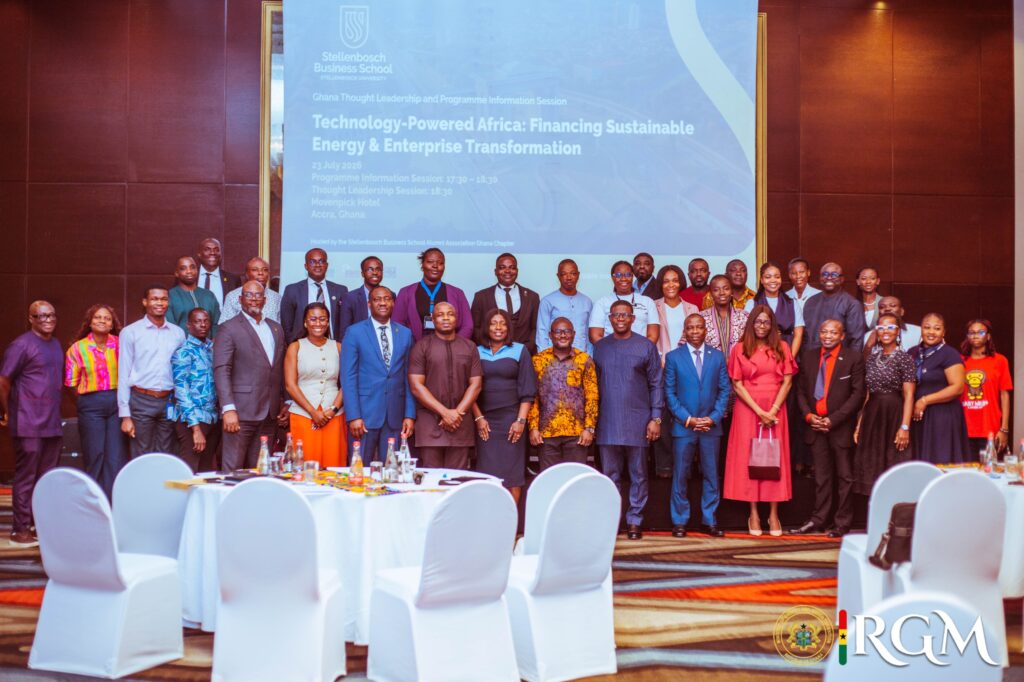
The experts made the call at a forum organised by the Stellenbosch Business School Alumni Association on the theme, “Technology-powered Africa: Financing sustainable energy and enterprise transformation.”
Mr Osahon Ogieva, Managing Director of FirstBank Ghana Limited, said governments had limited fiscal space because revenue generation and borrowing capacity were constrained by debt sustainability considerations.
“This is why innovative finance beyond the public purse has become essential.
“We need to think beyond taxation and borrowing by using innovative finance and blended models, bringing together government, private sector, and other actors to finance big infrastructure development projects,” he said.
Mr Ogieva urged African countries to establish structured investment vehicles to mobilise savings from citizens living abroad and cited Ethiopia’s diaspora bond initiative as an example of financing strategic infrastructure.
He also pointed to the use of pension funds for infrastructure financing in Nigeria, saying long-term domestic capital could support investments in sectors such as energy.
“Big tech like Google is already securing power deals because energy demand will define the next decade. We need long-term planning – a plan within ten years – for data centres and infrastructure so young innovators can build locally, instead of everything being run from abroad,” he stated.
Professor John Mawutor, Vice-Chancellor of the University of Professional Studies, Accra, said the high cost of investment and limited funding for research institutions continued to constrain innovation and commercialisation across Africa.
He said weak collaboration between academia and industry, coupled with the long gestation period of major capital projects, reduced the attractiveness of investments requiring patient capital.
“We must develop a continent-wide framework and cascade it to country and industry specific technologies to drive Africa’s development agenda,” he said.
Prof. Charles Adjasi, Professor of Development Finance and Economics, said increased investment in universities and research institutions was necessary to transform research into commercially viable products capable of attracting long-term financing.
“We don’t have departments that produce 100 per cent in areas like solar power and energy. Research is happening but it’s not translating into products. This is where real investment must be, so knowledge can move from basic research outlook into preparation for the real world,” he said.
Prof Adjasi called for closer collaboration among governments, academia and industry, and urged African countries to adopt longer-term development strategies.
“As we deliberate about what we want to do with technology – if we think about what we need for our own development, it’s easier. Let’s have a shared vision – a social contract that binds on Africa to come out with tech-solutions to drive development,” he said.
Mr Charles Sowah, member of the Stellenbosch Business School Alumni Association, said growing electricity demand from artificial intelligence and data centres underscored the need for Africa to expand energy and digital infrastructure.
He urged African countries to strengthen regional cooperation in technology infrastructure, citing initiatives in Tanzania and Kenya involving India as examples of collaborative investment.
GNA
Edited by Kenneth sackey
Reporter: Francis Ntow
[email protected]